
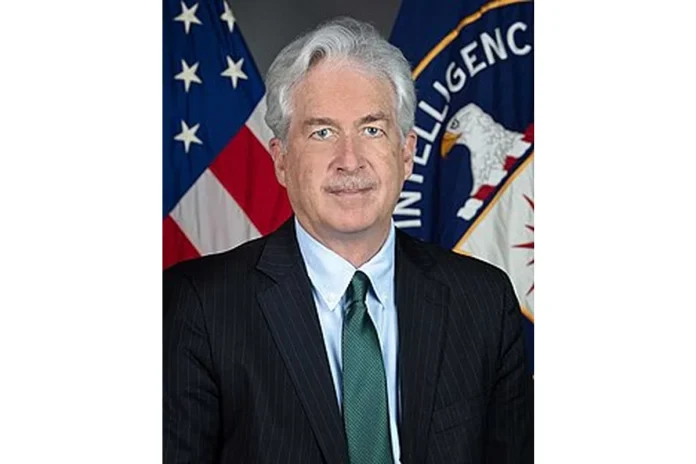
William J. Burns Bio
William Joseph Burns (born April 11, 1956) is an American diplomat and intelligence official who served as the 8th Director of the Central Intelligence Agency (CIA) during the Biden administration from March 2021 to January 2025. A career Foreign Service officer, he previously served as United States Deputy Secretary of State from 2011 to 2014 and held senior posts including Ambassador to Jordan and Russia, Assistant Secretary of State for Near Eastern Affairs, and Under Secretary of State for Political Affairs. After retiring from government service, he led the Carnegie Endowment for International Peace from 2014 to 2021. William Joseph Burns is also the author of a widely reviewed 2019 memoir on American diplomacy.
Early Life and Background
William Joseph Burns was born in 1956 at Fort Bragg, North Carolina, into a family with deep roots in United States military and diplomatic service. His mother was Peggy Cassady, and his father was William F. Burns, a United States Army major general who also served as a deputy assistant secretary of state for arms control, director of the United States Arms Control and Disarmament Agency, and the first United States special envoy to denuclearization negotiations with former Soviet countries under the Nunn-Lugar program. Growing up in this environment gave the younger Burns an early familiarity with the practical workings of national security policy.
Burns attended Trinity High School in Camp Hill, Pennsylvania, where he graduated as valedictorian in 1973. He then studied history at La Salle University in Philadelphia, earning a Bachelor of Arts degree with honors in 1978. He was awarded a Marshall Scholarship, becoming La Salle’s first Marshall Scholar, and traveled to the United Kingdom to study at the University of Oxford. At St. John’s College, Oxford, he completed both an MPhil and a DPhil in international relations, and his doctoral thesis, published in 1985, examined Economic Aid and American Policy Toward Egypt, 1955–1981. While at Oxford, Burns also played on the men’s basketball team.
Path to US Politics
Burns’s pathway into the diplomatic ranks of US Politics was shaped as much by his education as by his family background. His Marshall Scholarship and Oxford training connected him to the network of scholars and practitioners who would later staff senior posts in the State Department, while his father’s career provided a working model of how military and diplomatic service intersected. These formative experiences pointed him toward a Foreign Service career rather than elected office, and he entered the United States Foreign Service in 1982.
Inside the Foreign Service, Burns quickly accumulated postings that combined academic rigor with on-the-ground diplomacy. He served as a special assistant to successive secretaries of state, including Warren Christopher and Madeleine Albright, and worked at the United States National Security Council as special assistant to the president and senior director for Near East and South Asian affairs. These early assignments established him as a trusted operator on the most sensitive political portfolios, and they laid the groundwork for the ambassadorships and assistant secretaryships that followed later in his career.
William J. Burns Career
Early Career (1982–2001)
William Joseph Burns joined the United States Foreign Service in 1982 and spent the next two decades building expertise in the Middle East, Europe, and the broader Near East policy portfolio. Early in his career, he served as minister-counselor for political affairs at the United States Embassy in Moscow, giving him direct exposure to the closing phase of the Cold War and the difficult transition that followed the dissolution of the Soviet Union.
He was named acting director and later principal deputy director of the State Department’s Policy Planning Staff, a position in which he helped shape long-range diplomatic strategy. In 1998, President Bill Clinton appointed him United States Ambassador to Jordan, a post he held until 2001. His performance in Amman helped establish his reputation as a calm and effective manager of high-stakes relationships in the Arab world.
Ambassador to Russia and Assistant Secretary Era (2001–2008)
In 2001, Burns was appointed Assistant Secretary of State for Near Eastern Affairs, a senior bureau leadership role that he held through 2005. In that capacity, he managed United States policy across the Middle East during a turbulent period that included the aftermath of the September 11 attacks and the lead-up to the Iraq war. His bureau’s work placed him in daily contact with counterparts across the region and reinforced his standing as a top-tier Arabist within the State Department.
In 2005, Burns was named United States Ambassador to Russia, a post he would hold until 2008. His time in Moscow coincided with a sharp deterioration in United States-Russia relations, yet he was personally respected by Russian authorities for his professionalism. A leaked 2006 cable he signed describing a lavish Dagestani wedding became a minor classic of diplomatic writing. In 2008, President George W. Bush nominated him as a career ambassador, the highest rank in the United States Foreign Service, equivalent to a four-star general officer in the United States Armed Forces, and the Senate confirmed him.
Under Secretary of State and Deputy Secretary of State (2008–2014)
Burns returned to Washington in 2008 to serve as Under Secretary of State for Political Affairs, the third-ranking official at the State Department, a role he held until 2011. In this position, he coordinated United States diplomatic engagement on the full range of political issues and was often described as a quiet but central figure in shaping the Obama administration’s foreign policy in its early years. In 2009, he briefly served as acting secretary of state for a day before Hillary Clinton was confirmed.
From 2011 to 2014, William Joseph Burns served as the United States Deputy Secretary of State, the department’s number-two official. In this period he was, according to multiple accounts, deeply involved in the secret bilateral channel with Iran, alongside Jake Sullivan, that produced the 2013 interim agreement and helped pave the way for the broader Iran nuclear deal. He retired from the Foreign Service in 2014 after a 32-year career that included service under six presidents.
Carnegie Endowment for International Peace (2014–2021)
After leaving government, Burns was named president of the Carnegie Endowment for International Peace, one of the oldest and most influential international affairs think tanks in Washington. He led the institution from 2014 to 2021, a period that included renewed great-power competition, shifting Middle East alignments, and the early stages of the COVID-19 pandemic. He also published a widely reviewed 2019 memoir, The Back Channel: A Memoir of American Diplomacy and the Case for Its Renewal, released alongside nearly 100 declassified diplomatic cables.
Director of the Central Intelligence Agency (2021–2025)
In January 2021, President Joe Biden nominated Burns to be the 8th Director of the Central Intelligence Agency, calling him someone who shared his belief that intelligence must be apolitical. The Senate Intelligence Committee unanimously approved his nomination in early March 2021, and on March 18, 2021, the full Senate confirmed him by unanimous consent after Senator Ted Cruz lifted his hold. He was sworn in on March 19, 2021, and in July 2023 President Biden elevated the position to cabinet rank.
As CIA Director, Burns managed a portfolio that included the August 2021 United States military withdrawal from Afghanistan, during which he held a secret meeting in Kabul with Taliban leader Abdul Ghani Baradar. He flew to Moscow in November 2021 to warn Russian security officials of severe consequences if Russia invaded Ukraine, and he oversaw the July 2022 operation that killed al-Qaeda leader Ayman al-Zawahiri. He made a secret visit to China in May 2023 to ease tensions and pushed, after October 2023, for a deal to secure the release of Israeli hostages held by Hamas. He served until January 20, 2025.
Notable Events and Milestones
Among the signature moments of Burns’s career are his leadership of the secret 2013 channel with Iran, his November 2021 mission to warn Moscow against invading Ukraine, and his oversight of the 2022 operation that killed Ayman al-Zawahiri. His unanimous Senate confirmation as CIA Director in March 2021, his July 2023 elevation to cabinet rank, and his 32-year Foreign Service career that culminated in service under six presidents also stand out as defining milestones of a diplomatic life.
William J. Burns Awards and Honors
William Joseph Burns has received a broad range of awards and honors from the United States government, foreign governments, and outside organizations, reflecting more than three decades of diplomatic and intelligence service. These include repeated senior State Department awards as well as external recognition from press, policy, and Jewish-American institutions, culminating in a 2022 lifetime-achievement honor.
Government and Career Service Awards
Burns is the recipient of three Presidential Distinguished Service Awards, three Secretary’s Distinguished Service Awards, and the Secretary’s Career Achievement Award. His other State Department recognitions include the James Clement Dunn Award (1991), the Robert C. Frasure Memorial Award (2005), and the Charles E. Cobb Jr. Award for Initiative and Success in Trade Development (2006). In 2014, he received the Department of Defense Award for Distinguished Public Service, the U.S. Intelligence Community Medallion, and the Central Intelligence Agency’s Agency Seal Medal.
External Recognition
In 1994, Time magazine named Burns to both its 50 Most Promising American Leaders Under Age 40 and its 100 Most Promising Global Leaders Under Age 40 lists. He was named Foreign Policy’s Diplomat of the Year in 2013, received the Anti-Defamation League’s Distinguished Statesman Award in 2014, the Middle East Institute’s Lifetime Achievement Award in 2014, and the American Academy of Diplomacy’s Annenberg Award for Diplomatic Excellence in 2015. In 2022, he received the American Academy of Achievement’s Golden Plate Award. He also holds four honorary doctoral degrees and is a member of the American Academy of Arts and Sciences.
William J. Burns Family
Family Background and Public Service Lineage
William Joseph Burns was raised in a family with an unusually deep public service lineage. His mother is Peggy Cassady, and his father, William F. Burns, was a United States Army major general who also served as director of the United States Arms Control and Disarmament Agency in 1988–1989 and as the first United States special envoy to denuclearization negotiations with former Soviet countries under the Nunn-Lugar legislation. Burns also has two daughters.
Personal Life
Burns is married to Lisa Carty, a former diplomat and a senior official with the United Nations Office for the Coordination of Humanitarian Affairs. The couple has two daughters. In addition to English, Burns speaks French, Russian, and Arabic, languages that have supported his postings in Amman, Moscow, and the broader Near East.