
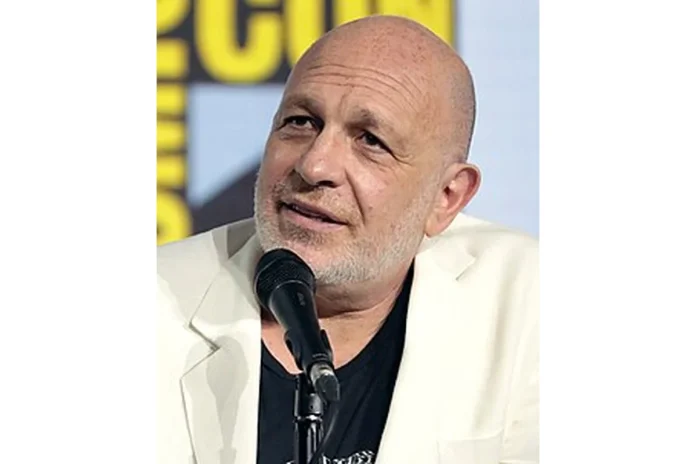
Akiva Goldsman Bio
Akiva Goldsman (born July 7, 1962) is an American screenwriter, producer, and director whose career spans more than three decades in film and television. He first gained wide attention with legal and superhero thrillers in the 1990s and went on to adapt major novels and franchise properties for Hollywood. In 2002, he won the Academy Award for Best Adapted Screenplay and the Golden Globe for Best Screenplay for A Beautiful Mind, the biographical drama about mathematician John Nash.
Beyond features, Goldsman has built a strong presence on television, writing and producing episodes of the science fiction series Fringe and co-developing Star Trek: Picard, Star Trek: Strange New Worlds, and the DC Comics series Titans. He is also a producer on large-scale projects such as Top Gun: Maverick and Transformers franchise films.
Early Life and Background
Akiva Goldsman was born on July 7, 1962, in New York City and raised in the Brooklyn Heights neighborhood. His parents, Tev Goldsman and Mira Rothenberg, were both clinical child psychologists who ran a group home for emotionally disturbed children. Growing up around their work gave Goldsman an early appreciation for storytelling and human behavior, themes that would later shape his screenwriting.
He attended Saint Ann’s School in Brooklyn Heights, where he has said he made many of the friends he would later work with in the entertainment industry. Goldsman went on to earn his bachelor’s degree from Wesleyan University before attending the graduate fiction-writing program at New York University, training that helped him transition into professional screenwriting.
Path to Screenwriting
Goldsman’s entry into the film industry came through the network of relationships he built in New York, combined with his graduate training in fiction writing. His first major feature credit arrived in 1994 with the legal thriller The Client, directed by Joel Schumacher and based on the John Grisham novel. The success of that film established him as a reliable adapter of best-selling material and opened the door to larger studio projects.
Throughout the mid-1990s, Goldsman built a working relationship with Schumacher that led to a string of high-profile assignments, including Batman Forever, A Time to Kill, and Batman & Robin. These films, while varied in critical reception, gave him the experience of working inside major studio franchises and set the stage for his later prestige projects.
Akiva Goldsman Career
Early Career (1994-2000)
Goldsman’s first major breakthrough came in 1994 with The Client, a legal thriller directed by Joel Schumacher and based on John Grisham’s 1993 novel. Starring Susan Sarandon and Tommy Lee Jones, the film was a box-office success and earned positive reviews, immediately establishing Goldsman as a sought-after screenwriter. He followed that success in 1995 with Batman Forever, produced by Tim Burton and directed by Schumacher, starring Val Kilmer, Tommy Lee Jones, Jim Carrey, Nicole Kidman, and Chris O’Donnell. The film grossed more than 330 million dollars worldwide and became the sixth-highest-grossing film of 1995.
In 1996, Goldsman wrote A Time to Kill, another Schumacher-directed legal drama based on Grisham’s novel, featuring Sandra Bullock, Samuel L. Jackson, Matthew McConaughey, and Kevin Spacey. He then co-wrote Batman & Robin in 1997 and the science fiction adventure Lost in Space in 1998, the latter directed by Stephen Hopkins and starring William Hurt, Gary Oldman, and Matt LeBlanc. That same year, he co-wrote the fantasy drama Practical Magic with Robin Swicord and Adam Brooks, starring Sandra Bullock and Nicole Kidman.
Breakthrough (2001-2010)
Goldsman’s career-defining moment arrived in 2001 with A Beautiful Mind, a biographical drama directed by Ron Howard and starring Russell Crowe as Nobel Laureate John Nash. Adapted from Sylvia Nasar’s book, the film depicted Nash’s years at Princeton and his long struggle with schizophrenia. At the 74th Academy Awards, A Beautiful Mind received eight nominations and won four, including Best Picture. Goldsman personally won the Academy Award for Best Adapted Screenplay, his first nomination and win in the category.
He added a Golden Globe for Best Screenplay for A Beautiful Mind in 2002, cementing his reputation as one of Hollywood’s leading adapters. In 2008, Goldsman joined the Fox science fiction series Fringe as a writer, director, and consulting producer, contributing the episode “Bad Dreams” and remaining a consulting producer through the show’s fifth season. He also wrote the screenplays for I, Robot in 2004, Cinderella Man in 2005, and I Am Legend in 2007, expanding his range across science fiction, historical drama, and horror.
Notable Works and Milestones
Goldsman re-teamed with director Ron Howard in 2006 to adapt Dan Brown’s novel The Da Vinci Code and returned to write its 2009 sequel Angels & Demons. He also took on producing duties for Universal Pictures’ Lone Survivor, a war drama based on Marcus Luttrell’s book, which was released in 2013. In 2014, he made his feature directorial debut with Winter’s Tale, an adaptation of Mark Helprin’s novel starring Colin Farrell, Russell Crowe, Jennifer Connelly, and Will Smith. He also directed the horror thriller Stephanie in 2017, further establishing his range behind the camera.
Recent Work and Television Expansion (2015-Present)
In 2015, Paramount Pictures tapped Goldsman to head a team of writers developing a multi-film cinematic universe based on Hasbro’s Transformers franchise. He co-wrote and produced the 2017 film adaptation of Stephen King’s The Dark Tower series. That same year, he signed a two-year first-look deal with Paramount for his production company, Weed Road, which included plans for a Tom Clancy’s Rainbow Six adaptation and projects based on the Ologies fantasy book series.
Goldsman’s television footprint grew significantly starting in 2018, when he was revealed as a member of the writing staff for Star Trek: Picard. In 2020, he was named creator and co-showrunner of the Paramount+ series Star Trek: Strange New Worlds, a prequel to the original Star Trek. He has also co-developed the DC Comics live-action series Titans and contributed as a producer to Top Gun: Maverick (2022). In February 2025, it was announced that Goldsman was developing a new television universe at Legendary Television featuring three reimagined Irwin Allen sci-fi series: Voyage to the Bottom of the Sea, Land of the Giants, and The Time Tunnel.
Akiva Goldsman Award Nominations
Akiva Goldsman received his first Academy Award nomination in 2002 for Best Adapted Screenplay for A Beautiful Mind, a film that earned eight total Oscar nominations and won four, including Best Picture. He was also nominated for and won the Golden Globe for Best Screenplay for the same film. Beyond these confirmed honors, additional nominations across his long career in film and television are not fully documented in the available records.
Akiva Goldsman Awards Won
Akiva Goldsman has won two of the most prestigious awards in film for his work on A Beautiful Mind. In 2002, he received the Academy Award for Best Adapted Screenplay, and that same year, he won the Golden Globe for Best Screenplay. A Beautiful Mind also won Best Picture at the 74th Academy Awards, capping a triumphant awards season for Goldsman and director Ron Howard.
Akiva Goldsman Family
Akiva Goldsman was born to Tev Goldsman and Mira Rothenberg, both clinical child psychologists who ran a group home for emotionally disturbed children in New York. His parents’ work in psychology and their care for young people shaped much of his upbringing in Brooklyn Heights. He has said that the friends he made at Saint Ann’s School in Brooklyn became some of his closest collaborators once he entered the entertainment industry.
Personal Life
Goldsman’s first wife, film producer Rebecca Spikings-Goldsman, died of a heart attack on July 6, 2010, at the age of 42. Rebecca was the daughter of producer Barry Spikings. In 2012, Goldsman met his second wife, Joann Richter, and the two married in 2014. They have two daughters and divide their time between Los Angeles and New York. Goldsman has spoken about how Rebecca’s passing influenced his decision to finally direct Winter’s Tale as a personal project about hope and connection.