
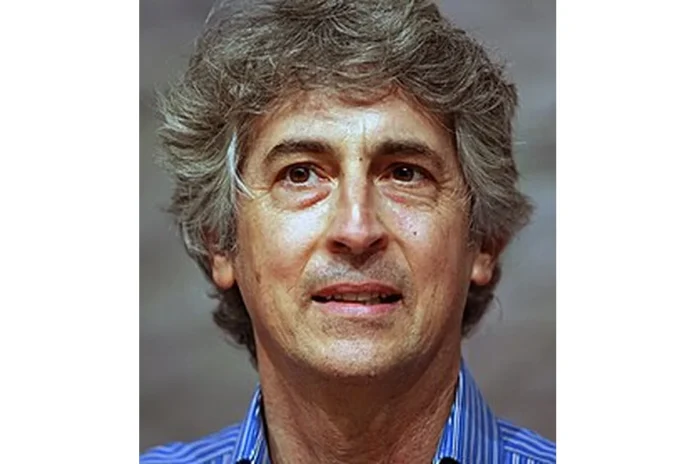
Alexander Payne Bio
Constantine Alexander Payne (born February 10, 1961) is an American filmmaker, screenwriter, and producer whose work has shaped contemporary American satire on screen. He is widely recognized for sharp, character-driven comedies such as Election, About Schmidt, Sideways, The Descendants, and The Holdovers, films that blend wry humor with meditations on family, aging, and morality. Over a career that began in the mid-1980s, Payne has earned two Academy Awards for Best Adapted Screenplay, two Golden Globe Awards, and a BAFTA Award, establishing himself as one of the most distinctive writer-directors of his generation.
Early Life and Background
Constantine Alexander Payne was born on February 10, 1961, in Omaha, Nebraska, the youngest of three sons of Peggy and George Payne, restaurant owners. He grew up in the Dundee neighborhood of Omaha and is of Greek ancestry. His paternal grandfather, Nicholas “Nick” Payne, had anglicized the family name from “Papadopoulos,” with roots in the Greek regions of Syros, Livadia, and Aegio. Payne’s family ran The Virginia Cafe, a fixture of Omaha that was destroyed by fire in 1969.
Around age 14, Payne inherited a Super 8mm projector from his father, an experience that helped spark his early interest in filmmaking. He attended Brownell-Talbot School, Dundee Elementary School, and Lewis and Clark Junior High before graduating from Creighton Prep in 1979. At Prep he wrote a humor column for the school newspaper and served as yearbook editor. Payne went on to Stanford University, where he majored in Spanish and History, studying abroad at the University of Salamanca and later spending time in Medellín, Colombia.
Path to Director
After Stanford, Payne enrolled at the UCLA Film School, where he earned his MFA in 1990. His thesis film, The Passion of Martin, drew industry attention and led to a writing and directing deal with Universal Pictures. Although the resulting screenplay was ultimately turned down, it later evolved into About Schmidt. To support himself during this period, Payne directed segments for the Playboy Channel while continuing to develop his craft.
His feature debut arrived with the black comedy Citizen Ruth (1996), a satire about the American abortion debate starring Laura Dern. The film premiered at the Sundance Film Festival and earned strong reviews for its fearless, darkly funny take on a divisive subject. That early success signaled Payne’s arrival as a writer-director with a distinctive voice.
Alexander Payne Career
Early Career (1985–1996)
Payne’s professional career began in 1985, the same year he started directing short films while still studying at UCLA. His breakthrough into the industry came when The Passion of Martin attracted notice from Universal Pictures. The screenplay deal that followed gave him both financial breathing room and creative momentum, even though the original project never made it to production.
Citizen Ruth (1996), released shortly after Payne completed his MFA, established his satirical voice and his willingness to tackle controversial subject matter with humor. The film featured Laura Dern, Kelly Preston, Burt Reynolds, and Tippi Hedren, and was widely praised at Sundance. It laid the groundwork for the pointed, character-focused comedies that would define his later work.
Breakthrough (1999–2013)
Payne’s second feature, Election (1999), starred Matthew Broderick and Reese Witherspoon in a sharp political satire set in an American high school. The film earned him his first Academy Award nomination for Best Adapted Screenplay and later became a cult favorite, even cited as a favorite of President Barack Obama. Witherspoon’s performance in particular drew widespread praise.
In 2002, Payne released About Schmidt, a comedy-drama starring Jack Nicholson as a retired widower traveling to his estranged daughter’s wedding. The screenplay won a Golden Globe Award and was nominated for a Writers Guild of America Award. Although Payne and his writing partner Jim Taylor were not nominated for an Oscar for About Schmidt, the film cemented Payne’s reputation for blending melancholy with dry humor.
Sideways (2004), a road-trip comedy-drama starring Paul Giamatti, Thomas Haden Church, Virginia Madsen, and Sandra Oh, became Payne’s signature achievement. The film earned five Academy Award nominations, including Best Picture, and won the Academy Award and Golden Globe for Best Adapted Screenplay. It also won the Golden Globe for Best Motion Picture – Musical or Comedy.
After a seven-year hiatus, Payne returned with The Descendants (2011), starring George Clooney as a man managing his comatose wife’s medical crisis. The film received near-universal praise and earned Payne another Academy Award for Best Adapted Screenplay, shared with co-writers Nat Faxon and Jim Rash. His 2013 black-and-white road film Nebraska, starring Bruce Dern and Will Forte, brought him a Best Director nomination and saw Dern win the Best Actor prize at the Cannes Film Festival.
Notable Works and Milestones
Among Payne’s most celebrated works are Citizen Ruth (1996), Election (1999), About Schmidt (2002), Sideways (2004), The Descendants (2011), Nebraska (2013), and The Holdovers (2023). His two Academy Awards for Best Adapted Screenplace, his Golden Globe for About Schmidt, and his multiple Oscar nominations across writing and directing mark him as a writer-director of unusual consistency. In 2017, Metacritic ranked him second on its list of the 25 best film directors of the 21st century.
Alexander Payne Award Nominations
Over the course of his career, Alexander Payne has earned multiple Academy Award nominations, including nods for Best Adapted Screenplay for Election, Sideways, and The Descendants, as well as Best Director nominations for Sideways, The Descendants, and Nebraska. He has also received Golden Globe nominations, BAFTA nominations, a Grammy nomination, and a Writers Guild of America Award nomination for Best Adapted Screenplay for About Schmidt. His consistent recognition across major awards bodies reflects his standing as a leading writer-director in American cinema.
Alexander Payne Awards Won
Payne has won two Academy Awards for Best Adapted Screenplace, for Sideways (2004) in 2005 and for The Descendants (2011) in 2012. He has also won two Golden Globe Awards, a BAFTA Award, and five Independent Spirit Awards. In 2024, he received the Honorary Heart of Sarajevo at the Sarajevo Film Festival in recognition of his contribution to cinema.
Alexander Payne Family
Payne was born to Peggy and George Payne, owners of The Virginia Cafe in Omaha. He is the youngest of three sons and grew up in the Dundee neighborhood alongside his brothers. The family’s restaurant, run by his father after his grandfather founded it, was a defining part of Payne’s upbringing until it was destroyed by fire in 1969.
Personal Life
Payne married Canadian actress Sandra Oh on January 1, 2003, after dating her for three years. They separated in 2005 and finalized their divorce on December 22, 2006. In 2015, he married Maria Kontos, whom he met while visiting the Aigio region of Greece, the ancestral home of part of his family. The couple welcomed a daughter in 2017 and divorced in 2022. Payne obtained Greek citizenship in 2022 and remains active in film and civic life, including serving as a board member for Film Streams, an Omaha nonprofit cinema.