
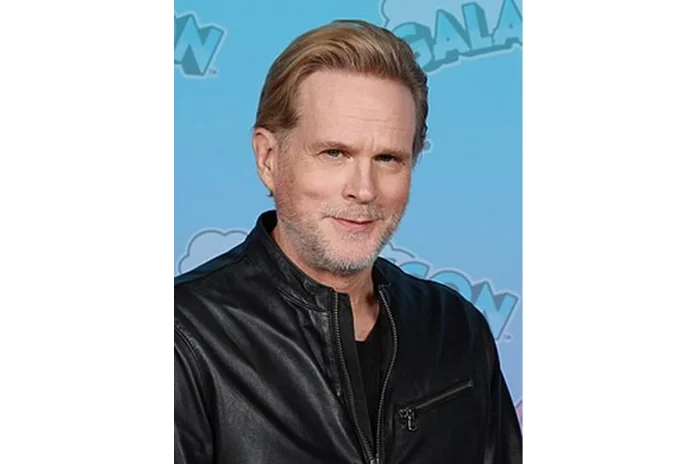
Cary Elwes Bio
Ivan Simon Cary Elwes (born 26 October 1962) is an English actor who has built a diverse and enduring career spanning more than four decades in film and television. Best known for his iconic role as Westley in The Princess Bride (1987), Elwes has demonstrated remarkable range throughout his career, appearing in everything from romantic comedies and period dramas to horror thrillers and blockbuster action films. His unique ability to seamlessly transition between comedic and dramatic roles has made him a sought-after performer across multiple genres. Elwes has also established himself as a published author, venture capitalist, and advocate for charitable causes, particularly those benefiting cancer research and victims of natural disasters.
Early Life and Background
Cary Elwes was born on 26 October 1962 in Westminster, London, England. He was the youngest of three sons born to portrait painter Dominick Elwes and interior designer Tessa Kennedy. His family background includes several notable artists and creative figures. His paternal grandfather was the portrait painter Simon Elwes, whose own father was the diplomat and tenor Gervase Elwes. One distant relative was John Elwes, a British miser who reportedly inspired Ebenezer Scrooge in Charles Dickens’s A Christmas Carol. Through his maternal grandfather, Elwes is related to Sir Alexander William “Blackie” Kennedy, one of the first photographers to document the archaeological site of Petra.
Elwes’s upbringing included significant challenges. His parents divorced when he was four years old, and his father committed suicide in 1975 when Elwes was thirteen years old. He was educated at Harrow School in London, where he received his formal secondary education. His stepfather, Elliott Kastner, was an American film producer and the first American to establish independent film production in the United Kingdom. Elwes was raised as a Catholic and served as an altar boy at Westminster Cathedral. His family ties to the clergy included such figures as Dudley Charles Cary-Elwes, the former Bishop of Northampton, and Abbot Columba Cary-Elwes.
In 1981, Elwes moved to the United States to study acting at Sarah Lawrence College in Bronxville, New York. While there, he furthered his training at both the Actors Studio and the Lee Strasberg Theatre and Film Institute under the tutelage of Al Pacino’s mentor, Charlie Laughton. Earlier in his teenage years, Elwes worked as a production assistant on several films including Absolution, Octopussy, and Superman, where he was assigned to work with Marlon Brando. When Elwes introduced himself to Brando, the legendary actor insisted on calling him “Rocky” after Rocky Marciano, a nickname that stuck with Elwes throughout his career.
Path to Acting
Elwes’s journey into professional acting began with practical experience in the film industry. During his teenage years, he gained valuable insights into filmmaking through his work as a production assistant on major Hollywood productions. These early experiences allowed him to observe established actors and directors at work, providing him with a foundational understanding of the industry that would later inform his own performances. His time at Sarah Lawrence College exposed him to various acting techniques and theatrical traditions, helping him develop a versatile approach to performance.
His formal training at the London Academy of Music and Dramatic Art, combined with his American studies at Sarah Lawrence College and the Actors Studio, equipped Elwes with a comprehensive toolkit for his future career. The international nature of his education, spanning both British and American acting traditions, would later prove instrumental in his ability to work seamlessly across Atlantic productions. This diverse training foundation helped him develop the adaptability and range that would become hallmarks of his acting career.
Cary Elwes Career
Early Career (1984–1999)
Elwes made his acting debut in 1984 in Marek Kanievska’s film Another Country, which was loosely based on the English boarding school exploits of British spies Burgess, Philby and MacLean. He played James Harcourt, a gay student, in a film that explored themes of espionage and identity in a British public school setting. He then played Guilford Dudley in the British historical drama Lady Jane, starring opposite Helena Bonham Carter. These early roles established Elwes as a capable dramatic actor with talent for period pieces and character-driven narratives.
Shortly after these initial film appearances, Elwes was cast in what would become his most enduring role. He was selected to play the stable-boy-turned-swashbuckler Westley in Rob Reiner’s fantasy-comedy The Princess Bride (1987), based on the novel by William Goldman. Although the film was a modest box office success upon its initial theatrical release, it received overwhelming critical acclaim and has since become a beloved cult classic, maintaining a 97% approval rating on Rotten Tomatoes. The film established Elwes as a leading man and introduced him to audiences worldwide.
Breakthrough (1987–Present)
Following The Princess Bride, Elwes continued to build his career with a diverse array of roles. He balanced dramatic performances, such as his appearance in the Oscar-winning Glory (1989), with comedic roles including Hot Shots! (1991). He played a rival driver to Tom Cruise in Days of Thunder (1990) and appeared in Francis Ford Coppola’s adaptation of Bram Stoker’s Dracula (1992). His versatility allowed him to move fluidly between genres, establishing him as a reliable supporting actor capable of anchoring both comedic and dramatic projects.
In 1993, Elwes achieved another milestone by starring as Robin Hood in Mel Brooks’s comedy Robin Hood: Men in Tights. This role allowed him to showcase his comic timing and parody skills in a film that paid homage to both the legendary outlaw character and the tradition of comedic filmmaking. The success of this production further cemented his reputation as an actor who could carry comedic productions while also delivering strong dramatic performances.
Elwes made his first major Hollywood franchise contribution in the horror-thriller genre with Saw (2004). He portrayed Dr. Lawrence Gordon, a role that would become one of his most recognizable performances. The film, produced on a modest budget of approximately one million dollars, went on to gross over one hundred million dollars worldwide, spawning one of the most successful horror franchises in cinema history. He reprised the role in Saw 3D (2010), the seventh installment in the series.
Throughout the 2000s and 2010s, Elwes maintained a steady presence in both film and television. He appeared in The X-Files during its final seasons, played astronaut Michael Collins in the HBO miniseries From the Earth to the Moon, and made guest appearances on numerous popular series including Seinfeld, Psych, and Life in Pieces. In 2019, he joined the cast of the Netflix phenomenon Stranger Things for its third season as Mayor Larry Kline, earning a Screen Actors Guild Award nomination alongside the ensemble cast. The same year, he appeared as Gavin Hawk in the Amazon Prime series The Marvelous Mrs. Maisel.
Notable Works and Milestones
Elwes’s filmography spans numerous critically acclaimed and commercially successful projects. Beyond The Princess Bride and Saw, his notable credits include Kiss the Girls (1997), Liar Liar (1997), Ella Enchanted (2004), No Strings Attached (2011), and New Year’s Eve (2011). He portrayed Ted Bundy in the A&E Network film The Riverman, which became one of the highest-rated original films in the network’s history and garnered a prestigious BANFF Rockie Award nomination. In 2023, Elwes appeared in both BlackBerry and Mission: Impossible – Dead Reckoning Part One, demonstrating his continued relevance in major Hollywood productions. He is set to appear in Mission: Impossible – The Final Reckoning in 2025.
Cary Elwes Award Nominations
Throughout his career, Cary Elwes has received recognition from various industry organizations. He was nominated for a Golden Satellite Award for Best Performance by an Actor in a Mini-Series or Motion Picture Made for Television for his portrayal of Colonel James Burton in The Pentagon Wars directed by Richard Benjamin. His performance as Ted Bundy in The Riverman earned him a BANFF Rockie Award nomination. More recently, he was nominated for a Screen Actors Guild Award for Outstanding Performance by an Ensemble in a Drama Series for his work on Stranger Things alongside the show’s talented ensemble cast.
Cary Elwes Family
Cary Elwes comes from a creative and artistic family with deep roots in both British and American entertainment industries. His father, Dominick Elwes, was a renowned portrait painter, while his mother, Tessa Kennedy, worked as an interior designer. He is the brother of artist Damian Elwes and film producer Cassian Elwes, both of whom have established successful careers in their respective fields. His stepfather, Elliott Kastner, was a pioneering American film producer who helped shape the independent film landscape in the United Kingdom. Elwes also has a half-sister, Milica Kastner, who passed away in March 2021 after battling Stage 4 cancer.
Personal Life
Elwes met photographer Lisa Marie Kurbikoff in 1991 at a chili cook-off in Malibu, California. They became engaged in 1997 and married in 2000. The couple has one daughter together. In January 2025, Elwes and his family lost their home in the Palisades Fire during the Southern California wildfires but managed to evacuate safely. Outside of his acting career, Elwes has pursued business interests as a venture capitalist and serves as an advocate for various charitable causes, particularly those related to cancer research following his sister’s battle with the disease. He is also known for his political engagement, having initiated a 2020 fundraiser that reunited many Princess Bride cast members to support Joe Biden’s presidential campaign in Wisconsin, which raised over four million dollars for Wisconsin Democrats.