
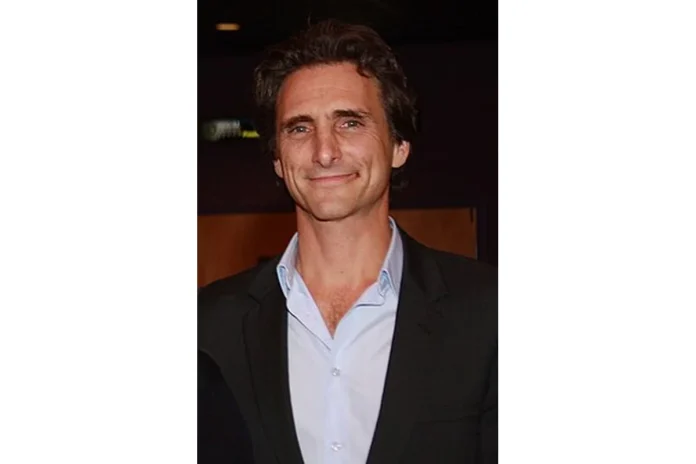
Lawrence Bender Bio
Lawrence Bender (born October 17, 1957) is an American film producer whose body of work helped define 1990s independent cinema and the wave of crime dramas and action films closely associated with Quentin Tarantino. Born and raised in the New York metropolitan area, Bender first gained attention as the producer of Reservoir Dogs in 1992 and went on to collaborate with Tarantino on landmark titles including Pulp Fiction, Jackie Brown, the Kill Bill films, and Inglourious Basterds. Beyond narrative features, he has produced politically engaged documentaries, most notably An Inconvenient Truth (2006), which won the Academy Award for Best Documentary Feature. He has received multiple Academy Award nominations for Best Picture, and he remains active in film and television production.
Early Life and Background
Lawrence Bender was born on October 17, 1957, and grew up in a Jewish family in The Bronx, New York. He later spent part of his childhood in New Jersey, where his father worked as a college history professor and his mother worked as a kindergarten teacher. He has described his hometown of Cherry Hill during that period as largely homogeneous and unwelcoming to Jewish residents, an experience that shaped his later social activism. He attended Cherry Hill High School East, where he originally planned to follow his grandfather into civil engineering because he had heard there were strong job prospects in the field.
After high school, Bender enrolled at the University of Maine, where he studied civil engineering and graduated in 1979. While in college, he discovered a passion for dance and, after graduation, auditioned successfully for a scholarship with the Louis Falco dance troupe in New York. He worked as a professional dancer for several years before a series of injuries forced him to retire from performing. That pivot from engineering to dance, and eventually toward film production, set the course for his future career.
Path to Film Producer
Bender’s entry into the film industry came in the 1980s, when he worked as a grip on the syndicated anthology series Tales from the Darkside. The on-set experience introduced him to the practical side of production and connected him with a generation of independent filmmakers working outside the Hollywood studio system. In 1989, he produced the horror film Intruder with director Sam Raimi and also co-wrote its story, marking his first producing credit and giving him the confidence to seek out more ambitious projects.
The decisive break came in 1990, when Bender was given the script for Reservoir Dogs by a relatively unknown writer-director named Quentin Tarantino. Bender agreed to produce the film on a low budget, and the picture became a critical and commercial hit that helped launch both careers. The success established Bender as a producer willing to back bold, original material and led directly to a long-running creative partnership with Tarantino. His career as a feature film producer is generally dated from the late 1980s onward, with Reservoir Dogs as the breakthrough title that changed his trajectory.
Lawrence Bender Career
Early Career (1987–1991)
Before Reservoir Dogs, Lawrence Bender spent several years learning the craft of film production from the ground up. His earliest industry work was on the set of Tales from the Darkside, where he served as a grip and absorbed how a television series is assembled episode by episode. That hands-on experience translated directly into his next step, when he produced the 1989 horror film Intruder with Sam Raimi and co-wrote the story.
Throughout the late 1980s, Bender was quietly building a network of independent filmmakers in New York and Los Angeles. By the time he read the Reservoir Dogs script in 1990, he had the technical knowledge and producing instincts needed to mount a tight, character-driven crime film on a limited budget. Reservoir Dogs was released in 1992 and became one of the most talked-about independent films of the decade, instantly establishing him as a producer to watch.
Breakthrough (1992–1999)
The 1990s marked the height of Lawrence Bender’s influence on American independent cinema. He produced Quentin Tarantino’s Reservoir Dogs in 1992 and followed it with Pulp Fiction in 1994, a film that won the Palme d’Or at the Cannes Film Festival and earned Bender his first Academy Award nomination for Best Picture. He expanded his slate with Killing Zoe (1994), Fresh (1994), White Man’s Burden (1995), From Dusk till Dawn (1996), Jackie Brown (1997), and Good Will Hunting (1997), the last of which brought him a second Best Picture nomination.
Later in the decade, he produced A Price Above Rubies (1998) and Anna and the King (1999), while maintaining deals with Miramax and Fox 2000 Pictures that gave him a steady platform to develop new material. This run of films cemented his reputation as one of the most reliable producers of auteur-driven American cinema.
He also continued his long collaboration with Quentin Tarantino, producing Jackie Brown in 1997 and later Kill Bill: Volume 1 in 2003 and Kill Bill: Volume 2 in 2004. These films, along with Pulp Fiction, became signature titles of the so-called Tarantino wave of crime and revenge cinema, and they remain the works most closely associated with the Lawrence Bender name.
Notable Works and Milestones
Across the 1990s and 2000s, Lawrence Bender’s producer credits included Reservoir Dogs, Pulp Fiction, Jackie Brown, Good Will Hunting, the two Kill Bill films, and Inglourious Basterds, as well as the documentary An Inconvenient Truth, which won the Academy Award for Best Documentary Feature. In 2001, he was named Producer of the Year at the Cannes Film Festival, becoming the third person and the first American ever to receive the award.
Lawrence Bender Award Nominations
Lawrence Bender has received three Academy Award nominations for Best Picture in recognition of his work as a producer. The first came in 1995 for Pulp Fiction, followed by a nomination in 1998 for Good Will Hunting. His third Best Picture nomination arrived in 2010 for Inglourious Basterds, capping a fifteen-year span in which his films were repeatedly recognized by the Academy. Beyond Best Picture, his broader catalog of produced and executive-produced films has accumulated additional Academy nominations across categories, though the Best Picture trio remains the most consistent marker of his prestige standing in the industry.
Lawrence Bender Awards Won
Lawrence Bender’s most prominent awards include the Palme d’Or at the 1994 Cannes Film Festival for Pulp Fiction, shared with the film’s director and fellow producers. In 2006, the documentary An Inconvenient Truth, which he produced, won the Academy Award for Best Documentary Feature. He was also named Producer of the Year at Cannes in 2001, the first American to receive that distinction. Additional honors include the 2005 Torch of Liberty award from the ACLU and a 2011 Wildlife Hero recognition from the National Wildlife Federation. Across his career, films he has produced or executive produced have won a total of eight Academy Awards in various categories.
| Award | Wins | Year |
|---|---|---|
| Palme d’Or (Cannes Film Festival, for Pulp Fiction) | 1 | 1994 |
| Cannes Producer of the Year | 1 | 2001 |
| Academy Award for Best Documentary Feature (An Inconvenient Truth) | 1 | 2006 |
| ACLU Torch of Liberty Award | 1 | 2005 |
Lawrence Bender Family
Lawrence Bender was raised in a Jewish family in The Bronx, New York, before moving to New Jersey during his childhood. His father was a college history professor and his mother was a kindergarten teacher, a household rooted in education and public service. Public information about his extended family, including siblings, spouses, or descendants, has not been formally documented in available sources.
Personal Life
Outside of film production, Lawrence Bender is known as a committed social and political activist. He serves on the board of The Creative Coalition and is a member of the Council on Foreign Relations and the Pacific Council, as well as an advisory board member for the UCLA Institute of the Environment and Sustainability. In 2004, he was a top fundraiser for John Kerry’s presidential campaign, and he was an early supporter of Barack Obama’s 2008 presidential bid. In 2013, the University of Maine awarded him an honorary Doctor of Humane Letters degree during its commencement ceremonies.