
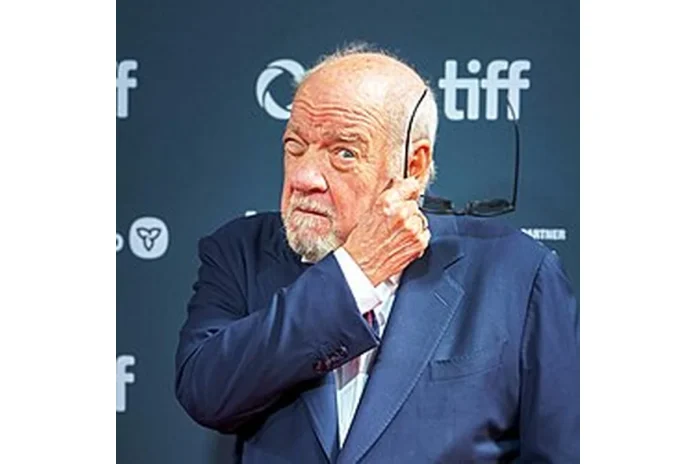
Paul Schrader Bio
Paul Joseph Schrader (born July 22, 1946) is an American screenwriter, film director, and film critic whose career stretches across more than five decades. He first gained international attention for writing the screenplay of Martin Scorsese’s Taxi Driver (1976), and he has continued collaborating with Scorsese on films including Raging Bull (1980), The Last Temptation of Christ (1988), and Bringing Out the Dead (1999). Schrader is also known for directing a varied body of work such as Blue Collar (1978), Hardcore (1979), American Gigolo (1980), Mishima: A Life in Four Chapters (1985), and First Reformed (2017). His films are often described as “man in a room” stories that follow isolated, troubled men confronting an existential crisis.
Early Life and Background
Paul Joseph Schrader was born in Grand Rapids, Michigan, on July 22, 1946, the son of Joan (née Fisher) and Charles A. Schrader, a business executive. His family attended the Calvinist Christian Reformed Church, and his mother was of Dutch descent, the daughter of emigrants from Friesland. His paternal grandfather was from a German family that had come to the United States through Canada. Raised under the religion’s strict principles, Schrader did not see a film until he was seventeen years old, when he managed to sneak away from home.
Schrader has said that The Absent-Minded Professor was the first film he saw, and that he was “very unimpressed” by it, while Wild in the Country, viewed sometime later, made a stronger impression. He attributes his intellectual rather than emotional approach to cinema to this absence of adolescent movie memories. He earned a B.A. in philosophy with a minor in theology from Calvin College before deciding against becoming a minister, and later completed an M.A. in film studies at the University of California, Los Angeles (UCLA) on the recommendation of critic Pauline Kael.
Path to Filmmaking
At UCLA, Schrader’s mentor Pauline Kael encouraged him to pursue film criticism, and he began writing for the Los Angeles Free Press and Cinema magazine. In 1972, he published Transcendental Style in Film: Ozu, Bresson, Dreyer, a scholarly book examining the similarities between Robert Bresson, Yasujirō Ozu, and Carl Theodor Dreyer. Other filmmakers who left a lasting mark on him included John Ford, Jean Renoir, Roberto Rossellini, Alfred Hitchcock, and Sam Peckinpah, with Renoir’s The Rules of the Game being called by Schrader the “quintessential movie” that represents “all of the cinema”.
Schrader transitioned to screenwriting in 1974, co-writing The Yakuza with his brother Leonard Schrader. The script sparked a Hollywood bidding war and sold for $325,000 before being directed by Sydney Pollack and starring Robert Mitchum. Although the film failed commercially, it brought Schrader to the attention of a new generation of directors, including Martin Scorsese, with whom he would build one of modern cinema’s most enduring partnerships.
Paul Schrader Career
Early Career (1974–1989)
In the mid-1970s, Schrader built a reputation as a sought-after screenwriter. He wrote Obsession (1975) for Brian De Palma and an early draft of Steven Spielberg’s Close Encounters of the Third Kind, which Spielberg ultimately rejected in favor of a lighter approach. He also wrote an early draft of Rolling Thunder (1977) that was reworked without his participation. His script about an obsessed New York City taxi driver became Martin Scorsese’s Taxi Driver (1976), which was nominated for the Oscar for Best Picture and won the Palme d’Or at the Cannes Film Festival.
Thanks to the acclaim for Taxi Driver, Schrader was able to direct his first feature, Blue Collar (1978), co-written with his brother Leonard Schrader and starring Richard Pryor, Harvey Keitel, and Yaphet Kotto. He then directed Hardcore (1979), again written by Schrader and featuring autobiographical parallels about the Calvinist milieu of Grand Rapids, with John Milius as executive producer. The 1980s brought American Gigolo (1980) starring Richard Gere, the remake Cat People (1982), the Cannes Palme d’Or-nominated Mishima: A Life in Four Chapters (1985) about Japanese writer Yukio Mishima, and Patty Hearst (1988). In 1987, Schrader served on the jury of the 37th Berlin International Film Festival.
Breakthrough (1990–2016)
Schrader’s 1990s work included The Comfort of Strangers (1990), adapted by Harold Pinter from the Ian McEwan novel, and Light Sleeper (1992), which he has called his most personal film. In 1997, he directed Touch, based on an Elmore Leonard novel, and the following year he earned wide critical praise for Affliction (1997), starring Nick Nolte and James Coburn, both nominated for Academy Awards for acting. In 1999, Schrader received the Laurel Award for Screenwriting Achievement from the Writers Guild of America, cementing his standing in the screenwriting community.
The 2000s brought the well-received biopic Auto Focus (2002) about Hogan’s Heroes actor Bob Crane, and the troubled production of Exorcist: The Beginning, on which Schrader was replaced by Renny Harlin after disagreements with the studio. Schrader’s original cut was eventually released in limited theaters as Dominion: Prequel to the Exorcist (2005). After years of struggle to find funding, Schrader returned with the Kickstarter-funded The Canyons (2013), written by Bret Easton Ellis, and The Dying of the Light (2014) starring Nicolas Cage.
Notable Works and Milestones
Schrader’s signature work as a screenwriter is Taxi Driver, which won the Palme d’Or and was nominated for Best Picture, while First Reformed (2017) earned him his first Academy Award nomination for Best Original Screenplay. He grouped First Reformed, The Card Counter (2021), and Master Gardener (2022) into a loose trilogy, all of which premiered at the Venice Film Festival, and he was awarded the Golden Lion Honorary Award in 2022.
Paul Schrader Award Nominations
Paul Schrader has earned nominations across major international festivals and awards bodies throughout his career. His work as a screenwriter on Taxi Driver contributed to a Best Picture nomination at the Academy Awards, and the film won the Palme d’Or at the Cannes Film Festival. Mishima: A Life in Four Chapters was nominated for the Palme d’Or at Cannes, and Affliction produced two Academy Award nominations for acting. Schrader received his first personal Academy Award nomination for Best Original Screenplay for First Reformed in 2017.
Paul Schrader Awards Won
Schrader’s career has been recognized with several prestigious awards. He received the Laurel Award for Screenwriting Achievement from the Writers Guild of America in 1999 and the Golden Lion Honorary Award at the Venice Film Festival in 2022.
| Award | Wins | Year |
|---|---|---|
| Writers Guild of America Laurel Award for Screenwriting Achievement | 1 | 1999 |
| Venice Film Festival Golden Lion Honorary Award | 1 | 2022 |
Paul Schrader Family
Schrader is the son of Charles A. Schrader, a business executive, and Joan Schrader (née Fisher), and his family attended the Calvinist Christian Reformed Church. His brother, Leonard Schrader, was a frequent collaborator who co-wrote The Yakuza and Blue Collar with him. Schrader has been married twice, first to art director Jeannine Oppewall and later to actress Mary Beth Hurt, who has appeared in smaller roles in a variety of his films. Together, Schrader and Hurt have two children, a daughter and a son.
Personal Life
Schrader battled a cocaine addiction earlier in his career, which contributed to his divorce from his first wife, Jeannine Oppewall. He relocated from Los Angeles to Japan in an effort to get his life on track, eventually quitting drugs around 1990. After the birth of his children, he became an Episcopalian and later attended a Presbyterian church. In September 2022, he was hospitalized for breathing problems, and in January 2023 he and Mary Beth Hurt moved from suburban Putnam County, New York, to an assisted-living facility in Manhattan’s Hudson Yards area, where Hurt received treatment for Alzheimer’s disease.