
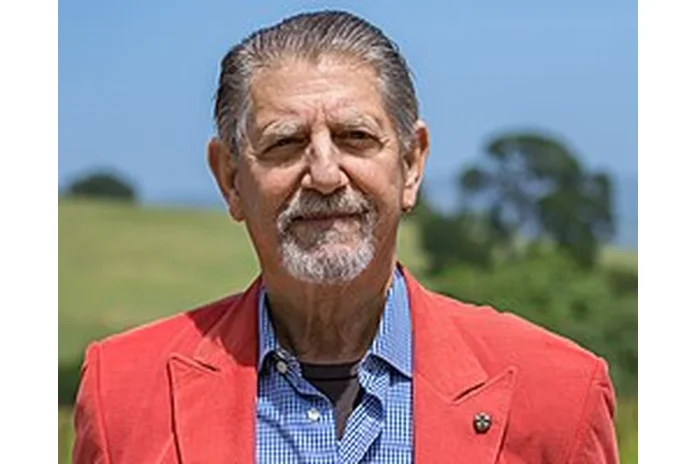
Peter Coyote Bio
Peter Coyote (born Robert Peter Cohon; October 10, 1941) is an American actor, director, screenwriter, author, and narrator whose career spans film, television, theater, and audiobooks. He is known for his performances in E.T. the Extra-Terrestrial (1982), Cross Creek (1983), Jagged Edge (1985), Patch Adams (1998), and Erin Brockovich (2000), as well as for his long collaboration with documentary filmmaker Ken Burns. Coyote is also a renowned narrator, voice artist, and writer, and was a founder of the Diggers, a Haight-Ashbury counterculture collective. He later embraced Zen Buddhism and has narrated numerous documentary series, including The Roosevelts: An Intimate History, for which he won a Primetime Emmy in 2015.
Early Life and Background
Peter Coyote was born Robert Peter Cohon on October 10, 1941, in New York City. He is the son of Ruth (née Fidler) and Morris Cohon, an investment banker. His father was of Sephardic Jewish descent and his mother came from a working-class Ashkenazi Jewish family whose father, trained as a rabbi in Russia, eventually ran a small candy store in the Bronx. Coyote grew up in a highly intellectual and cultural but unreligious family that was active in left-wing politics.
Coyote grew up in Englewood, New Jersey, and graduated from Dwight Morrow High School in 1959. He later spoke of being strongly influenced by Susie Nelson, his family’s African-American housekeeper, saying that he was “half black and half white inside” because of her presence in his life. He is the maternal uncle of librarian Jessamyn West. While studying at Grinnell College in Iowa in 1961, Coyote helped organize a group of twelve students who traveled to Washington, D.C. during the Cuban Missile Crisis in support of President John F. Kennedy’s “peace race,” a delegation that met with National Security Advisor McGeorge Bundy at the White House.
Path to Acting
Upon graduating from Grinnell College with a Bachelor of Arts in English literature in 1964, Coyote moved to the West Coast and began working toward a master’s degree in creative writing at San Francisco State University. He took a short apprenticeship at the San Francisco Actor’s Workshop and joined the San Francisco Mime Troupe, a radical political street theater whose members were arrested for performing in parks without permits. With the Mime Troupe he acted, wrote scripts, and directed productions, including the first cross-country tour of the controversial play The Minstrel Show, Civil Rights in a Cracker Barrel.
From 1967 to 1975, Coyote was a prominent member of the San Francisco Haight-Ashbury counterculture community and a founding member of the Diggers, an anarchist group known for operating anonymously and without money. The Diggers fed hundreds of people each day through their Free Frame of Reference, ran a Free Store, a Free Medical Clinic, and even a short-lived Free Bank, and later evolved into a commune network called the Free Family. During this period, Coyote also lived at the Black Bear Ranch commune in Siskiyou County, California, and later changed his surname from Cohon to Coyote after a transformative experience connected to the journal Coyote’s Journal.
Peter Coyote Career
Early Career (1967–1981)
After years in countercultural and communal life, Coyote was hired in 1975 as an artist under the Comprehensive Employment and Training Act, an experience that led to his appointment to the San Francisco Arts Commission. In 1976, Governor Jerry Brown appointed him to the California Arts Council, where he served until 1983, including three years as Chair. In 1978, Coyote returned to acting at San Francisco’s Magic Theatre, where he was playing the lead in the world premiere of Sam Shepard’s True West when a Hollywood agent approached him.
His screen career began with supporting roles in Die Laughing (1980), Tell Me a Riddle (1980), and Southern Comfort (1981), and he was seriously considered for the role of Indiana Jones in Raiders of the Lost Ark (1981). He played the mysterious scientist “Keys” in Steven Spielberg’s E.T. the Extra-Terrestrial (1982) and took his first starring role in the science fiction adventure Timerider: The Adventure of Lyle Swann (1982). In 1983, he appeared in Martin Ritt’s Cross Creek, and in 1985 he starred in the thriller Jagged Edge.
Breakthrough (1982–2002)
Through the 1980s and 1990s, Coyote built a wide-ranging film career with starring and supporting roles for directors including Roman Polanski (Bitter Moon, 1992), Pedro Almodóvar (Kika, 1993), Diane Kurys (A Man in Love), Jean-Paul Rappeneau (Bon Voyage), and Walter Salles (Exposure). His 1990 guest appearance on the television series Road to Avonlea brought him his first Primetime Emmy Award nomination. He later appeared in major studio productions including Sphere, A Walk to Remember (2002), Femme Fatale (2002), and Steven Soderbergh’s Erin Brockovich (2000), and took lead roles on the television series The 4400 in 2004 and The Inside in 2005.
Coyote was also active in public service and politics, serving on the California Arts Council and writing articles for Mother Jones magazine as a delegate to the 1996 Democratic National Convention. He developed the political television program “The Active Opposition” for Link TV in 2006 and created Outside the Box with Peter Coyote in 2007. His memoir Sleeping Where I Fall, a chronicle of the 1967 to 1975 countercultural period, was published by Counterpoint Press in April 1998 and received a Pushcart Prize for one of its stories, “Carla’s Story,” originally published in Zyzzyva.
Notable Works and Milestones
Beyond his screen acting, Coyote became one of the most recognizable documentary narrators in American public television. He narrated the opening ceremony of the 2002 Winter Olympics, the PBS series The Pacific Century (1992), the National Geographic series Guns, Germs, and Steel, and the 12-hour Ken Burns series on the National Parks. He also narrated more than 15 episodes of the National Geographic Explorer series, the documentary Enron: The Smartest Guys in the Room, and the 17¼-hour Burns and Novick documentary The Vietnam War (2017).
Peter Coyote Award Nominations
Peter Coyote has received a Primetime Emmy Award nomination in addition to his career wins. His verified nominations include a 1990 Primetime Emmy nomination for his guest appearance on the television series Road to Avonlea, recognizing his work as a dramatic actor in episodic television. That nomination marked his first major industry recognition and helped establish his reputation beyond the Bay Area theater and arts scene in which he had worked for more than a decade.
Peter Coyote Awards Won
Peter Coyote has won a Primetime Emmy Award for his documentary narration work, along with other literary and audiobook honors. In 2015, he won the Primetime Emmy Award for Outstanding Narrator for his work on Ken Burns’s documentary miniseries The Roosevelts: An Intimate History. He has also received a Pushcart Prize for his short story “Carla’s Story,” and a gold medal in the 2024 Independent Publisher Book Awards for his narration of the audiobook Trilogy: Three True Stories of Scoundrels and Schemers by Peggy Adler.
Peter Coyote Family
Peter Coyote was born to Morris Cohon, an investment banker of Sephardic Jewish descent, and Ruth Cohon (née Fidler), who came from a working-class Ashkenazi Jewish family. He has noted that his maternal grandfather, trained as a rabbi in Russia, escaped being drafted into the Imperial Russian Army and ran a small candy store in the Bronx. Coyote is the maternal uncle of librarian and writer Jessamyn West, and he has often credited his family and the family’s housekeeper, Susie Nelson, for shaping his early sense of identity and social conscience.
Personal Life
After years of communal living in the Bay Area, Coyote undertook meditation practice in 1975 and became a dedicated practitioner of American Zen Buddhism, moving into the San Francisco Zen Center. He was later ordained a lay priest in the Sōtō tradition and was ordained as a Zen Priest in 2015, an experience he has discussed in his books and lectures. In 2025, he narrated the PBS documentary series The American Revolution, continuing his long collaboration with filmmaker Ken Burns.