
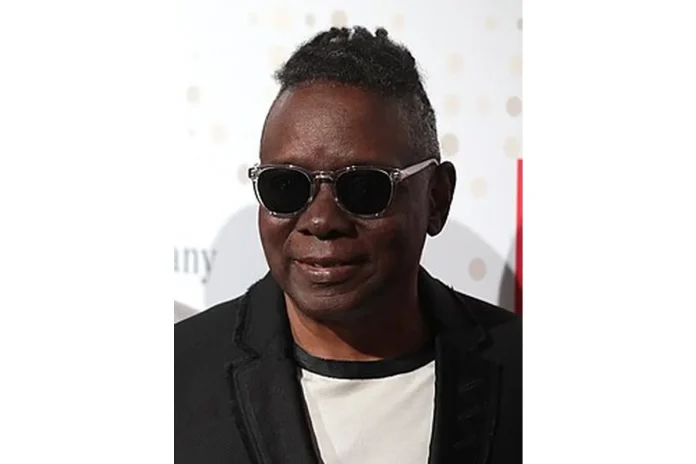
Philip Bailey Bio
Philip James Bailey, born on May 8, 1951, in Denver, Colorado, is an American singer, songwriter, and percussionist whose career has spanned more than five decades. He is best known as one of two lead vocalists of the legendary band Earth, Wind & Fire, alongside founder Maurice White. Renowned for a four-octave vocal range and a distinctive falsetto, Bailey has shaped the sound of contemporary R&B, soul, funk, and jazz while building a respected catalog of solo work. Over the years he has collected multiple Grammy Awards and been inducted into the Rock and Roll Hall of Fame, the Vocal Group Hall of Fame, and the Songwriters Hall of Fame. His influence as a vocalist, percussionist, and songwriter remains significant in popular music.
Early Life and Background
Philip Bailey was born and raised in Denver, Colorado, where he grew up surrounded by the sounds of jazz, gospel, and the Motown sound. He attended Denver’s East High School before continuing his education at the Metropolitan State University of Denver and later the University of Colorado. During his formative years in Denver, Bailey developed his musical interests by performing in a local R&B band called Friends & Love, an experience that helped him sharpen his vocal and percussion skills. His early musical influences included jazz figures such as Miles Davis, John Coltrane, and Max Roach, as well as the Motown artistry of Stevie Wonder and the vocal styles of Sarah Vaughan and Dionne Warwick. These influences shaped his sense of melody, phrasing, and emotional delivery, laying the foundation for his later career.
Path to Music
Bailey’s path to the national stage began in the early 1970s, when his vocal talent caught the attention of Earth, Wind & Fire founder Maurice White. In 1972, while still attending the University of Colorado, Bailey was invited to join the group, marking a turning point in his young career. He soon established himself as a lead vocalist, lending his falsetto to early favorites such as “Devotion,” “Keep Your Head to the Sky,” and “Reasons,” and sharing lead duties with White on signature songs including “Shining Star,” “September,” and “Boogie Wonderland.” The group’s blend of funk, soul, jazz, and African-inspired rhythms gave Bailey a platform to develop his artistry and reach a global audience. By the mid-1990s, when White reduced his touring schedule, Bailey had emerged as the on-stage frontman of Earth, Wind & Fire, a role he continues to hold alongside longtime members Verdine White and Ralph Johnson.
Philip Bailey Career
Early Career (1970-1982)
Bailey’s recording career began in 1970 with Earth, Wind & Fire, and within a few years the band had become a major force in popular music. In addition to his work with the group, he contributed vocals and percussion to recordings by Alphonso Johnson, Ronnie Laws, Stanley Turrentine, and Deniece Williams during the late 1970s. He also produced the debut album of the group that became the Dazz Band and worked as an arranger and guest artist on their follow-up. In 1979, he appeared on Andraé Crouch’s Grammy-winning album I’ll Be Thinking of You, and in 1980 he joined Deniece Williams, Billy Davis, and Marilyn McCoo for the gospel showcase “Jesus At the Roxy” in Los Angeles, an experience that deepened his interest in Christian music.
Breakthrough (1983-1986)
Bailey launched his solo career in 1983 with Continuation on Columbia Records, an album that reached No. 19 on the Billboard Top R&B Albums chart. The single “I Know” climbed to No. 10 on the Billboard Hot R&B Songs chart, and the project was praised by critics at the Boston Globe and the New York Daily News. In 1984, he released Chinese Wall, his biggest commercial success as a solo artist, certified Gold by the RIAA and reaching No. 10 on the Billboard Top R&B/Hip-Hop Albums chart. The album produced the international hit “Easy Lover,” a duet with Phil Collins that topped the UK Singles Chart and reached No. 2 on the Billboard Hot 100. The track earned an MTV Video Music Award for Best Overall Performance in a Video and a Grammy nomination for Best Pop Performance by a Duo or Group With Vocals.
In 1984, Bailey also released his first gospel album, The Wonders of His Love, on Myrrh Records, which reached No. 13 on the Billboard Christian Albums chart and earned a Grammy nomination for Best Inspirational Performance. He followed it in 1986 with Inside Out, a fourth studio album that reached No. 30 on the Billboard Top R&B Albums chart, and with the gospel album Triumph, which won the Grammy for Best Gospel Performance, Male. These years cemented Bailey’s reputation as a versatile artist capable of moving between pop, R&B, and gospel with ease.
Notable Works and Milestones
Bailey’s most recognized solo work remains Chinese Wall, the 1984 album that paired him with Phil Collins and produced the enduring duet “Easy Lover.” He has also built a respected catalog of jazz and gospel recordings, including the Grammy-winning gospel album Triumph and the jazz album Love Will Find A Way, which reached No. 1 on both the Billboard Top Jazz Albums and Contemporary Jazz Albums charts in 2019. His decades-long tenure as a lead voice of Earth, Wind & Fire, including performances at events such as the 2007 World Series, has secured his place among the most influential vocalists of his generation.
Philip Bailey Award Nominations
Across his career, Philip Bailey has earned twenty-one Grammy nominations, reflecting his impact as both a solo artist and a member of Earth, Wind & Fire. His nominations span categories including Best R&B Vocal Performance, Male, Best Pop Performance by a Duo or Group With Vocals, Best Inspirational Performance, Best Gospel Performance, Male, and Best Traditional R&B Performance. Additional recognition has come through nominations at the American Music Awards and a Golden Globe nomination tied to the title song of the 1988 film Twins.
Philip Bailey Awards Won
Bailey has won seven Grammy Awards, including Best Gospel Performance, Male for his 1986 album Triumph and two Grammys for his vocal work on CeeLo Green’s 2010 single “Fool for You,” which won Best Traditional R&B Performance and Best R&B Song. In 1985, “Easy Lover” earned him the MTV Video Music Award for Best Overall Performance in a Video, and in 2020 he was named Soul Act of the Year at the Jazz FM Awards. In May 2008, Berklee College of Music awarded him an honorary Doctorate of Music and invited him to deliver the commencement speech.
Philip Bailey Family
Details about Philip Bailey’s immediate family are not widely documented in the sources available for this profile. Publicly verifiable information about his parents, partners, and children is limited, and this section is intentionally brief to avoid speculation. Bailey’s long-standing ties to Denver, Colorado, where he was born and raised, remain a central part of his personal story.
Personal Life
Philip Bailey continues to be active as a musician, performing with Earth, Wind & Fire and pursuing solo projects rooted in jazz, gospel, and R&B. He has made occasional forays into other media, including a 1995 Chicago staging of the Broadway musical Raisin, based on the play A Raisin in the Sun. In 2007, he sang “God Bless America” during Game 3 of the World Series at Coors Field in Denver, the first World Series game ever held in his hometown. He has also received civic recognition in Colorado, including induction into the Colorado Music Hall of Fame in 2017.