
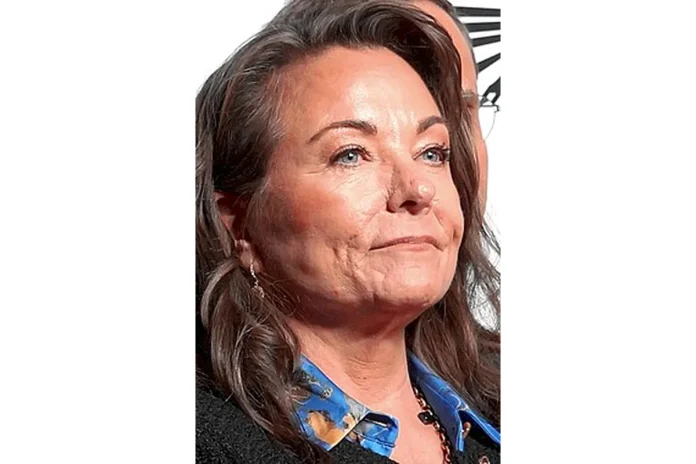
Theresa Russell Bio
Theresa Lynn Russell, born Theresa Lynn Paup on March 20, 1957, is an American actress whose career spans more than four decades across film and television. She first came to attention with a debut role in Elia Kazan’s The Last Tycoon (1976) and quickly built a reputation for portrayals of brooding, troubled, and disturbed characters. Russell is widely recognized for her six collaborations with English director Nicolas Roeg, to whom she was married from 1982 until the early 1990s. Her filmography includes more than fifty features, ranging from mainstream Hollywood productions to experimental and independent cinema.
Early Life and Background
Theresa Lynn Russell was born in San Diego, California, the eldest of three children of Carole Platt and Jerry Russell Paup. Her father served in the United States Navy and was stationed in San Diego at the time of her birth. Both of her parents were natives of Burbank, and one of her grandfathers was a farmer originally from Iowa. Russell’s parents divorced when she was five years old, after which her father moved to Mexico and her mother remarried and relocated the family to Los Angeles County. Russell was raised in Burbank, where her mother had two additional children through the second marriage.
Russell has spoken about growing up in financial difficulty, recalling that her family sometimes relied on food stamps to get by. She described a turbulent relationship with her stepfather and has said that by the age of thirteen she had begun experimenting with recreational drugs. As a teenager, she frequently cared for her younger siblings and developed an interest in acting through regular viewings of classic films on cable television, with film noirs making a particular impression. Her first stage experience came at Burbank High School, where she played the title role in a production of Gypsy.
At fourteen, Russell was approached by a photographer who suggested she try modeling. After insisting that he first meet her mother, she began a working relationship with a fashion photographer who was a friend of the family. Russell dropped out of high school at sixteen and briefly moved to a horse ranch with an older boyfriend before enrolling at the Lee Strasberg Institute in West Hollywood at seventeen. She studied there for approximately three years, training in the method approach to acting associated with Lee Strasberg and the teachings of Stanislavski.
Path to Acting
Through her modeling work, Russell met photographer Peter Douglas, son of actor Kirk Douglas, who introduced her to veteran film producer Sam Spiegel in 1975. Spiegel was preparing a screen adaptation of F. Scott Fitzgerald’s The Last Tycoon, directed by Elia Kazan with a screenplay by Harold Pinter. Spiegel arranged for Russell to audition for the role of Cecilia Brady, the daughter of a studio executive played by Robert Mitchum, and she was cast in the part. The film, which was Kazan’s last feature, marked Russell’s screen debut and earned her early critical notice.
For her screen credit on The Last Tycoon, Russell adopted the surname Russell, the given name of her paternal grandfather, and continued to use it professionally thereafter. The following year, she was cast opposite Dustin Hoffman in Ulu Grosbard’s crime drama Straight Time (1978), playing a troubled young woman who becomes involved with Hoffman’s criminal character. Vincent Canby of The New York Times praised her performance, and the role established her as a striking new screen presence. In 1979, Russell appeared in the CBS miniseries Blind Ambition, portraying Maureen Dean, the wife of White House Counsel John Dean, in a Watergate-era biographical drama that also starred Martin Sheen.
Theresa Russell Career
Early Career (1976–1979)
Russell opened her film career with The Last Tycoon (1976), a Hollywood drama that introduced her to audiences and critics alike. Her second feature, Straight Time (1978), brought her alongside Dustin Hoffman in a critically praised performance that Roger Ebert and Vincent Canby both highlighted as a signal of her talent. The miniseries Blind Ambition followed in 1979 and expanded her visibility on television, allowing her to portray a real-life political figure in a large-scale dramatic production.
During these formative years, Russell developed the screen identity that would carry through her career, taking on difficult characters and earning a reputation for direct, fearless acting. Her early training at the Lee Strasberg Institute shaped her commitment to method techniques, and her work with established directors such as Kazan and Grosbard gave her a strong foundation. By the end of the decade, she was poised to take on more challenging and unconventional projects.
Breakthrough (1980–1987)
Russell’s major breakthrough arrived with Bad Timing (1980), a controversial thriller directed by Nicolas Roeg in which she starred as Milena Flaherty, a young American in Vienna drawn into a destructive relationship with a psychoanalyst played by Art Garfunkel. The film drew strong reactions for its graphic content, but Russell’s performance was widely praised, with Roger Ebert describing it as astonishingly powerful. She and Roeg began a romance during production and married in 1982, after which she became a frequent collaborator and screen muse.
She went on to star in Roeg’s Eureka (1983), playing the covetous daughter of a Klondike prospector portrayed by Gene Hackman, followed by a lead role opposite Bill Murray in John Byrum’s adaptation of The Razor’s Edge (1984). In 1985, she portrayed Marilyn Monroe in Roeg’s experimental alternate-history film Insignificance, earning further critical praise for a performance that Ebert described as built from the ground up. Her commercial breakthrough came with Black Widow (1987), directed by Bob Rafelson, in which she played Catharine Peterson, a serial killer who seduces and murders wealthy men. Co-starring Debra Winger, the neo-noir thriller brought Russell mainstream attention and reinforced her reputation as one of the most committed actresses of her generation.
Notable Works and Milestones
Russell’s signature films include Bad Timing, Eureka, Insignificance, Black Widow, and Kafka, the 1991 Steven Soderbergh black-and-white surrealist feature in which she starred opposite Jeremy Irons. She also appeared in a supporting role as Emma Marko in Sam Raimi’s blockbuster Spider-Man 3 (2007), and earned critical acclaim for her work opposite Ryan Gosling in the 2001 Sundance drama The Believer. Over the course of her career, she received honors such as the Joseph Plateau Award at Film Fest Gent in 2025, recognizing her contribution to cinema.
Theresa Russell Award Nominations
Russell earned recognition across her career for both independent and mainstream projects, with nominations reflecting her range as a performer. Her work in The Believer (2001) contributed to the film receiving the Special Jury Prize for Drama at the 2001 Sundance Film Festival, while her role in the HBO miniseries Empire Falls (2005) was part of a production that received a Golden Globe Award nomination for Best Miniseries or Television Film and a Primetime Emmy Award nomination for Outstanding Miniseries.
Theresa Russell Awards Won
In October 2025, Theresa Russell was honored with the Joseph Plateau Award at Film Fest Gent in Ghent, Belgium, where she also served on the grand jury. The award recognized her overall contribution to cinema and underscored her standing as a distinctive screen actress across more than four decades of work.
| Award | Wins | Year |
|---|---|---|
| Joseph Plateau Award | 1 | 2025 |
Theresa Russell Family
Theresa Lynn Russell was born into a family with roots in California and the Midwest. Her mother, Carole Platt, raised her primarily in Burbank after the divorce from Russell’s father, Jerry Russell Paup, a United States Navy serviceman. Through her mother’s second marriage, Russell gained two half-siblings, and she often took responsibility for her younger brothers and sisters during her teenage years.
Russell married English director Nicolas Roeg on February 12, 1982, in Westminster, London, and the couple had two sons: Statten, born in 1983, and Maximillian, born in 1985. The family lived primarily in Notting Hill, while Russell also kept a residence in Los Angeles. Following her divorce from Roeg in the early 1990s, she returned to California before beginning a long-term relationship with jazz musician Mike Melvoin in 2003 that lasted until his death in 2012.
Personal Life
Russell’s personal life has been closely tied to her artistic work, in particular her marriage and creative partnership with Nicolas Roeg, with whom she shares two sons. After their divorce in the early 1990s, she returned to live in California before establishing a relationship with jazz pianist Mike Melvoin in 2003 that lasted until his death in 2012. She has divided her residences between Notting Hill in London and Los Angeles, and she continues to take on selective film and television projects.