
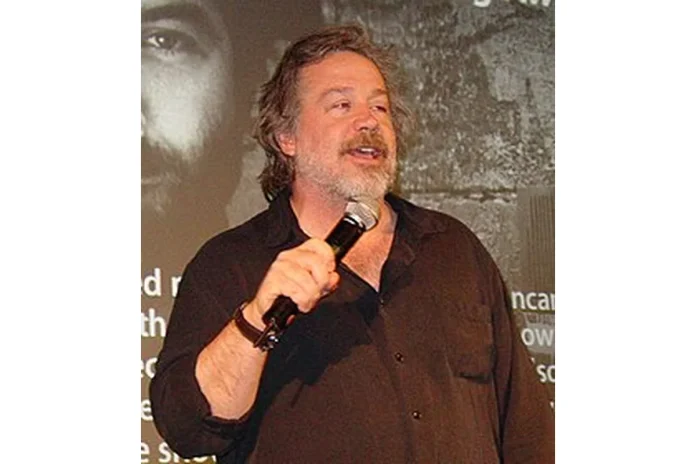
Tom Hulce Bio
Thomas Edward Hulce, known professionally as Tom Hulce, is an American actor and theatre producer born on December 6, 1953, in Detroit, Michigan. He first rose to international attention for his portrayal of Wolfgang Amadeus Mozart in the Academy Award-winning film Amadeus (1984), a role that earned him a nomination for the Academy Award for Best Actor. Over a career that began in 1974, Hulce built a remarkable body of work that spans Broadway, Hollywood, animated film, and television, before shifting his primary focus to producing in the 1990s.
Beyond Amadeus, Hulce is widely recognized for his early comedic turn in Animal House (1978), his role in Parenthood (1989), and his voice performance as Quasimodo in Disney’s The Hunchback of Notre Dame (1996). As a producer, he helped bring several landmark musicals to the stage, including Spring Awakening, which won the Tony Award for Best Musical in 2007.
Early Life and Background
Thomas Edward Hulce was born in Detroit, Michigan, and grew up in the nearby community of Plymouth, the youngest of four children. His mother, Joanna Winkleman, sang briefly with Phil Spitalny’s All-Girl Orchestra, while his father, Raymond Albert Hulce, worked for the Ford Motor Company. Music filled his early years, and as a child Hulce dreamed of becoming a singer, a path he abandoned only after his voice changed during adolescence.
Encouraged by his parents and teachers, the young Hulce discovered a passion for acting and performance. He spent a formative year studying the arts at the Interlochen Arts Academy, an experience that helped sharpen his craft and solidify his ambitions. This early immersion in a disciplined creative environment laid the groundwork for the training he would later pursue at the college level.
Path to Celebrity
After completing his time at Interlochen, Hulce enrolled at Beloit College in Wisconsin, where he continued to develop his theatrical skills. He later transferred to the University of North Carolina School of the Arts, a program known for its rigorous conservatory-style training, although he left the school in 1973 without completing a degree. Despite the unconventional exit, the training he received equipped him with the technical foundation needed to step onto professional stages.
Hulce’s professional debut came in 1974, when he was cast opposite Anthony Hopkins in the Broadway production of Equus, a performance he also brought to Los Angeles. The role established him as a compelling young stage presence and opened the door to a steady stream of theatrical work throughout the remainder of the 1970s. During this period he balanced stage commitments with occasional screen appearances, including his first film role in September 30, 1955 (1977), a drama influenced by the life of James Dean.
Tom Hulce Career
Early Career (1974-1983)
The years following his Broadway debut in Equus were a period of steady growth for Tom Hulce, as he built a reputation through dedicated work in regional and New York theatre. In 1978, he landed his breakthrough screen role as freshman college student Larry “Pinto” Kroger in the hit comedy Animal House, a performance that introduced his energetic style to a wide moviegoing audience. He followed this success with additional early film and television work, including a guest appearance on the acclaimed series St. Elsewhere in 1983.
Throughout this period, Hulce continued to take on demanding stage roles, refining his craft alongside some of the most respected actors of the era. He earned early recognition for his theatre work, which would later serve as a strong foundation for his most celebrated screen performance. By the early 1980s, Hulce had established himself as a versatile performer capable of moving easily between comedy, drama, and the demands of live performance.
Breakthrough (1984-1996)
In 1984, Tom Hulce reached the peak of his acting career when he was cast as Wolfgang Amadeus Mozart in Miloš Forman’s film Amadeus, an adaptation of Peter Shaffer’s stage play. Hulce won the coveted role over a remarkable list of competitors, including David Bowie, Mikhail Baryshnikov, Mark Hamill, and Kenneth Branagh. The performance earned him a nomination for the Academy Award for Best Actor in 1985, making him one of the most talked-about actors of the year, even as the award went to his co-star F. Murray Abraham.
Following the success of Amadeus, Hulce continued to take on a wide range of film roles, including Dominick and Eugene (1988), Parenthood (1989), Fearless (1993), and Mary Shelley’s Frankenstein (1994). In 1990, he received his first Emmy Award nomination for Murder in Mississippi, in which he portrayed the 1960s civil rights activist Michael Schwerner. He later won an Emmy Award in 1996 for his role in the television movie The Heidi Chronicles, further cementing his reputation as a thoughtful and committed dramatic actor.
That same year, Hulce lent his voice to Disney’s animated adaptation of The Hunchback of Notre Dame, providing both the speaking and singing voice of the title character, Quasimodo. The role introduced his work to a new generation of audiences and remains one of his most beloved performances. He also took on a variety of supporting roles in films such as Shadow Man (1988) and The Inner Circle (1991), demonstrating his willingness to explore international and independent projects.
Notable Works and Milestones
Tom Hulce’s signature work remains his portrayal of Mozart in Amadeus, a performance that defined an era of historical cinema and earned him an Academy Award nomination. He has also earned a Tony Award nomination for his role in A Few Good Men on Broadway and won a Primetime Emmy Award for The Heidi Chronicles. His voice work as Quasimodo in The Hunchback of Notre Dame stands as a defining moment in animated film history.
Tom Hulce Award Nominations
Throughout his career, Tom Hulce has earned recognition from many of the most respected institutions in entertainment, including the Academy Awards, the Golden Globe Awards, the Primetime Emmy Awards, and the Tony Awards. His 1985 Academy Award nomination for Best Actor for Amadeus marked one of the defining honors of his acting career. He has also received multiple Golden Globe nominations, an Emmy nomination for Murder in Mississippi in 1990, and a Tony Award nomination for his performance in A Few Good Men.
Tom Hulce Awards Won
Tom Hulce has won several prestigious awards across acting and producing. He received a Primetime Emmy Award in 1996 for Outstanding Supporting Actor in a Miniseries or Movie for The Heidi Chronicles, and in 2007 he won the Tony Award for Best Musical as a lead producer of Spring Awakening. His producing work on Broadway has also brought additional honors, including Drama Desk and Obie recognition for projects such as Talking Heads.
Tom Hulce Family
Tom Hulce was born to Raymond Albert Hulce, who worked for the Ford Motor Company, and Joanna Winkleman, who had earlier sung with Phil Spitalny’s All-Girl Orchestra. He grew up as the youngest of four children in a household that valued both music and steady work. His family’s support for the arts played an important role in his early decision to pursue a career in performance.
Personal Life
In 2008, Tom Hulce publicly identified as gay in an interview with Seattle Gay News, where he also addressed and dispelled long-standing internet rumors that he had once been married to a woman with whom he had fathered a daughter. He largely stepped away from acting in the mid-1990s to focus on stage directing and producing, though he briefly returned to the screen in 2023 to reprise his role as Quasimodo in the Disney short Once Upon a Studio. His later years have been devoted primarily to developing and producing new work for the stage.