
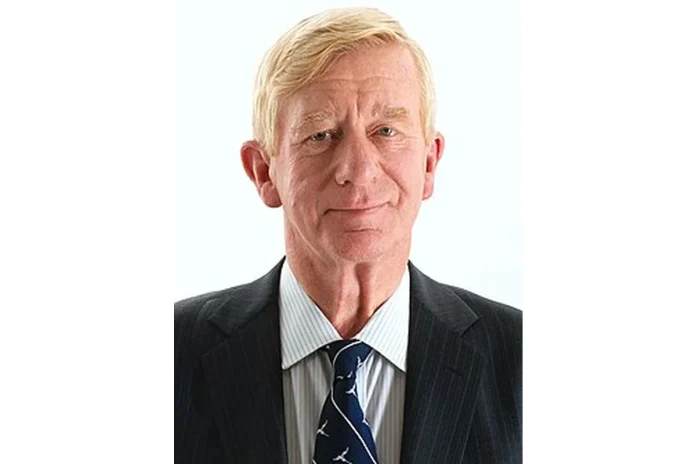
Bill Weld Bio
William Floyd Weld (born July 31, 1945) is an American attorney, businessman, author, and politician who served as the 68th governor of Massachusetts from 1991 to 1997. A Harvard-educated lawyer, he earlier served as United States Attorney for the District of Massachusetts and as Assistant Attorney General for the Justice Department’s Criminal Division. Weld was the Libertarian Party vice-presidential nominee in 2016 and later rejoined the Republican Party to mount a primary challenge to President Donald Trump in 2020.
Over the course of his career, Weld has worked in law, private equity, and lobbying, and he remains active in public affairs. Born in Smithtown, New York, he has been noted for fiscally conservative and socially liberal positions throughout his political career.
Early Life and Background
William Floyd Weld was born in Smithtown, New York, on July 31, 1945. He was primarily raised on a farm in Smithtown, although his family also maintained a residence in Manhattan. His father, David Weld (1911–1972), was an investment banker, and his mother, Mary Nichols Weld (1913–1986), was a descendant of William Floyd, a signatory of the U.S. Declaration of Independence. The Weld family has deep roots at Harvard, with eighteen Welds having attended the university and two Harvard buildings named for the family.
Weld attended Middlesex School in Concord, Massachusetts, before enrolling at Harvard College. He graduated with a Bachelor of Arts, summa cum laude, in classics in 1966 and later studied economics at University College, Oxford. After returning to the United States, he earned a J.D., cum laude, from Harvard Law School in 1970. His maternal grandfather was the ichthyologist and ornithologist John Treadwell Nichols, and his first cousin is the novelist John Nichols.
Path to US Politics
Weld began his legal career as junior counsel on the U.S. House Judiciary Committee’s impeachment inquiry staff during the 1974 impeachment proceedings against President Richard Nixon. He contributed to the groundbreaking "Constitutional Grounds for Presidential Impeachment" report. Among his colleagues on the inquiry staff was Hillary Clinton.
After returning to Massachusetts, Weld ran for state Attorney General in 1978 and lost to Democratic incumbent Francis X. Bellotti. In 1981, on the recommendation of Rudy Giuliani, he was appointed United States Attorney for the District of Massachusetts, launching him into the national political arena.
Bill Weld Career
Early Career (1974–1990)
As U.S. Attorney for Massachusetts, Weld prosecuted some of New England’s largest banks in money-laundering and white-collar cases, and he expanded the public corruption investigation of Boston Mayor Kevin White’s administration, securing more than 20 indictments, guilty pleas, or convictions. He won 109 convictions out of 111 cases, and The Boston Globe said in 1985 that he had been by far the most visible figure in the prosecution of financial institutions.
In 1986, President Reagan promoted Weld to head the Criminal Division of the Justice Department in Washington, where he oversaw 700 employees and supervised all federal prosecutions. He worked on major Reagan-era prosecutions, including the capture of Manuel Noriega on drug trafficking charges. In March 1988, he resigned in protest of improper conduct by Attorney General Edwin Meese. He then joined the law firm Hale and Dorr as a senior partner from 1988 until 1990.
Breakthrough (1990–1994)
In 1990, Weld announced his candidacy for governor of Massachusetts to succeed Michael Dukakis. Although Republicans made up under 14 percent of the state electorate and no Republican had won the governorship since 1970, his liberal stances on social issues made him competitive. He won the Republican primary and defeated John Silber on November 6, 1990, becoming the first Republican governor of Massachusetts since Francis W. Sargent left office in 1975.
As governor, Weld supported adoption rights, gay rights, and the Massachusetts Education Reform Act of 1993, which created the Massachusetts Comprehensive Assessment System and the legal framework for charter schools. He launched a successful effort to privatize many state human services and worked to expand Medicaid access.
Republican Era (1994–Present)
In 1994, Weld won reelection as governor by 921,740 votes in the most lopsided gubernatorial contest in Massachusetts history. In 1996, he was the Republican nominee for the United States Senate in Massachusetts and lost to Democratic incumbent John Kerry by 191,508 votes.
Weld was nominated to become United States Ambassador to Mexico by President Bill Clinton in 1997, but he resigned as governor after Senate Foreign Relations Committee Chairman Jesse Helms refused to hold a hearing on the nomination, effectively blocking it. In 2016, he became the Libertarian Party’s vice-presidential nominee alongside Gary Johnson, and the ticket received nearly 4.5 million votes, the most ever for a Libertarian ticket. In 2019, Weld rejoined the Republican Party and launched a primary challenge to President Donald Trump in 2020, winning one pledged delegate in the Iowa caucuses before suspending his campaign on March 18, 2020.
Notable Events and Milestones
Weld’s signature political moments include his 1990 gubernatorial victory as the first Republican governor of Massachusetts in 15 years, his record 1994 reelection margin, his principled 1988 resignation from the Justice Department in protest of Attorney General Edwin Meese, his 2016 Libertarian vice-presidential run that set a new record for third-party votes, and his 2020 Republican primary challenge against President Donald Trump that produced the first delegate won against an incumbent president since Pat Buchanan in 1992.
Bill Weld Career Wins
Weld’s most notable political victories include his 1990 election as governor of Massachusetts, his 1994 gubernatorial reelection by a record margin, and his 2020 Republican primary win of one pledged delegate in the Iowa caucuses, the first delegate won against an incumbent president since 1992. His 2016 Libertarian ticket with Gary Johnson also set a new party record for total votes received.
Gubernatorial Highlights
Weld was elected the 68th governor of Massachusetts in 1990 and reelected in 1994 by the largest margin of victory in state history, carrying all but five towns including Boston. His tenure featured grade-A and grade-B ratings from the Cato Institute for fiscal stewardship and a sharp drop in state unemployment.
Other Wins and Achievements
Beyond his electoral victories, Weld secured 109 convictions out of 111 cases as U.S. Attorney for Massachusetts, was promoted to head the Justice Department’s Criminal Division, and served as the Libertarian Party vice-presidential nominee on the highest-vote third-party ticket in a generation. He has also been recognized for his pro-choice advocacy, his support for gay rights, and his work on criminal justice and ethics reform.
| Position | Wins | Year |
|---|---|---|
| Governor of Massachusetts | 1 (elected) | 1990 |
| Governor of Massachusetts (Reelection) | 1 (reelected, record margin) | 1994 |
| Iowa Republican Caucus (Delegate) | 1 | 2020 |
Bill Weld Family
Family Background and Lineage
Weld’s father, David Weld (1911–1972), was an investment banker, and his mother, Mary Nichols Weld (1913–1986), was a descendant of Declaration of Independence signatory William Floyd. The Weld family has a deep Harvard connection, with ancestor Edmund Weld among the earliest students in the class of 1650, eighteen family members having attended Harvard, and two Harvard buildings named for the family. His maternal grandfather was ichthyologist and ornithologist John Treadwell Nichols, and his first cousin is novelist John Nichols.
Personal Life
Weld married Susan Roosevelt, a great-granddaughter of President Theodore Roosevelt, on June 7, 1975. The couple had five children: David Minot (born 1976), Ethel Derby (born 1977), Mary Blake (born 1979), Quentin Roosevelt (born 1981), and Frances Wylie (born 1983). They divorced in 2002. Weld’s second wife is writer Leslie Marshall, and they live in Canton, Massachusetts. Weld is an Episcopalian, plays blindfold chess, and is a longtime fan of the Grateful Dead.