
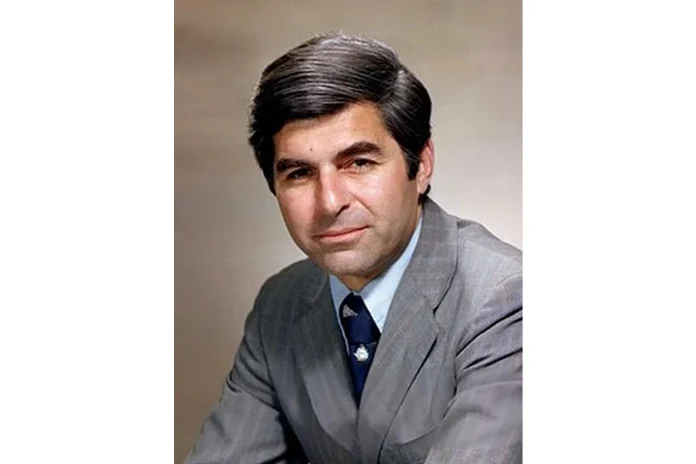
Michael Dukakis Bio
Michael Stanley Dukakis (born November 3, 1933) is an American politician, lawyer, and academic best known for serving as governor of Massachusetts across two separate stretches and for capturing the Democratic nomination for president in 1988. A member of the Democratic Party, he served as the state’s chief executive from 1975 to 1979 and again from 1983 to 1991, a combined tenure that makes him the longest-serving governor in Massachusetts history. Although he lost the general election to Republican George H. W. Bush, Dukakis remains a defining figure in late-twentieth-century American politics.
Born in Brookline, Massachusetts, to Greek immigrants, Dukakis built his career on a foundation of public service, military service, and legal training. After leaving the governorship, he devoted himself to teaching, board service, and advocacy for public transportation and urban policy. He is also a recipient of the Distinguished Eagle Scout Award and has been honored abroad with the Order of Honor (Grand Commander).
Early Life and Background
Michael Stanley Dukakis was born in Brookline, Massachusetts, on November 3, 1933. His father, Panos Dukakis, was a Greek immigrant from Edremit in Turkey whose family originated in the village of Pelopi on the island of Lesbos. Panos settled in Lowell, Massachusetts, in 1912, graduated from Harvard Medical School, and worked as an obstetrician. Dukakis’s mother, Euterpe (née Boukis), was born in Larissa to Aromanian parents and emigrated with her family to Haverhill, Massachusetts, in 1913. The household blended Greek heritage with a strong commitment to education and professional service.
Dukakis grew up alongside an older brother, Stelian, whom he admired as a child. Stelian later suffered a mental breakdown as a teenager and was institutionalized for years before eventually working as a teacher and local official, only to die in 1973 after being struck by a car. Dukakis attended Brookline High School, where he was an honor student and a member of the basketball, baseball, tennis, and cross-country teams. As a 17-year-old senior, he ran the Boston Marathon, an early hint of the discipline that would shape his public life.
He graduated from Swarthmore College in 1955 with a Bachelor of Arts in political science and later earned his Juris Doctor from Harvard Law School in 1960. He is also an Eagle Scout and a recipient of the Distinguished Eagle Scout Award from the Boy Scouts of America.
Path to US Politics
Although Dukakis had been accepted into Harvard Law School, he chose to enlist in the United States Army after college, serving from 1955 to 1957. After basic training at Fort Dix and advanced individual training at Camp Gordon, he was assigned as a radio operator to the 8020th Administrative Unit in Munsan, South Korea, supporting the United Nations delegation of the Military Armistice Commission. He returned from service to complete his law degree at Harvard, where he earned his J.D. in 1960.
Dukakis began his political career as an elected town meeting member in Brookline, the same community where he had grown up. In 1963, he married Katherine “Kitty” Dickson, beginning a long partnership that would remain central to his public life. He then moved into state-level politics, first serving in the Massachusetts House of Representatives and later mounting unsuccessful bids for Attorney General in 1966 and for lieutenant governor in 1970. Those early campaigns and his years in private legal practice at the firm Hill and Barlow prepared him for his first run for the governorship.
Michael Dukakis Career
Early Career (1962–1974)
Dukakis served four terms in the Massachusetts House of Representatives between 1962 and 1970, building a reputation as a reform-minded legislator. In 1966, he ran unsuccessfully for Attorney General of Massachusetts, and in 1970 he was the Democratic nominee for lieutenant governor on a ticket led by Boston mayor Kevin White; the Democratic ticket lost the 1970 gubernatorial election. After his lieutenant governor bid, he returned to the private sector, practicing law and becoming a partner at Hill and Barlow.
Those years in the state legislature and in private practice gave him the political foundation for his first run at the governorship in 1974. Running as a reformer in a period of fiscal crisis, he defeated the incumbent Republican governor, Francis Sargent, while pledging a “lead pipe guarantee” of no new taxes.
Governor of Massachusetts Breakthrough (1974–1979)
During his first term, Dukakis hosted President Gerald Ford and Queen Elizabeth II during their 1976 visits to Boston commemorating the United States bicentennial. He gained public attention for going to work during the Blizzard of 1978, appearing on local television in a sweater to announce emergency bulletins. He is also remembered for his 1977 proclamation exonerating Nicola Sacco and Bartolomeo Vanzetti, two Italian anarchists whose trial had sparked worldwide protests.
His first term, however, was marked by a backlash against high sales and property tax rates, and the state Democratic Party refused to renominate him in 1978, choosing Edward J. King in the primary. His wife Kitty later called the primary defeat “a public death.” Following his first governorship, Dukakis taught at Harvard University’s John F. Kennedy School of Government and published his book State and Cities: The Massachusetts Experience in 1980.
Second and Third Terms (1983–1991)
Four years later, Dukakis defeated Edward J. King in a 1982 rematch and went on to win the general election against John Winthrop Sears, beginning what would become the longest governorship in Massachusetts history. Future U.S. senator and 2004 Democratic presidential nominee John Kerry was elected lieutenant governor on the same ballot, serving in the Dukakis administration from 1983 to 1985.
Dukakis presided over a high-tech boom known as the “Massachusetts Miracle” and earned a reputation as a technocrat. The National Governors Association voted him the most effective governor in 1986. He became known for improvements to Boston’s mass transit system and for riding the subway to work each day. In 1988, he and his economic adviser Rosabeth Moss Kanter wrote Creating the Future: the Massachusetts Comeback and Its Promise for America, examining the state’s economic revival.
1988 Presidential Campaign
Building on his popularity as governor, Dukakis sought the 1988 Democratic presidential nomination and prevailed over a field that included Jesse Jackson, Dick Gephardt, Paul Simon, Gary Hart, Joe Biden, and Al Gore. He won 2,877 of 4,105 delegates and chose U.S. Senator Lloyd Bentsen of Texas as his running mate. He was the first Greek-American and first major-party nominee with ancestry outside Northwestern Europe to receive a major-party presidential nomination.
The general election proved difficult. The campaign was marked by Vice President George H. W. Bush’s attacks on Dukakis’s record, including criticism of a Massachusetts prison furlough program that resulted in the release of convicted murderer Willie Horton, and by a much-ridiculed photograph of Dukakis riding an M1 Abrams tank at a General Dynamics plant in Sterling Heights, Michigan. The image of “Dukakis in the tank” became a lasting symbol of the campaign. Dukakis lost the election, carrying only ten states and the District of Columbia, though he improved on the Democratic performances of 1980 and 1984.
Post-1988 Political Career
After the 1988 defeat, Dukakis announced that he would not seek another term as governor and left office in 1991. He went on to serve on the board of directors of Amtrak and taught political science at Northeastern University, Loyola Marymount University, and the Luskin School of Public Affairs at UCLA, retiring from his teaching roles in 2021 and from Northeastern in 2024. In November 2008, Northeastern named its Center for Urban and Regional Policy after Michael and Kitty Dukakis.
He remained engaged in Democratic politics, supporting the 2012 Senate campaign of Elizabeth Warren, endorsing Hillary Clinton in the 2016 Democratic primaries, backing Setti Warren’s 2018 Massachusetts gubernatorial primary bid, endorsing Elizabeth Warren again in the 2020 primaries, and supporting Joe Biden in the 2020 general election. A 2024 documentary, Dukakis: Recipe for Democracy, premiered on October 22, 2024, chronicling his work as a Northeastern professor.
Michael Dukakis Career Wins
Michael Dukakis’s principal political victories came at the state level, where he won three gubernatorial elections in Massachusetts. His first gubernatorial win came in 1974, when he defeated the incumbent Republican Francis Sargent, and he returned to the governor’s office in 1982 by defeating Edward J. King in the Democratic primary and John Winthrop Sears in the general election.
Massachusetts Governorship Highlights
Dukakis’s 1974 victory established him as a reform-minded leader during a period of fiscal crisis. His 1982 comeback against Edward J. King, after a bruising 1978 primary loss, was widely seen as a remarkable political resurrection and launched the long second tenure that made him the longest-serving governor in Massachusetts history. He also earned recognition from the National Governors Association as the most effective governor in 1986.
Other Wins & Achievements
Beyond his gubernatorial victories, Dukakis captured the 1988 Democratic presidential nomination with 2,877 delegates and led a competitive general-election campaign that carried ten states and the District of Columbia. He has also been honored with the Distinguished Eagle Scout Award and the Order of Honor (Grand Commander).
Michael Dukakis Family
Family Background and Political Lineage
Dukakis is the cousin of Academy Award-winning actress Olympia Dukakis. He had an older brother, Stelian Dukakis, who struggled with mental illness, briefly worked as a teacher and local official, and died in 1973 after being struck by a car. Dukakis’s parents, Panos and Euterpe (née Boukis) Dukakis, were Greek immigrants whose working-class story became a recurring theme in his political identity.
Personal Life
Dukakis married Katherine “Kitty” Dickson in 1963, and the couple remained together for 61 years until her death on March 21, 2025. Their first child together, a daughter, died from anencephaly soon after being born. They later had two daughters, Andrea and Kara. Dukakis also adopted Kitty’s son, John Dukakis (born 1958), from her previous marriage to Phoenix businessman John Chaffetz. The family primarily lived in Brookline, Massachusetts, while also maintaining a home in Los Angeles during his UCLA teaching career.