
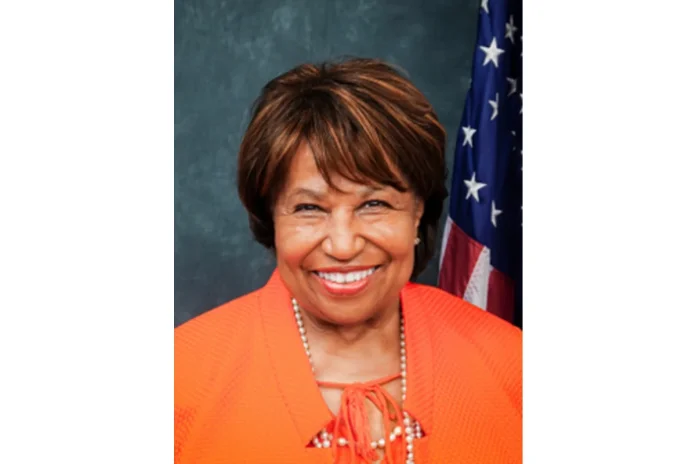
Carol Moseley Braun Bio
Carol Elizabeth Moseley Braun, born on 16 August 1947 in Chicago, Illinois, is an American diplomat, politician, and lawyer whose career has spanned more than five decades in public service, law, business, and education. She represented Illinois in the United States Senate from 1993 to 1999, becoming the first African American woman elected to the Senate, the first African American senator from the Democratic Party, and the first woman senator from Illinois. After leaving the Senate, she served as the United States Ambassador to New Zealand and Samoa, ran for the Democratic presidential nomination in 2004, campaigned for mayor of Chicago in 2011, and later chaired the United States African Development Foundation beginning in 2024.
A University of Chicago Law School graduate, Moseley Braun has built a reputation as a trailblazer in American politics. Her career has included tenures in the Illinois General Assembly, county government, federal office, the diplomatic corps, the private sector, and academia. She is also the author of an upcoming memoir, Trailblazer: Perseverance in Life and Politics, scheduled for publication in 2026.
Early Life and Background
Carol Elizabeth Moseley was born in Chicago, Illinois, to Joseph J. Moseley, a Chicago police officer and jail guard, and Edna A. (Davie) Moseley, a medical technician. Both of her parents were Catholic, and she was raised in the faith. The family lived in a segregated middle-class neighborhood on the South Side of Chicago, where she attended Ruggles School for elementary school. She later attended Parker High School in Chicago, which is now the site of Paul Robeson High School.
Her parents divorced when she was in her teens, after which she lived with her grandmother. Despite the family disruption, Moseley continued her education and eventually pursued a path toward public service and the law. Her early exposure to civic life in Chicago and the challenges of a changing city helped shape her future interest in politics and government.
Path to U.S. Politics
Moseley began her undergraduate studies at the University of Illinois at Urbana–Champaign but dropped out after four months. She then majored in political science at the University of Illinois at Chicago, graduating in 1969. She went on to earn a J.D. degree from the University of Chicago Law School in 1972, where she met her future husband, Michael Braun.
From 1973 to 1977, she worked as a prosecutor in the United States Attorney’s office in Chicago. As an Assistant United States Attorney, she focused on civil and appellate law, and her work in housing, health policy, and environmental law earned her the Attorney General’s Special Achievement Award. After the birth of her son, she left government service briefly before being persuaded to run for the Illinois state legislature, launching what would become a landmark political career.
Carol Moseley Braun Career
Early Career (1978–1992)
Moseley Braun was first elected to public office in 1978, winning a seat in the Illinois House of Representatives. She became the first African American woman to serve as assistant majority leader in that body and gained a reputation as a champion for liberal social causes. In 1984, she proposed a moratorium on the application of the death penalty in Illinois. She also successfully sued her own party and the state of Illinois on behalf of African American and Hispanic citizens in the landmark reapportionment case Crosby v. State Board of Elections. When she left the state legislature, her colleagues honored her in a resolution as the conscience of the House.
In 1988, she was elected Cook County Recorder of Deeds, a post she held for four years. Her tenure in county government gave her administrative experience and a stronger political base on the South Side of Chicago, setting the stage for a historic run for federal office.
Breakthrough (1992–1998)
Angered by incumbent Democratic Senator Alan Dixon’s vote to confirm Clarence Thomas despite accusations of sexual harassment from Anita Hill, Moseley Braun challenged Dixon in the 1992 Democratic primary. Backed by a coalition from the Hyde Park neighborhood of Chicago, and with help from the negative ads run by fellow Democratic candidate Albert Hofeld, she won the primary. On 3 November 1992, she became the first African American woman elected to the United States Senate, defeating Republican Richard S. Williamson.
During her single Senate term, Moseley Braun earned distinction on both social and economic issues. She was strongly pro-choice, voting against the ban on partial-birth abortions and restrictions on abortion funding at military bases. She voted against the death penalty, supported gun control measures, and was one of only fourteen senators to vote against the Defense of Marriage Act. On economic matters, she supported the 1993 budget package, NAFTA, and the Private Securities Litigation Reform Act, even as she voted against the 1996 welfare reform laws. In 1993, she convinced the Senate Judiciary Committee to reject the renewal of a design patent held by the United Daughters of the Confederacy because it included the Confederate flag, threatening to filibuster the legislation until the chamber froze over. She was also the first woman to serve on the Senate Finance Committee.
Moseley Braun was defeated for re-election in 1998 by Republican Peter Fitzgerald, ending her time in the Senate after a single term that left an outsized mark on American political history.
Democratic Party Era (1999–Present)
On 8 October 1999, President Bill Clinton nominated Moseley Braun to be the United States Ambassador to New Zealand and Samoa. The Senate confirmed her on 10 November 1999 in a 96–2 vote, and she served in that role until 2001. After returning to the United States, she founded an organic products company known as Good Food Organics in 2005, the parent company of Ambassador Organics, which later became defunct.
In 2003, Moseley Braun launched a campaign for the Democratic presidential nomination, formally announcing her candidacy at the University of Chicago Law School. Her campaign struggled with fundraising, ultimately raising just under 600,000 dollars, and she withdrew from the race in January 2004, endorsing Howard Dean. In 2010, she announced a run for mayor of Chicago to succeed Richard M. Daley. She finished fourth in a field of six candidates in 2011, losing to Rahm Emanuel. In November 2016, she became a visiting professor of political science at Northwestern University. In January 2023, President Joe Biden nominated her to be a member and chair of the board of directors of the United States African Development Foundation. The Senate confirmed the nomination on 8 March 2024, and she was sworn in as board member and chair in April 2024, with her term set to run until 22 September 2029.
Notable Events and Milestones
Among her most celebrated achievements, Moseley Braun was the first African American woman elected to the United States Senate, the first African American senator from the Democratic Party, and the first woman senator from Illinois. In 1993, she played a key role in pressuring the Senate to drop its informal ban on women wearing pants on the chamber floor, alongside Senator Barbara Mikulski. She later chaired the United States African Development Foundation and was elected Board Chair of the DuSable Museum in Chicago in April 2025.
Carol Moseley Braun Career Wins
Carol Elizabeth Moseley Braun has compiled a long record of political firsts and trailblazing achievements across local, state, national, and international public service. Her victories include elections to the Illinois House of Representatives, the Cook County Recorder of Deeds office, the United States Senate, and major Democratic primaries.
Electoral Highlights
Moseley Braun won her first election to the Illinois House of Representatives in 1978 and served in that body for a decade. In 1988, she won election as Cook County Recorder of Deeds. Her most historic victory came on 3 November 1992, when she defeated Republican Richard S. Williamson to become the first African American woman elected to the United States Senate. She also won the 1992 Democratic primary, defeating incumbent Senator Alan J. Dixon.
Other Wins and Achievements
Beyond her electoral victories, Moseley Braun earned the Attorney General’s Special Achievement Award for her work as a federal prosecutor. She was also confirmed by the United States Senate in a 96–2 vote to serve as the United States Ambassador to New Zealand and Samoa. Her memoir, Trailblazer: Perseverance in Life and Politics, is scheduled to be published by Hanover Square Press on 21 January 2026.
Carol Moseley Braun Family
Family Background and Public Service Lineage
Carol Elizabeth Moseley Braun was born to Joseph J. Moseley, a Chicago police officer and jail guard, and Edna A. (Davie) Moseley, a medical technician. Both parents were Catholic, and she was raised in the faith on the South Side of Chicago. Her parents’ public service and commitment to family helped shape her own sense of duty and her later path into law and politics.
Personal Life
In 1973, Moseley married Michael Braun, whom she had met at the University of Chicago Law School. The couple had one son, Matthew, born in 1977. Their marriage ended in divorce in 1986. She has remained active in public life in Chicago, including her election as Board Chair of the DuSable Museum in April 2025.