
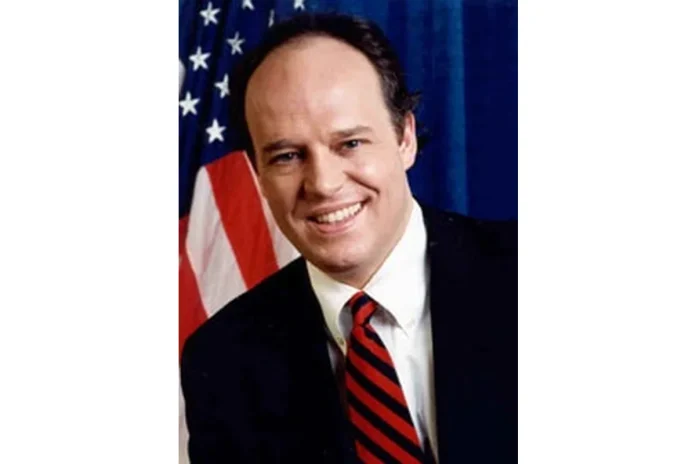
Peter Fitzgerald Bio
Peter Gosselin Fitzgerald (born October 20, 1960) is a retired American lawyer, politician, and banker who served as a United States Senator from Illinois from 1999 to 2005. A member of the Republican Party, he became the first Republican in twenty years to win a U.S. Senate race in Illinois when he defeated Democratic incumbent Carol Moseley Braun in 1998. Known as a maverick willing to break with party leadership, Fitzgerald pressed for independent investigations into Illinois corruption, took prominent stands on federal spending, and opposed drilling in the Arctic National Wildlife Refuge.
After leaving the Senate, Fitzgerald moved to McLean, Virginia, founded Chain Bridge Bank in 2007, and has remained active on civic boards. The son of banking magnate Gerald Francis Fitzgerald, he built a career that spanned law, state legislature, federal office, and community banking.
Early Life and Background
Peter Gosselin Fitzgerald was born on October 20, 1960, in Elgin, Illinois, one of five children of Gerald Francis Fitzgerald and Marjorie Gosselin Fitzgerald. He spent most of his childhood in Inverness, a northwestern suburb of Chicago, where his family was deeply rooted in the local community. Growing up in a family with a long history in commercial banking, Fitzgerald was exposed early to the world of finance and public service, lessons that would shape his later career.
He graduated from Portsmouth Abbey School, a Catholic boarding school in Rhode Island, in 1978, and went on to earn a Bachelor of Arts degree from Dartmouth College in 1982. As a Rotary Scholar, he completed postgraduate studies at Aristotelian University in Greece, an experience that broadened his perspective before he returned to the United States to pursue law. He earned his Juris Doctor from the University of Michigan in 1986, preparing him for a legal career that would eventually lead into politics.
His father, Gerald Francis Fitzgerald, built Suburban Bancorp, a chain of suburban banks around the Chicago suburbs, and sold it in 1994 to a subsidiary of the Bank of Montreal for $246 million. This family background in banking gave Peter Fitzgerald a strong grounding in financial matters that would later influence his policy work in the Senate.
Path to US Politics
Fitzgerald’s first attempt at elected office came in 1988, when he ran for the Illinois House of Representatives but lost the Republican primary to James M. Kirkland by 1.15%. Undeterred, he challenged long-time incumbent Republican Congressman Phil Crane in the 1994 Republican primary for Illinois’ 8th congressional district, losing 40% to 33% in a multi-candidate field. These early losses did not dim his ambition, and they helped him build name recognition across the state.
In 1992, Fitzgerald won election to the Illinois State Senate, where he served until 1998. He joined a group of conservative state senators elected that year who frequently challenged the leadership of the Illinois Republican Party. The group, which became known as the “Fab Five,” also included Steve Rauschenberger, Dave Syverson, Patrick O’Malley, and Chris Lauzen. This early record of independence foreshadowed his later reputation as a Republican willing to break with party leadership.
Peter Fitzgerald Career
Early Career (1992–1998)
During his six years in the Illinois State Senate, Fitzgerald established himself as a fiscal conservative and an independent voice within his party. He built relationships with voters across suburban Chicago and northern Illinois, focusing on issues such as taxes, government spending, and ethics in public life. His willingness to challenge entrenched party leaders earned him both loyal supporters and determined critics.
His experience in Springfield gave him the political foundation to mount a statewide campaign. By the time he announced his intention to challenge U.S. Senator Carol Moseley Braun in 1998, Fitzgerald had spent nearly a decade in elected office and had become a recognized figure in Illinois politics.
1998 Senatorial Breakthrough
Fitzgerald entered the 1998 Republican primary against Illinois Comptroller Loleta Didrickson, who had the support of the state Republican Party, Governor Jim Edgar, and former presidential nominee Bob Dole. In a hard-fought primary, Fitzgerald narrowly defeated the establishment candidate to win the nomination, signaling his independence from the party establishment.
During the general election, Fitzgerald drew support from Republicans and Independents while also drawing criticism from segments of the party he had alienated during the primary. Moseley Braun, meanwhile, was backed by prominent Democrats including First Lady Hillary Clinton and U.S. Congressman Luis V. Gutierrez. Final polling had the candidates running even, but Fitzgerald ultimately defeated Moseley Braun by a 2.9% margin, becoming the first Republican in Illinois to win a U.S. Senate race in twenty years. He was also the only Republican challenger in the country to defeat an incumbent Democratic senator in the 1998 cycle.
U.S. Senate Era (1999–2005)
Fitzgerald had two major moments in the national spotlight during his Senate tenure. The first came in 2000, when he filibustered a large federal spending bill because it included funds for the Lincoln Presidential Library in Springfield. He accused Republican Governor George Ryan of avoiding competitive bidding to direct money to political allies, famously declaring that he wanted Illinois to get “a $150 million library, not a $50 million library that just happens to cost $150 million.” His second major moment came after the September 11, 2001 terrorist attacks, when he stood alone against a massive airline bailout measure, delivering a speech titled “Who will bail out the American taxpayer.” The bill passed 96–1.
On policy, Fitzgerald was staunchly conservative on issues such as opposition to abortion, gay marriage, and taxes, but he broke with many conservatives on environmental issues, consistently opposing drilling in the Arctic National Wildlife Refuge. He also supported “reasonable” gun control, immigration reform, and the McCain-Feingold campaign finance reform legislation. Throughout his tenure, he battled with the state Republican Party leadership, insisting on the appointment of an out-of-state U.S. Attorney, Patrick Fitzgerald, to investigate corruption in Illinois. Several indictments followed, including that of former Republican Governor George Ryan and, years later, Democratic Governor Rod Blagojevich.
Notable Events and Milestones
When the Republican establishment made clear it would not support him for reelection, Fitzgerald announced his retirement. Republicans nominated businessman Jack Ryan, who later withdrew from the race under pressure from the Illinois Republican Party. Just 86 days before the election, the party drafted Maryland native Alan Keyes as the nominee, and he was defeated by Barack Obama. During his final months in office, Fox News published an op-ed titled “Retiring Senator Stood Up for Principles.”
Peter Fitzgerald Family
Family Background and Public Service
Fitzgerald comes from a family with deep roots in commercial banking. His father, Gerald Francis Fitzgerald, built Suburban Bancorp into a chain of suburban banks around Chicago, which the family sold in 1994. The Fitzgerald family has been continuously involved in commercial banking since the mid-1940s, a legacy that shaped Peter’s later decision to enter the financial sector after politics.
Personal Life
Peter Fitzgerald is married to Nina Fitzgerald. After retiring from the Senate in 2005, the couple moved to McLean, Virginia, where he founded Chain Bridge Bank in 2007 and has served as its Chairman. He also serves on the board of trustees of the National Constitution Center in Philadelphia, a museum dedicated to the U.S. Constitution.