

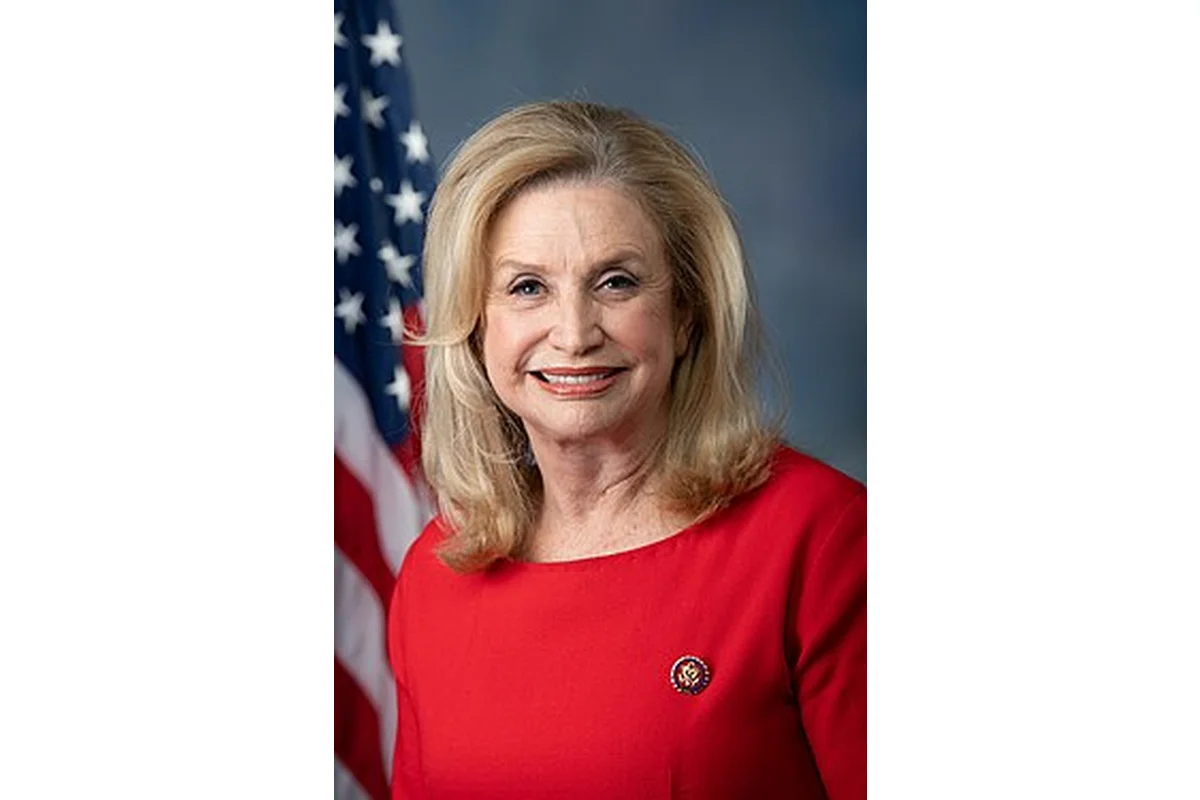
Carolyn Maloney Bio
Carolyn Jane Maloney (née Bosher) is an American politician and longtime Democratic member of Congress who represented parts of New York City in the U.S. House of Representatives for three decades. Born on February 19, 1946, in Greensboro, North Carolina, she built a career around consumer protection, women’s rights, government oversight, and post-9/11 health care for first responders. She is widely recognized as the author of the Credit CARD Act of 2009 and as a driving force behind the James Zadroga 9/11 Health and Compensation Act.
Maloney also made history as the first woman to chair the Joint Economic Committee and the House Committee on Oversight and Reform. After New York redistricted her Manhattan-based seat in 2022, she lost a Democratic primary to fellow longtime Representative Jerry Nadler, ending her congressional career. She is also a member of the Junior League of New York and has been honored for her public service by government watchdog and civic organizations.
Early Life and Background
Carolyn Jane Bosher was born in Greensboro, North Carolina, on February 19, 1946. She grew up in the same state and attended Greensboro College, where she earned her Bachelor of Arts degree. Her Southern upbringing and her college years in North Carolina shaped her early interest in civic life and public service.
After graduating from Greensboro College, Maloney visited New York City in 1970 and decided to make the city her permanent home. For several years she worked as a teacher and an administrator for the New York City Board of Education, gaining firsthand experience with urban public systems and the families they served. In 1976, she married Clifton Maloney, an investment banker, and the couple settled in Manhattan.
Her transition into government work began in 1977, when she joined the New York State Legislature. Over the next several years, she held senior staff positions in both the State Assembly and the State Senate, learning the inner workings of state government. Those staff years gave her a practical foundation in policy drafting, constituent service, and legislative strategy that would shape her future career in elected office.
Path to US Politics
Maloney’s first successful run for elected office came in 1982, when she won a seat on the New York City Council. She defeated incumbent Robert Rodriguez in a heavily Spanish-speaking district based in East Harlem and parts of the South Bronx, and she served on the Council for ten years. During that time, she became the first chair of the Committee on Contracts, where she investigated city contracting practices in areas such as sludge disposal. She also authored the legislation that created the city’s Vendex program, a computerized system for tracking information about city contracts and vendors.
As a Council member, Maloney introduced the first measure in New York City to recognize domestic partnerships, including those of same-sex couples, well before such recognition became common in American politics. She was also the first person to give birth while serving on the Council and the first to offer a comprehensive package of legislation to expand access to affordable day care.
In 1992, Maloney ran for Congress in the newly redrawn 14th congressional district, which combined the historically Republican Upper East Side with Long Island City, parts of the Upper West Side, and a sliver of Brooklyn. She won with 51 percent of the vote, defeating the Republican incumbent’s allies and benefiting from Bill Clinton’s strong showing in the district. Her victory launched a congressional career that would last more than three decades.
Carolyn Maloney Career
Early Career (1982-1992)
Maloney’s early political career was rooted in the New York City Council, where she represented a diverse East Harlem and South Bronx district from 1982 to 1992. She quickly earned a reputation for investigative work, chairing the Committee on Contracts and shining a light on questionable city deals. Her work on the Vendex system was a notable early achievement in government transparency at the municipal level.
She also used her Council tenure to advance social legislation, including early domestic partnership recognition and expanded day-care access. These efforts gave her a record of accomplishment on consumer protection, women’s issues, and government reform that she would carry into her congressional career.
Breakthrough (1992-2008)
Maloney’s first major congressional breakthrough came in 1992, when she won the newly drawn 14th district and became the first woman to represent New York’s 7th Council district in Congress. In 1994, she turned back a challenge from Republican City Councilman Charles Millard, the last well-financed Republican to mount a serious race in the district. Her hold on the seat grew more comfortable in later cycles, with her 2012 victory margin exceeding 120,000 votes against her Republican challenger.
During this period, Maloney became known for prolific legislative work. A 2014 New York Daily News story noted that she had proposed more legislation than any other House member, and she led passage of major bipartisan bills, including the Debbie Smith Act, which cleared the national backlog of untested rape kits, and the Violence Against Women Act reauthorization of 2013. She also authored a measure providing Medicare coverage for annual mammograms that was included in the Fiscal Year 1998 federal budget.
After the September 11, 2001 attacks, Maloney emerged as one of Congress’s strongest advocates for New York City’s recovery. She pushed for federal aid to first responders and co-founded the bipartisan House 9/11 Commission Caucus. Her persistence helped lead to the enactment of reforms to U.S. intelligence agencies and the passage of the James Zadroga 9/11 Health and Compensation Act, which President Barack Obama signed into law in 2010. That law provided $4.3 billion in federal funds for 9/11 responders and survivors.
Democratic Party Era (2009-2022)
From 2009 to 2011, Maloney chaired the Joint Economic Committee, becoming the first woman to hold that position. While chairing the Subcommittee on Financial Institutions and Consumer Credit, she authored the Credit Cardholders’ Bill of Rights, also known as the Credit CARD Act of 2009, which President Obama signed into law in a Rose Garden ceremony she attended on May 22, 2009. A 2014 Social Science Research Network study estimated that the law has saved consumers $11.9 billion per year.
On October 17, 2019, Maloney became the first woman to chair the House Committee on Oversight and Reform following the death of Representative Elijah Cummings, and she was formally chosen to succeed him on November 20, 2019. In 2021, the Center for Effective Lawmaking ranked her the third-most effective lawmaker in the House, and in 2019 GovTrack had ranked her the top legislative leader in the chamber. As chair, she held hearings on gun manufacturer practices and called for federal investigations of social media platforms.
Throughout this era, Maloney also championed the creation of a Smithsonian American Women’s History Museum on the National Mall, a bill that passed and was signed into law in 2020. She served as chief House sponsor of the Equal Rights Amendment and continued to lead the fight to extend 9/11 health programs, securing $8.5 billion in funding in 2015 that extended monitoring and health insurance coverage for 75 years. In 2022, after redistricting merged her district with that of Representative Jerry Nadler, she lost the Democratic primary by roughly thirty points, ending her congressional career.
Notable Events and Milestones
One of Maloney’s signature achievements was the passage of the $10.2 billion Never Forget the Heroes Act in 2019, which made the World Trade Center Health Program and the September 11 Victim Compensation Fund permanent, with authorization extending until 2090 and 2092, respectively. She was also the first member of Congress to wear a burqa on the House floor, doing so in 2001 in a speech supporting Afghan women’s rights, an act that drew both praise and criticism. In 2010, she received the Good Government Award from the Project On Government Oversight, and in 2018, she was honored with the Mary Harriman Award from the Junior League of New York.
Carolyn Maloney Career Wins
Maloney’s career wins include numerous congressional election victories and major legislative accomplishments. She won her first congressional race in 1992 and went on to win reelection in nearly every cycle, with her strongest performances including an 80.9 percent victory in 2012 and an 83.2 percent win in 2016. She also defeated progressive primary challengers in 2018 and 2020, demonstrating consistent support within the Democratic base.
Congressional Election Highlights
Maloney’s first congressional win came in 1992, when she captured 51 percent of the vote in a competitive open-seat race. She went on to defeat well-funded opponents across multiple cycles, including hedge fund lawyer Reshma Saujani in 2010, whom she beat by 62 percentage points, and progressive challenger Suraj Patel in 2018, when she won with 59.6 percent of the primary vote. In 2016 and 2020, she again fended off primary challengers before going on to win her general election races with more than 80 percent of the vote.
Her most recent general election win came in 2020, and her final race was the 2022 Democratic primary loss to Jerry Nadler after redistricting combined the two longtime members’ districts.
Other Wins and Achievements
Beyond her election victories, Maloney’s legislative wins include the Credit CARD Act of 2009, the James Zadroga 9/11 Health and Compensation Act and its 2015 extension, the Debbie Smith Act, and the law establishing the Smithsonian American Women’s History Museum. She also secured billions of dollars in federal funding for New York mass transit projects and was hailed as a champion of the Second Avenue Subway. Her 2010 Good Government Award and 2018 Mary Harriman Award round out a record of recognition from both government watchdogs and civic organizations.
Carolyn Maloney Family
Family Background and Personal Life
Carolyn Jane Maloney was born Carolyn Jane Bosher in Greensboro, North Carolina. She married Clifton Maloney, an investment banker, in 1976, and the couple had two daughters. The family made their home in New York City, where Maloney had settled after visiting in 1970.
Clifton Maloney died in 2009 during a climbing expedition on Cho Oyu, the world’s sixth-tallest peak, in Tibet. He was an experienced mountaineer. Their daughter Virginia is one of two children Maloney raised with her husband.
Personal Life
Maloney resides in New York City. Outside of politics, she is a member of the Junior League of New York and serves on the board of the Michael Stern Parkinson’s Research Foundation. She has long been an advocate for women’s health, victims’ rights, and Parkinson’s disease research, reflecting a personal commitment to many of the causes she championed in Congress.