
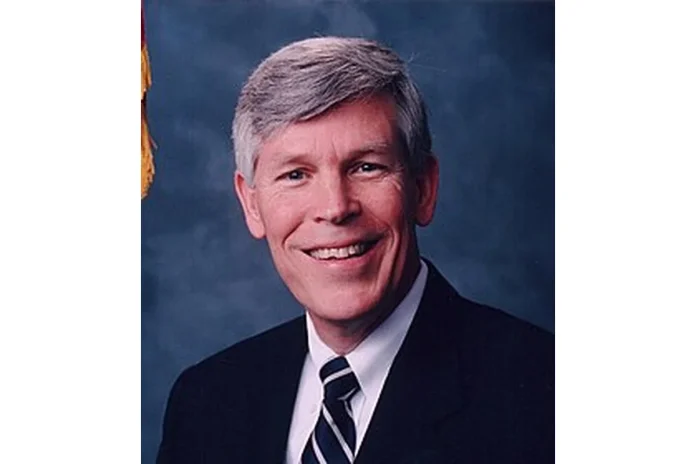
Connie Mack III Bio
Cornelius Alexander McGillicuddy III, widely known as Connie Mack III, is an American politician who built a long career in United States national politics as a member of the Republican Party. Born in Philadelphia, Pennsylvania, on 29 October 1940, he served in the U.S. House of Representatives for Florida’s 13th congressional district from 1983 to 1989 and then represented Florida in the United States Senate from 1989 to 2001. During his time in the Senate, he chaired the Senate Republican Conference from 1997 to 2001 and was twice mentioned as a possible Republican vice-presidential nominee, first in 1996 and again in 2000.
Throughout his career, Mack focused on health-care policy, increased biomedical research funding, Medicare coverage for clinical trials, and reform of the U.S. Food and Drug Administration. A cancer survivor, he became a leading voice in Congress for cancer research and early detection. He is the grandson of Connie Mack, the legendary owner and manager of baseball’s Philadelphia Athletics and a member of the Baseball Hall of Fame, and his family was once regarded as one of the major political dynasties in the United States.
Early Life and Background
Connie Mack III was born Cornelius Alexander McGillicuddy III in Philadelphia, Pennsylvania, in 1940, the son of Cornelius Alexander McGillicuddy Jr. and Susan (née Sheppard) McGillicuddy. His father’s family were Irish immigrants, while his mother came from a distinguished Texas political family. His maternal grandfather was Morris Sheppard, a United States Senator and Representative from Texas, and his maternal step-grandfather was Tom Connally, who also served as a United States Senator from Texas. Mack’s maternal great-grandfather, John Levi Sheppard, served as a U.S. Representative from Texas.
His paternal grandfather was Connie Mack (1862–1956), the former owner and manager of baseball’s Philadelphia Athletics and a member of the Baseball Hall of Fame, who was the source of his popular nickname. Growing up in this environment, Mack was exposed early to both public service and the world of professional sports, influences that would shape his later interests in public policy and political life.
Path to US Politics
Mack graduated from the University of Florida with a Bachelor of Business Administration degree in 1966. While there, he joined the Sigma Alpha Epsilon fraternity and Florida Blue Key, an early sign of his growing interest in leadership and public life. After college, he eventually settled in Florida, where the political climate along the Gulf Coast offered new opportunities for a candidate with his family name and political connections.
His entry into electoral politics came in 1982, when he ran in the Republican primary for Florida’s newly created 13th congressional district, which stretched along the Gulf Coast from Sarasota to Naples. Mack led a crowded four-way Republican primary with 28 percent of the vote and then won a runoff election in October against State Representative Ted Ewing by a margin of 58 percent to 42 percent. In the November general election, he won with 65 percent of the vote, beginning a steady rise in Florida and national Republican politics.
Connie Mack III Career
Early Career (1983–1988)
After winning the 13th congressional district in 1982, Connie Mack III took office in the U.S. House of Representatives in 1983. He quickly established himself as a reliable conservative voice for the Gulf Coast region, working on health-care policy, fiscal matters, tax-code changes, and public housing reform during his three House terms.
His standing among Florida voters grew steadily. In 1984, he won re-election unopposed, and in 1986 he was returned to office with 75 percent of the vote, a strong mandate that set the stage for his move to the U.S. Senate.
Breakthrough (1988–2000)
In 1988, Mack decided to run for the United States Senate after incumbent Democratic Senator Lawton Chiles announced his retirement. He won the Republican primary with 62 percent of the vote against Robert Merkle and went on to defeat Democratic U.S. Congressman Buddy MacKay in the general election with just 50 percent of the vote, narrowly capturing the seat.
His 1994 re-election campaign became one of the most decisive of his career. He defeated Democratic attorney Hugh Rodham, the brother of Hillary Clinton, by a margin of 71 percent to 29 percent, winning every county in the state. This victory made him the only Republican senator in Florida history to be elected to more than one term, a record later matched by Marco Rubio in 2016.
Within the Senate, Mack rose to become chairman of the Senate Republican Conference from 1997 to 2001, one of the highest-ranking positions in the Senate Republican leadership. During the same period, he was twice mentioned as a potential Republican vice-presidential nominee, first by Bob Dole in 1996 and then by George W. Bush in 2000. His legislative work centered on health-care and research issues, including leading a bipartisan effort to double funding for the National Institutes of Health, securing Medicare coverage for clinical trials, and strengthening the U.S. Food and Drug Administration. He was also a leading Republican advocate of the Women’s Health Initiative.
Republican Era (1983–2001)
Across nearly two decades in Congress, Mack remained a consistent voice for conservative principles and health-care reform. He retired from the Senate in 2000, and Democrat Bill Nelson, the Florida State Treasurer and a former U.S. Representative, won the open seat. Mack’s son, U.S. Congressman Connie Mack IV, later ran unsuccessfully against Nelson in 2012, continuing the family’s political involvement at a high level.
Notable Events and Milestones
One of the defining moments of Mack’s career was his 1994 Senate re-election victory, in which he carried every county in Florida. His selection as chairman of the Senate Republican Conference and his consideration for the vice-presidential nomination in both 1996 and 2000 placed him among the most prominent Republicans of his era.
Connie Mack III Career Wins
Connie Mack III compiled a strong record of electoral victories in Florida, beginning with his 1982 win in the 13th congressional district and continuing through two successful U.S. Senate campaigns in 1988 and 1994.
U.S. Senate Highlights
Mack won his first Senate race in 1988 with 50 percent of the vote against Buddy MacKay. Six years later, he won re-election in a landslide, taking 71 percent of the vote against Hugh Rodham and sweeping every county in Florida. His Senate tenure ended in 2001 when he retired from public office.
Other Wins and Achievements
Beyond electoral wins, Mack earned recognition for his role in doubling National Institutes of Health funding and for his leadership on cancer research and FDA reform. In 2005, President George W. Bush appointed him chairman of the President’s Advisory Panel for Federal Tax Reform, and in 2007 he became Senior Policy Advisor to Liberty Partners of Tallahassee, a Florida-based lobbying firm.
Connie Mack III Family
Family Background and Political Lineage
The McGillicuddy family carries a notable political and sports legacy. Mack’s paternal grandfather, Connie Mack, was the legendary owner and manager of baseball’s Philadelphia Athletics and a member of the Baseball Hall of Fame. On his mother’s side, his grandfather Morris Sheppard served as both a U.S. Representative and U.S. Senator from Texas, and his maternal step-grandfather, Tom Connally, also served as a U.S. Senator from Texas. The family was once regarded as one of the major political dynasties in the United States.
Personal Life
Connie Mack III is married to Ludie Hobbs, his wife. The couple has a son, Connie Mack IV, who followed his father into politics and served as a U.S. Congressman from Florida before running unsuccessfully for the U.S. Senate in 2012.