
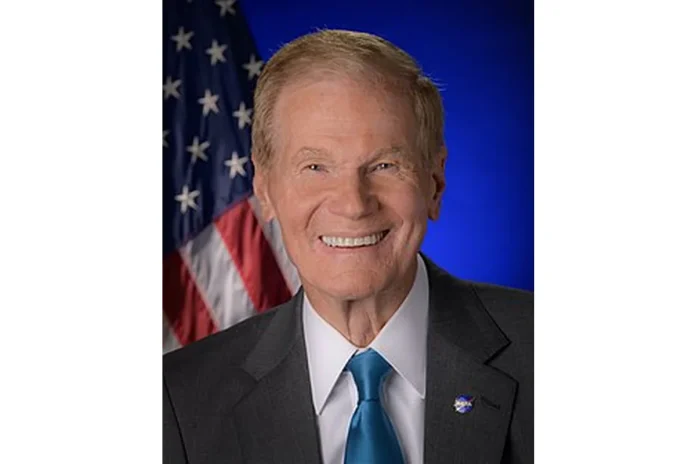
Bill Nelson Bio
Clarence William Nelson II, widely known as Bill Nelson, is an American politician, attorney, and former astronaut. A member of the Democratic Party, he represented Florida in the United States House of Representatives from 1979 to 1991 and served as a United States Senator from Florida from 2001 to 2019. In January 1986, he became the second sitting member of Congress to travel in space, after Senator Jake Garn, when he served as a payload specialist on Space Shuttle Columbia mission STS-61-C. In 2021, President Joe Biden nominated him to lead the National Aeronautics and Space Administration (NASA), and he was confirmed by unanimous consent. He left NASA on January 20, 2025, at the end of the Biden administration.
Early Life and Background
Clarence William Nelson II was born on September 29, 1942, in Miami, Florida. He was the only child of Nannie Merle Nelson and Clarence William Nelson, a real estate investor and lawyer. After his birth, the family settled in Melbourne, Florida, on the state’s Space Coast, where Nelson spent most of his childhood. His father died of a heart attack when Nelson was 14 years old, and his mother died of amyotrophic lateral sclerosis (ALS), also known as Lou Gehrig’s disease, when he was 24.
Nelson attended Melbourne High School and was active in civic youth organizations, including serving as International President of the Kiwanis-sponsored Key Club International from 1959 to 1960. He later attended the University of Florida before transferring to Yale University, where he earned a Bachelor of Arts in political science in 1965. He was a roommate of Bruce Smathers, the son of Florida Senator George Smathers. Nelson went on to receive a Juris Doctor from the University of Virginia School of Law in 1968 and was admitted to the Florida Bar that same year.
Path to US Politics
In 1965, during the Vietnam War, Clarence William Nelson II joined the United States Army Reserve. He served on active duty from 1968 to 1970, attaining the rank of Captain, and remained in the Army Reserve until 1971. After his active-duty service, he began practicing law in Melbourne, Florida, in 1970, and in 1971 he worked as a legislative assistant to Florida Governor Reubin Askew. These early experiences in the military, in the legal profession, and at the state capitol prepared him for a career in public service.
In 1972, Nelson was elected to the Florida House of Representatives as the member from the 47th district, representing much of Brevard County and portions of Orange and Seminole Counties. He won reelection in 1974 and 1976, building a strong reputation as a state legislator. In 1978, he successfully ran for the United States House of Representatives in Florida’s 9th congressional district, an open seat on the Space Coast, beginning a long career in federal politics.
Bill Nelson Career
Early Career (1972–1990)
After his time in the Florida House of Representatives, Clarence William Nelson II won election to the United States House of Representatives in 1978. He was redistricted to the 11th congressional district, which encompassed all of Brevard County and parts of Orange, Indian River, and Osceola counties. He won reelection in 1980, 1982, 1984, 1986, and 1988, serving as a U.S. Representative for six terms.
In 1990, Nelson left his House seat to run for the Democratic nomination for Governor of Florida, but lost the primary decisively to former United States Senator Lawton Chiles, capturing 30.5 percent of the vote to Chiles’ 69.5 percent. After his gubernatorial defeat, he continued in public service and was elected Treasurer, Insurance Commissioner, and Fire Marshal of Florida, serving in that role from 1995 to 2001.
Breakthrough (1986–2000)
Clarence William Nelson II’s political breakthrough came in January 1986, when he became the second sitting member of Congress, and the first House member, to fly in space. He served as a payload specialist on Space Shuttle Columbia’s STS-61-C mission from January 12 to 18, 1986. Notably, the pilot of that mission was Charles Bolden, who later served as NASA Administrator. Ten days after the mission ended, the Space Shuttle Challenger disaster occurred, and one of the astronauts originally assigned to STS-61-C, Gregory Jarvis, lost his life.
Following his time as Florida’s chief financial officer, Nelson ran for the United States Senate in 2000, seeking the seat vacated by retiring Republican Connie Mack III. He defeated Republican U.S. Representative Bill McCollum with 51 percent of the vote, beginning what would become three terms in the upper chamber of Congress.
Democratic Party Era (2001–2019)
As a United States Senator from Florida, Clarence William Nelson II was generally considered a centrist and a moderate Democrat. He supported same-sex marriage, tax relief for lower- and middle-income families, environmental regulation, the Affordable Care Act, and the expansion of Medicaid. He chaired the Senate Aging Committee from 2013 to 2015 and served as the ranking member of the Senate Commerce Committee from 2015 to 2019.
Nelson won reelection to the Senate in 2006 against Republican Katherine Harris, capturing 57 of Florida’s 67 counties and earning endorsements from all 22 of the state’s daily newspapers. He won a third term in 2012, defeating Republican U.S. Representative Connie Mack IV with 55.2 percent of the vote. In 2018, he ran for a fourth term against Republican Florida Governor Rick Scott. The race was extraordinarily close, with a margin of less than 0.25 percent, triggering a manual recount under Florida law. The recount ultimately showed that Scott had defeated Nelson by 10,033 votes, ending Nelson’s Senate career.
Notable Events and Milestones
One of the defining moments of Clarence William Nelson II’s career was his 1986 flight aboard Space Shuttle Columbia, which made him the first member of the United States House of Representatives to fly in space. In 2000, he became the first Democrat to win a U.S. Senate seat in Florida in decades, and he later earned a decisive 60 percent victory in 2006. His narrow loss in 2018, decided by a manual recount, was one of the closest Senate races in modern Florida history.
Bill Nelson Family
Family Background and Public Service Lineage
Clarence William Nelson II was the only child of Nannie Merle Nelson and Clarence William Nelson, a real estate investor and lawyer based in Melbourne, Florida. He was of Scottish, Irish, English, and Danish descent. Both of his parents died of serious illnesses before he reached the age of 25, and he has often credited his family and the Melbourne community with shaping his lifelong commitment to public service.
Personal Life
In 1972, Clarence William Nelson II married Grace Cavert. The couple has two adult children: a son, Charles William Nelson, who is commonly known as Bill Jr., and a daughter, Nan Ellen Nelson. Nelson has been a member of Baptist, Episcopal, and Presbyterian congregations throughout his life, and he joined the First Presbyterian Church in Orlando in 2005. He is also a lifelong hunter and has written publicly about his interest in environmental protection and space exploration.
Bill Nelson NASA Administration (2021–2025)
On March 19, 2021, President Joe Biden announced his intention to nominate Clarence William Nelson II as Administrator of the National Aeronautics and Space Administration. The United States Senate confirmed him by unanimous consent on April 29, 2021, and he was sworn in on May 3, 2021, by Vice President Kamala Harris. His nomination received bipartisan support, including from his Senate successor, Rick Scott, and leaders of the space industry.
As NASA Administrator, Nelson oversaw the deployment of the James Webb Space Telescope, the Artemis 1 mission, the Double Asteroid Redirection Test (DART) asteroid impact, and significant progress toward future Artemis crewed launches. He supported the Artemis program and worked with former Senate colleagues to secure full requested Artemis funding for fiscal year 2022, the first time that had occurred. He also became a strong supporter of commercial fixed-price contracts, helping aerospace companies compete for NASA business. He led the agency until January 20, 2025, when he left office at the end of the Biden presidency.