
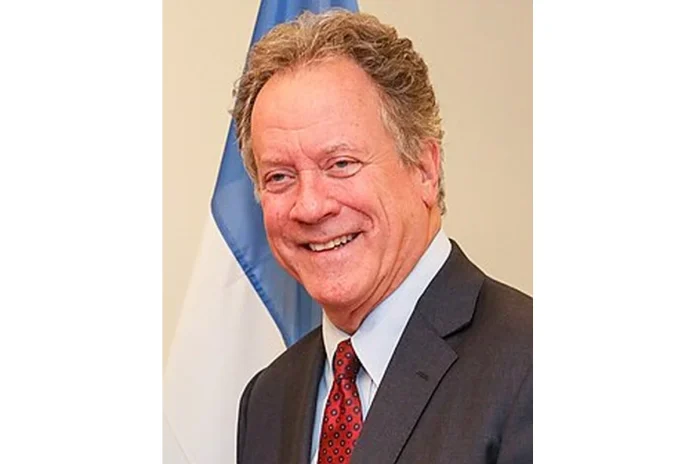
David Muldrow Beasley Bio
David Muldrow Beasley (born February 26, 1957) is an American politician, law professor, and former executive director of the United Nations World Food Programme. A member of the Republican Party, he served one term as the 113th Governor of South Carolina from 1995 to 1999, after more than a decade in the South Carolina House of Representatives. Beasley later led the World Food Programme from 2017 to 2023 and accepted the 2020 Nobel Peace Prize on the agency’s behalf. He has also taught law and remained active in international humanitarian and development initiatives.
Early Life and Background
David Muldrow Beasley was born in Lamar, South Carolina, to Richard Lee Beasley and Jacqueline Blackwell Beasley. He grew up in his hometown and graduated from Lamar High School in 1975. As a young student, Beasley attended the Capitol Page School in Washington, D.C., while serving as a page in the United States Congress, an early experience that introduced him to national government and public service.
After high school, Beasley enrolled at Clemson University before transferring to the University of South Carolina. He earned a Bachelor of Arts in Interdisciplinary Studies in 1979 and went on to receive his Juris Doctor from the University of South Carolina School of Law in 1983. His academic path combined legal training with broad studies in the social sciences, preparing him for both a career in law and a career in elected office.
Path to US Politics
Beasley entered politics at a remarkably young age, winning election to the South Carolina House of Representatives in 1979 at the age of 20 while still completing his undergraduate degree. He represented the Society Hill area in the House for sixteen years, building a record as a rising leader within the state legislature. His colleagues elevated him to majority whip from 1985 to 1986 and then to majority leader from 1987 to 1989.
During that period, Beasley was widely recognized as the youngest Speaker pro tempore and majority leader in the nation, a distinction that signaled his rapid rise in state politics. In the 1991–92 legislative session, he switched from the Democratic to the Republican Party, aligning himself with the political shift taking place across the South. By the early 1990s, he had built the experience and profile needed to pursue statewide office.
David Muldrow Beasley Career
Early Career (1979–1994)
Beasley’s early career was defined by his long tenure in the South Carolina House of Representatives, where he served continuously from 1979 to 1995. He rose through the chamber’s leadership ranks, serving as majority whip and majority leader, and earned a reputation as one of the most influential state legislators of his generation. His work in the House gave him deep knowledge of state policy, budgeting, and legislative strategy.
In 1994, Beasley decided to run for governor of South Carolina. He first faced a difficult Republican primary against former U.S. congressman and state senator Arthur Ravenel Jr., whom he defeated in both the primary and the runoff. He then won the general election against Democratic Lieutenant Governor Nick Theodore by a narrow margin of 50% to 48%, setting the stage for his single term as the state’s chief executive.
Governor of South Carolina Breakthrough (1995–1999)
As the 113th Governor of South Carolina, Beasley presided over a period of strong economic performance, with unemployment falling to a record low of 3.5% in 1998. He often spoke openly about his Christian faith and conservative values, themes that resonated in a state known for its religious and political traditions. His administration also took on social and cultural issues, including a high-profile campaign against the expansion of legal video poker gambling.
Beasley’s most defining moment as governor came in 1996, when he announced on statewide television that he had reversed his earlier position and now believed the Confederate flag should be removed from the South Carolina State House dome and relocated to a monument on the grounds. The decision drew strong criticism from some supporters and contributed to his loss in the 1998 gubernatorial election, in which he fell to Democratic former state representative Jim Hodges by a margin of 53% to 45%. The flag itself remained atop the dome until 2000 and was not removed from the State House grounds entirely until 2015, after the Emanuel Nine shooting.
Post-Governor and National Activity (1999–2016)
After leaving the governorship, Beasley continued to engage in political and public life. In 2000, he supported George W. Bush in the South Carolina Republican presidential primary, introducing Bush at Bob Jones University in a speech that drew national attention. In 2003, he received the John F. Kennedy Profile in Courage Award from U.S. Senator Ted Kennedy for his stand on the Confederate flag, a recognition that highlighted the bipartisan respect his decision had earned.
In 2004, Beasley unsuccessfully sought the Republican nomination for the United States Senate to replace retiring Democrat Fritz Hollings, losing the primary to Congressman Jim DeMint of Greenville, South Carolina. The following year, in April 2005, he co-founded the Center for Global Strategies, Ltd, with his former chief legal counsel Henry Deneen, and continues to serve as chairman of the board. The center focuses on developmental initiatives in underserved regions of the world, reflecting his growing interest in international affairs.
World Food Programme Era (2017–2023)
In February 2017, United States Ambassador to the United Nations Nikki Haley, herself a former South Carolina governor, nominated Beasley to serve as the next executive director of the United Nations World Food Programme. United Nations Secretary-General António Guterres and José Graziano da Silva of the U.N. Food and Agriculture Organization officially appointed him in March 2017, citing his experience with governmental and business leaders and his strong resource mobilization skills. In this role, Beasley served at the level of Under-Secretary-General of the United Nations and sat on the organization’s Senior Management Group.
During his tenure, Beasley led the World Food Programme’s response to major humanitarian crises, including the COVID-19 pandemic and the global food crisis linked to the Russo-Ukrainian War. In December 2020, he accepted the Nobel Peace Prize on behalf of the World Food Programme in recognition of the agency’s efforts to combat world hunger. His original five-year term was extended by Secretary-General Guterres, but his term as executive director ultimately ended in April 2023. In 2023, he was also made a Grand Officer of the Order of the Two Niles by Sudanese head of state General Abdel Fattah al-Burhan.
Distinguished Professor Role (2024–Present)
In January 2024, Beasley returned to academia when the University of South Carolina appointed him a Distinguished Professor of Practice and Public Service in the Department of Legal Studies at the Joseph F. Rice School of Law. The position allows him to draw on his experience in law, government, and international humanitarian leadership in teaching and public service work.
Notable Events and Milestones
Among Beasley’s most significant milestones are his 1994 election as governor at age 37, his 1996 televised call to relocate the Confederate flag, his 2003 John F. Kennedy Profile in Courage Award, and his 2020 acceptance of the Nobel Peace Prize on behalf of the World Food Programme. He is also recognized as one of the youngest Speaker pro tempore and majority leaders in the history of the South Carolina House of Representatives.
David Muldrow Beasley Family
Family Background and Personal Life
David Muldrow Beasley is the son of Richard Lee Beasley and Jacqueline Blackwell Beasley, both of whom raised him in Lamar, South Carolina. His early exposure to public life in the small town of Lamar, combined with his time as a congressional page in Washington, D.C., helped shape his path into state and national politics.
Beasley is married to Mary Wood Beasley. Throughout his career, the couple has remained based in South Carolina, where he continues to teach law at the University of South Carolina and engage in humanitarian and development work through the Center for Global Strategies.