

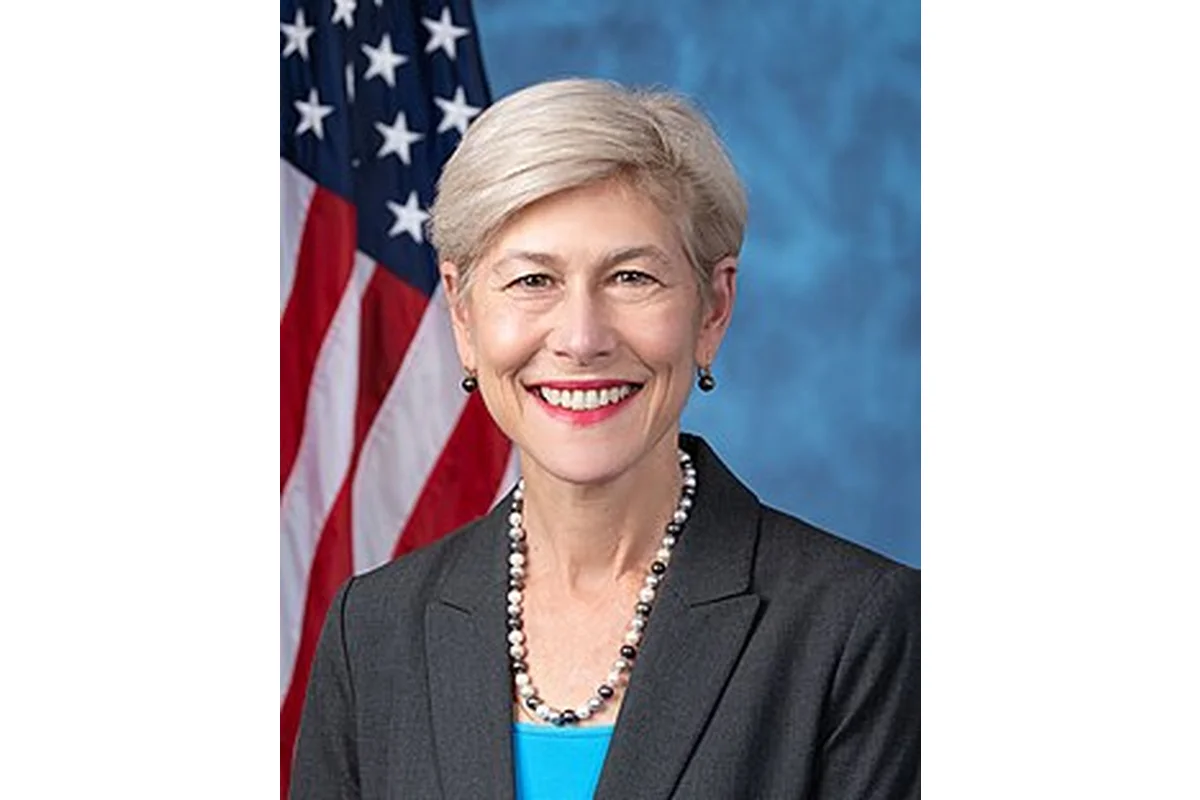
Deborah Ross Bio
Deborah Ross (née Koff; born June 20, 1963) is an American lawyer and politician who has served as the U.S. representative for North Carolina’s 2nd congressional district since 2021. Her district is based in Raleigh and includes much of Wake County. A member of the Democratic Party, Ross is known for her long career in North Carolina politics and a focus on consumer protection, civil liberties, and infrastructure investment.
Before winning her seat in Congress, Ross served in the North Carolina House of Representatives from 2003 to 2013, represented the state as the 2016 Democratic nominee for U.S. Senate, and held senior roles at the American Civil Liberties Union of North Carolina and the regional transit agency GoTriangle.
Early Life and Background
Deborah Ross was born in Philadelphia, Pennsylvania, on June 20, 1963, and grew up in Connecticut. She is the daughter of Marvin Koff and Barbara (née Klein) Koff. Her father served as an Air Force physician and her mother worked as a teacher, which gave the family a strong tradition of public service and professional discipline that shaped Ross’s early years.
She completed her higher education at Brown University, earning a Bachelor of Arts degree in 1985. She later attended the University of North Carolina School of Law, where she received her Juris Doctor in 1990. Her academic training laid the foundation for a career in law, public policy, and eventually elected office.
Path to US Politics
After law school, Ross began her legal career at the Raleigh-based firm Hunton & Williams, where she worked as a tax litigator and municipal bond lawyer. She later joined Duke Law School as a senior lecturing fellow, contributing to legal education in North Carolina while continuing her practice. These early roles helped her build the professional reputation that would carry her into public service.
In 1994, Ross was hired as state director for the American Civil Liberties Union of North Carolina. During her time at the ACLU, she worked on First Amendment and juvenile justice issues. Alongside Governor Jim Hunt and then State Senator Roy Cooper, she helped overhaul North Carolina’s system for dealing with youth offenders, and she successfully encouraged state police agencies to collect race-based statistics on traffic stops to address concerns about racial profiling. She stepped down from the ACLU in 2002 to launch her first campaign for the North Carolina House of Representatives.
Deborah Ross Career
Early Career (2002–2013)
Deborah Ross was first elected to the North Carolina General Assembly in 2002. She represented the 38th House district and later the 34th district, covering much of northern Raleigh and the surrounding Wake County suburbs. In 2004, she defeated Wake County Commissioner Phil Jeffreys to win a second term, and in 2006 she ran unopposed in the general election. By 2007, her colleagues had elevated her to one of the House Democratic Whips, a leadership post that reflected her growing influence in the state legislature.
During her time in the North Carolina House, Ross supported measures such as the Equal Pay Act, an unsuccessful bill aimed at banning pay discrimination based on gender. She also spoke publicly about the need for coastal protection policies grounded in scientific sea-level rise forecasts, warning that insurers would likely raise premiums for coastal property owners if those risks were ignored. In 2013, she announced her resignation from the legislature to become legal counsel for GoTriangle, the Triangle region’s transit agency, where she worked on transportation and infrastructure policy.
2016 Senate Campaign Breakthrough
In 2015, Ross resigned from GoTriangle to run for the United States Senate in 2016. She won the March 2016 Democratic primary with 62.4 percent of the vote in a four-candidate field, earning endorsements from groups including EMILYs List, Planned Parenthood, the North Carolina Association of Educators, the North Carolina AFL–CIO, American Association for Justice, End Citizens United, the Democratic Senatorial Campaign Committee, Democracy for America, and the League of Conservation Voters.
Her general-election opponent was Republican incumbent Richard Burr. Ross raised more money than Burr for three consecutive quarters, though Burr entered the year with a larger cash reserve. The Cook Political Report rated the race a toss-up, and national observers viewed it as a competitive seat. In the November election, Burr defeated Ross by a margin of 51 percent to 45 percent, ending her first bid for federal office.
Congressional Era (2021–Present)
After a period in private practice at the Raleigh firm Smith Moore Leatherwood LLP, which merged with Fox Rothschild in November 2018, Ross announced her candidacy on December 2, 2019, for North Carolina’s newly redrawn 2nd congressional district. Court-ordered redistricting had reshaped the seat into a safely Democratic district covering southern Wake County and almost all of Raleigh. The previous incumbent, Republican George Holding, opted to retire rather than run in the reconfigured district.
Ross won the Democratic primary on March 3 and the general election on November 3, defeating Republican nominee Alan Swain and Libertarian Jeff Matemu. Since taking office in 2021, she has supported legislation expanding tax credits for families, voted for the American Rescue Plan Act of 2021, and backed the Infrastructure Investment and Jobs Act, which directed billions of dollars toward North Carolina highways, public transportation, broadband, and lead-pipe replacement. She also supported the CHIPS and Science Act of 2022, a $280 billion measure to expand U.S. semiconductor manufacturing.
Notable Events and Milestones
Ross’s tenure has included several signature legislative efforts. On July 1, 2021, she and Representative Mariannette Miller-Meeks introduced the America’s CHILDREN Act, which would create a pathway to permanent residency for young people who grew up legally in the United States but were blocked from obtaining green cards by administrative backlogs. More recently, on June 23, 2025, Ross joined Representatives Lance Gooden and Dina Titus in introducing the Pro Codes Act, a bill addressing copyright claims over privately drafted model laws used by government bodies.
Deborah Ross Career Wins
Deborah Ross has compiled a long record of electoral and legislative victories, beginning in the North Carolina General Assembly and continuing in the U.S. House of Representatives. Her wins reflect both steady support in the Raleigh area and the broader Democratic trends that have reshaped Wake County politics.
Congressional Highlights
Ross won her first election to Congress on November 3, 2020, defeating Republican Alan Swain and Libertarian Jeff Matemu in North Carolina’s 2nd congressional district. She has since represented the district, which is based in Raleigh, and has been re-elected as a member of the Democratic caucus in subsequent cycles.
Other Wins & Achievements
Ross has won election to the North Carolina House of Representatives multiple times, including a victory over Wake County Commissioner Phil Jeffreys in 2004 and an unopposed general-election contest in 2006. Her 2016 Democratic Senate primary win, with 62.4 percent of the vote, stands as one of her most decisive primary performances.
Deborah Ross Family
Family Background and Public Service
Deborah Ross is the daughter of Marvin Koff and Barbara (née Klein) Koff. Her father served as an Air Force physician and her mother worked as a teacher, giving Ross a family background rooted in military service, medicine, and education. That upbringing helped shape her interest in public service and the law.
Personal Life
Ross married Stephen Wrinn in 1994. The couple lives in Raleigh, North Carolina, in a home they restored in the historic Boylan Heights neighborhood. Ross is also one of three Unitarian Universalists serving in the United States Congress.