
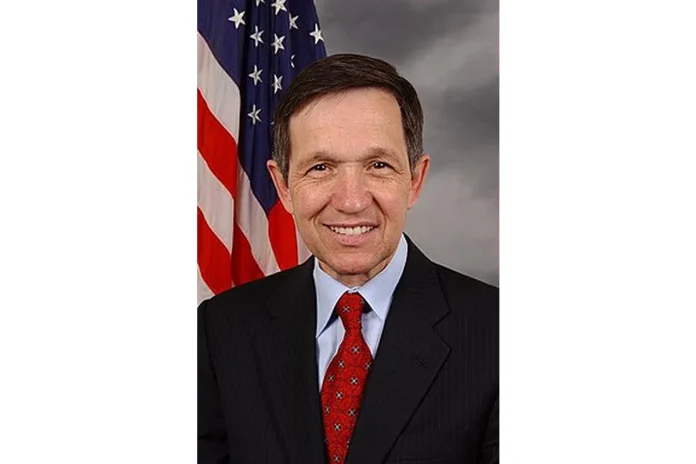
Dennis Kucinich Bio
Dennis John Kucinich (born October 8, 1946) is an American politician and political commentator whose career has spanned more than five decades in local, state, and national office. He served as the U.S. Representative for Ohio’s 10th congressional district from 1997 to 2013 and as mayor of Cleveland from 1977 to 1979, making him the youngest mayor of a major American city at the time he took office. Originally a Democrat, he became an independent in 2024 and has been widely regarded as one of the most progressive voices in the United States Congress.
Beyond his legislative work, Kucinich is known for his long-standing advocacy of single-payer health care, an anti-war foreign policy, and the creation of a Cabinet-level Department of Peace. After leaving Congress he worked as a television contributor and continued to seek public office, including runs for governor of Ohio in 2018, mayor of Cleveland in 2021, and Ohio’s 7th congressional district in 2024.
Early Life and Background
Dennis John Kucinich was born in Cleveland, Ohio, on October 8, 1946, in the Tremont neighborhood on the city’s West Side. He was the oldest of seven children born to Frank J. Kucinich, a Croatian American truck driver and longtime Teamsters member, and Virginia Norris Kucinich, an Irish American homemaker. The family moved 21 times during his childhood, and Kucinich often helped search for affordable apartments. He has four brothers and two sisters.
Kucinich’s early years were shaped by financial instability, which gave him a working-class outlook that he has carried throughout his political life. His Catholic upbringing and the industrial culture of Cleveland provided a formative backdrop for the economic and social concerns that would later define his career in public service.
Path to US Politics
Kucinich’s path to politics began in the late 1960s. In 1967, he ran unsuccessfully for office for the first time, but he did not give up. Two years later, in 1969, he was elected to the Cleveland City Council at age 23, becoming one of the youngest council members in the city’s history. He also continued his education, graduating from St. John Cantius High School in 1965, attending Cleveland State University from 1967 to 1970, and earning both a Bachelor of Arts and a Master of Arts in speech and communication from Case Western Reserve University in 1973.
In 1972, he ran for the U.S. House of Representatives and narrowly lost to incumbent Republican William E. Minshall Jr. After Minshall retired, Kucinich sought the Democratic nomination in 1974 but lost it, then ran as an Independent in the general election and finished third. In 1975, he became clerk of the Cleveland municipal court, a position he held for two years, before winning election as mayor of Cleveland in 1977.
Dennis Kucinich Career
Early Career (1969-1983)
After winning a seat on the Cleveland City Council in 1969, Kucinich built a reputation as a young reformer. He served as clerk of the municipal court from 1975 to 1977, gaining administrative experience that prepared him for higher office. In 1977, at age 31, he was elected mayor of Cleveland, becoming the youngest person to lead a major American city and earning the nickname “the boy mayor of Cleveland.”
His tenure as mayor was marked by conflict. Kucinich famously refused to sell the city’s publicly owned electric utility, Municipal Light, a decision that angered powerful business and organized crime interests. The city defaulted on its debt shortly afterward, and he lost his 1979 reelection bid to George Voinovich. After leaving office, he struggled financially, worked briefly as a radio host and lecturer, and returned to Cleveland politics, winning a special election to the city council in 1983.
Mayoral Breakthrough (1977-1979)
As mayor, Kucinich’s signature act was his refusal to privatize Cleveland’s municipal electric utility, a stand that has been credited with saving the city an estimated $195 million between 1985 and 1995. The decision, however, triggered a fierce backlash, including a contract killing plot by organized crime figures that was foiled only because Kucinich was hospitalized and missed the Columbus Day Parade. He also survived a recall election before ultimately losing to George Voinovich in his 1979 reelection campaign.
Decades later, the Cleveland City Council honored Kucinich for the “courage and foresight” he showed in standing up to the banks, and the municipal utility he saved continues to operate today as Cleveland Public Power. His mayoral years established him as a champion of public ownership and a fierce critic of corporate influence in government.
Congressional Era (1997-2013)
In 1996, Kucinich was elected to the U.S. House of Representatives from Ohio’s 10th congressional district, defeating two-term Republican incumbent Martin Hoke. He was reelected seven times, often by wide margins in his strongly Democratic district, and served until 2013. In Congress, he founded and chaired the Congressional Progressive Caucus from 1999 to 2003, helping to organize the party’s left wing.
During his tenure, Kucinich voted against the 2002 authorization of military force in Iraq and consistently opposed war funding. He introduced articles of impeachment against Vice President Dick Cheney in 2007 and against President George W. Bush in 2008, citing the manipulation of intelligence leading to the Iraq War. He also introduced the NEED Act on monetary reform, criticized the 2008 bank bailout, and was a vocal opponent of the USA PATRIOT Act. After redistricting forced him to face Representative Marcy Kaptur in 2012, Kucinich lost the Democratic primary and left Congress.
Post-Congressional Era (2013-Present)
After leaving Congress in 2013, Kucinich became a regular contributor on the Fox News Channel, appearing on programs such as The O’Reilly Factor until 2018. In 2018, he ran for governor of Ohio and lost the Democratic primary to Richard Cordray. In 2020, he announced a bid for mayor of Cleveland in 2021 but finished third in the nonpartisan primary.
In May 2023, he was named campaign manager for Robert F. Kennedy Jr.’s 2024 presidential run, serving in that role until October 2023. In 2024, he left the Democratic Party to run as an independent for Ohio’s 7th congressional district, finishing third with 13% of the vote. He has continued to appear on television as a political commentator, frequently defending non-interventionist foreign policy positions.
Notable Events and Milestones
Among Kucinich’s most notable achievements are his anti-war advocacy, including his vote against the Iraq War authorization and his introduction of articles of impeachment against both Vice President Cheney and President Bush. He also ran for the Democratic presidential nomination in both 2004 and 2008, finishing second in the 2004 Hawaii Democratic caucuses with 31% of the vote. His 2003 receipt of the Gandhi Peace Award and his 2010 US Peace Prize underscored his long commitment to peace advocacy.
Dennis Kucinich Family
Family Background and Political Lineage
Dennis Kucinich is the oldest of seven children born to Frank J. Kucinich, a Croatian American truck driver and Teamsters member, and Virginia Norris Kucinich, an Irish American homemaker. His brother Gary Kucinich also served on the Cleveland City Council. His youngest brother, Perry Kucinich, died in 2007, and his youngest sister, Beth Ann Kucinich, died in 2008. The family’s working-class roots and frequent moves across Cleveland shaped Kucinich’s lifelong identification with ordinary Americans.
Personal Life
Kucinich was baptized a Catholic. His first marriage to Helen Kucinich ended in divorce. He married Sandra Lee McCarthy in 1977; they had a daughter, Jackie, born in 1981, and divorced in 1986. He married his third wife, British citizen Elizabeth Harper, on August 21, 2005. Kucinich has been a vegan since 1995 and is an advocate of veganism, a practice he shares with his wife Elizabeth.
Dennis Kucinich Recognition
In 2003, Kucinich received the Gandhi Peace Award from Promoting Enduring Peace in recognition of his longstanding peace advocacy. In 2010, the US Peace Memorial Foundation awarded him the US Peace Prize, citing his national leadership in efforts to prevent and end wars. These honors reflect the international recognition he has earned for his consistent opposition to military intervention.
Upcoming Projects (2025)
Following his 2024 independent run for Ohio’s 7th congressional district, Dennis Kucinich is expected to continue his work as a political commentator and public speaker. He has signaled interest in remaining active in national policy debates, particularly on peace, single-payer health care, and non-interventionist foreign policy. Specific 2025 campaign plans have not been publicly announced.