
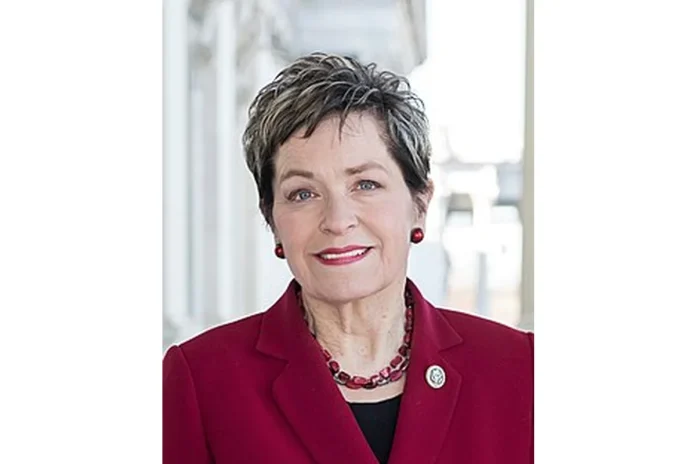
Marcy Kaptur Bio
Marcia Carolyn “Marcy” Kaptur (born June 17, 1946) is an American politician who has represented Ohio’s 9th congressional district in the United States House of Representatives since 1983. A member of the Democratic Party, she is the longest-serving woman in the history of Congress and has served as the dean of Ohio’s congressional delegation since 2009. Trained as an urban planner before entering public service, Kaptur has built a career around working-class economic populism, opposition to several free-trade agreements, and support for veterans’ causes and manufacturing communities in northern Ohio.
Her district stretches across northwestern Ohio along the southern shore of Lake Erie, including parts of Toledo and surrounding communities. Over more than four decades in Congress, she has served on the House Appropriations and Budget Committees and sponsored the legislation that established the National World War II Memorial on the National Mall in Washington, D.C.
Early Life and Background
Marcy Kaptur was born on June 17, 1946, in Toledo, Ohio, to Anastasia Delores (Rogowski) Kaptur and Stephen Jacob Kaptur. Both parents were of Polish descent. Her paternal grandparents came from the town of Żnin in present-day Poland, while her maternal grandparents, the Rogowskis, came from the area of Polonne, now located in Ukraine’s Khmelnytskyi Oblast. Her family ran a small grocery store in nearby Rossford, and her mother worked as an automobile union organizer. Growing up in a working-class household with strong Polish-American and Catholic roots shaped her lifelong focus on labor rights and economic fairness.
Kaptur became involved in politics at an early age, volunteering with the Ohio Democratic Party when she was 13. She graduated from St. Ursula Academy, an all-girls Catholic preparatory school in Toledo, in 1964. She was the first person in her family to attend college, earning a Bachelor of Arts degree in history from the University of Wisconsin–Madison in 1968. She went on to receive a Master of Urban Planning from the University of Michigan in 1974 and later began doctoral studies in urban planning development finance at the Massachusetts Institute of Technology in 1981.
Path to US Politics
After college, Kaptur returned to Ohio and worked as an urban planner on the Toledo-Lucas County Plan Commissions from 1969 to 1975. During those years she stayed active in local Democratic politics, volunteering for Hubert Humphrey’s 1968 presidential campaign and helping George McGovern carry Lucas County in the 1972 presidential election, one of only two counties in Ohio that McGovern won. In 1975, she became director of planning for the National Center for Urban Ethnic Affairs, a Washington-based organization founded by Catholic priest Geno Baroni.
She later joined the Carter administration as a domestic policy advisor on urban affairs, helping advance housing and neighborhood revitalization bills through Congress. After her time in Washington, she returned to graduate study in Massachusetts. In 1982, local Democratic leaders recruited her to run for Congress in Ohio’s 9th district. Initially considered a long shot, she entered the race after encouragement from Geno Baroni and party officials who had struggled to find a viable challenger. She withdrew from her doctoral program and drove through a snowstorm back to Ohio to begin campaigning.
Marcy Kaptur Career
Early Career (1982-1984)
Marcy Kaptur’s 1982 congressional campaign gained attention for its grassroots style, including raising $10,000 through bake sales, a strategy that became a hallmark of her early political efforts. With the country in recession during President Reagan’s first term and unemployment rising in Lucas County, Kaptur focused on local economic decline and criticized her opponent, freshman Republican Ed Weber, for supporting Reagan-era free trade policies. She connected with working-class voters by emphasizing economic populism and cultural familiarity, even serving kielbasa made from her father’s recipe at a rally.
Despite receiving little support from the national Democratic Party, which had largely written off the district, Kaptur benefited from encouragement by Representatives Shirley Chisholm and Mary Rose Oakar. Though outspent nearly three to one, she won the 1982 election with 58 percent of the vote. She took office on January 3, 1983, becoming the first woman to represent Ohio’s 9th congressional district. In her first term, she was appointed to the Banking, Finance, and Urban Affairs Committee as well as the Veterans’ Affairs Committee. She won reelection in 1984 with 55 percent of the vote, defeating Republican Frank Venner even as Reagan carried the district.
World War II Memorial and Trade Battles (1987-2000)
In 1987, Kaptur introduced the World War II Memorial Act in the House to authorize the American Battle Monuments Commission to establish a national memorial. The bill was not voted on before the end of the session and failed to become law. She introduced similar legislation twice in 1989 without success, but in 1993 the legislation passed the House, and after a companion bill cleared the Senate, President Bill Clinton signed it into law. Kaptur later said that she felt “a great sense of fulfillment” that the memorial was built, calling the World War II generation “the most unselfish America has ever seen.”
Meanwhile, in 1993, Kaptur emerged as one of Congress’s most vocal opponents of the North American Free Trade Agreement, warning that it would cause widespread job losses as companies moved work to lower-wage Mexico. Following NAFTA, she objected to the General Agreement on Tariffs and Trade and the establishment of the World Trade Organization in 1995. Her prominent role in trade policy debates drew national attention, and in 1996, independent presidential candidate Ross Perot invited her to join his ticket as a vice-presidential candidate. She declined the offer.
Financial Crisis and Party Leadership (2002-2018)
Kaptur was a vocal critic of Wall Street and its role in the 2008 financial crisis, opposing the Emergency Economic Stabilization Act that authorized a federal bailout of major U.S. banks. Her position, along with her broader criticism of the financial industry, was featured in Michael Moore’s 2009 documentary Capitalism: A Love Story. In 2011, she introduced H.R. 1489, aimed at restoring key provisions of the Glass-Steagall Act by repealing parts of the Gramm-Leach-Bliley Act, which drew support from 30 co-sponsors.
Within the Democratic Party, Kaptur repeatedly pushed for a greater focus on working-class priorities. In 2002, she challenged Representative Nancy Pelosi for the position of House Democratic leader, using her candidacy to highlight what she described as the party’s neglect of its “non-money wing,” though she withdrew before a vote. She ran for vice chair of the House Democratic Caucus in 2008 but lost to Representative Xavier Becerra. In 2016, Kaptur endorsed Senator Bernie Sanders in the Democratic presidential primary and introduced him at a Toledo rally, before later endorsing the party’s nominee, Hillary Clinton. In 2018, she became the longest-serving woman in the House of Representatives, and in 2023, she became the longest-serving woman in Congress overall.
Modern Era (2012-Present)
After the 2010 census, redistricting extended the 9th district to include parts of western Cleveland, setting up a 2012 Democratic primary against incumbent 10th district congressman Dennis Kucinich. Kaptur won the primary with 56 percent of the vote and went on to a comfortable general-election victory. In 2020, her district shifted from a reliably Democratic seat to a swing district, and following the 2020 census, further redistricting incorporated strongly Republican areas. Despite the unfavorable shift, she defeated Republican nominee J.R. Majewski in 2022 by a margin of 56.6 percent to 43.4 percent.
In 2024, Kaptur faced an extremely close race against state representative Derek Merrin, who was endorsed by President-elect Donald Trump. She won reelection by less than one percentage point, taking 48.3 percent to Merrin’s 47.6 percent, marking the first time in her political career that she failed to secure a majority of the vote. She currently serves on the House Appropriations and Budget Committees in the 119th Congress and continues to advocate for her district’s manufacturing, agricultural, and Great Lakes communities.
Notable Events and Milestones
Among the signature accomplishments of Marcy Kaptur’s career is her role in establishing the National World War II Memorial, legislation she first introduced in 1987 and that was ultimately signed into law in 1993. Her long record of opposition to free-trade agreements, including NAFTA, has shaped her identity as an economic populist representing industrial communities in northern Ohio. In 2018, she became the longest-serving woman in the House of Representatives, and in 2023, she surpassed that record to become the longest-serving woman in congressional history.
Marcy Kaptur Career Wins
Marcy Kaptur has won more than twenty consecutive elections in Ohio’s 9th congressional district, a record of sustained voter support unmatched by most of her contemporaries. Her career wins trace a steady arc from her first upset victory in 1982 through landslide re-elections in the 1980s and 1990s, narrower but still decisive victories in the 2010s, and increasingly competitive races in the 2020s.
Congressional Election Highlights
Kaptur’s first win came in 1982, when she defeated freshman Republican Ed Weber with 58 percent of the vote in a long-shot grassroots campaign. From 1986 to 2002, she won every election with at least 74 percent of the vote, and she won her 12th term in 2004 with 68 percent. Her 2010 reelection, against Tea Party favorite Rich Iott, was her closest victory since 1984, with 59 percent of the vote. In 2012, she won a Democratic primary against fellow incumbent Dennis Kucinich with 56 percent of the vote, then secured a 16th term with 73 percent in the general election. Her 2024 reelection, at 48.3 percent to 47.6 percent, was her narrowest victory ever.
Other Wins and Achievements
Beyond election victories, Kaptur’s achievements include successful passage of legislation establishing the National World War II Memorial, which she first introduced in 1987 and which became law in 1993. She has held influential roles on the House Appropriations and Budget Committees, secured a position as vice chair of a task force on trade under Speaker Jim Wright in the 1980s, and co-chaired the Congressional Ukrainian Caucus. In 2011, she introduced H.R. 1489 to restore key provisions of the Glass-Steagall Act, drawing support from 30 co-sponsors.
Marcy Kaptur Family
Family Background and Heritage
Marcy Kaptur was raised in a working-class family of Polish heritage in northwestern Ohio. Her father, Stephen Jacob Kaptur, and her mother, Anastasia Delores (Rogowski) Kaptur, both descended from Polish immigrants. Her paternal grandparents came from the town of Żnin in present-day Poland, and her maternal grandparents, the Rogowskis, came from the area of Polonne, now located in Ukraine’s Khmelnytskyi Oblast. The family ran a small grocery store in Rossford, and her mother worked as an automobile union organizer, instilling in Kaptur a deep appreciation for the labor movement and economic populism.
Personal Life
Kaptur is a practicing Roman Catholic and has described her faith as a core part of her identity, particularly as an American of Polish heritage. She has expressed admiration for Catholic social teaching, especially the option for the poor, and has blended her religious beliefs with progressive politics throughout her career. The Washington Post has described her as “an economic populist from America’s heartland with progressive values and a conservative disposition.” She has continued to live in the Toledo area she has represented since first winning office in 1982.