
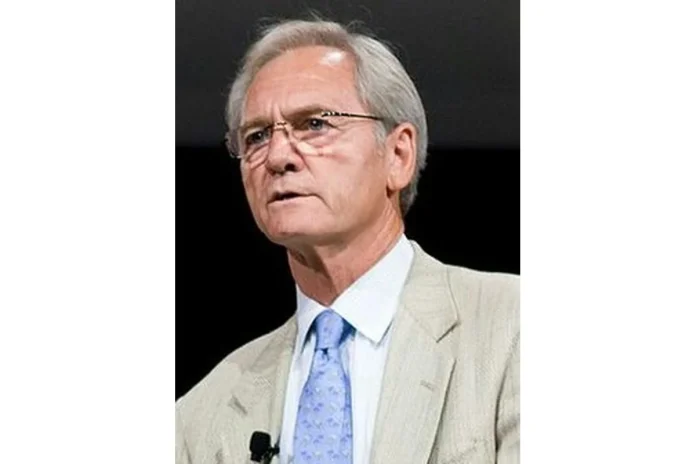
Don Siegelman Bio
Donald Eugene Siegelman, born on February 24, 1946, is an American politician and member of the Democratic Party whose career in Alabama state government spanned more than two decades. He served as the 51st Governor of Alabama from 1999 to 2003 and is the only person in Alabama history to be elected to all four of the state’s top statewide offices: Secretary of State, Attorney General, Lieutenant Governor, and Governor. He also holds the distinction of being the most recent Democrat and the only Catholic to serve as Governor of Alabama.
Siegelman’s time in office was followed by a lengthy federal prosecution that became one of the most debated political cases in the state. Convicted in 2006 on federal corruption charges, he was later released on supervised probation in 2017, completing his sentence in 2019. Allegations of prosecutorial misconduct in his case drew bipartisan calls for review, and his story has been the subject of ongoing public discussion and a documentary film.
Early Life and Background
Donald Eugene Siegelman was born and raised in Mobile, Alabama, the son of Catherine Andrea Schottgen and Leslie Bouchet Siegelman. He was raised in the Catholic faith, a tradition that would later make him the only Catholic ever elected Governor of Alabama. Mobile, a port city with a long political history, shaped his early understanding of Southern civic life and the role of public service in the region.
Siegelman attended the University of Alabama, where he earned a bachelor’s degree in 1968 and served as president of the student government association. He was a member of the Delta Kappa Epsilon fraternity. After college, he served in the Air National Guard for 19 months as a fuel handler and fuel truck driver before being discharged for medical reasons in 1969. He later earned a Juris Doctor degree from Georgetown University Law Center in 1972 and studied international law at Pembroke College, Oxford, from 1972 to 1973. While attending law school, he worked as an officer in the United States Capitol Police to support himself.
Path to US Politics
After completing his education, Siegelman became active in the Alabama Democratic Party, beginning a long climb through the state’s top political offices. In 1978, he was elected Secretary of State of Alabama, launching a career that would eventually cover all four of the most powerful elected positions in the state. He served two terms as Secretary of State, from 1979 to 1987, building a reputation as a young reform-oriented officeholder.
His ambition carried him upward through the ranks of state government. He was elected Attorney General of Alabama in 1986, serving from 1987 to 1991, and ran unsuccessfully for Governor in 1990, losing in the Democratic primary runoff. In 1994, he was elected Lieutenant Governor, serving from 1995 to 1999, and positioned himself for his ultimate political goal. In 1998, Siegelman was elected Governor with 57 percent of the vote, including more than 90 percent of the African American electorate, becoming the first native Mobilian to hold the state’s highest office.
Don Siegelman Career
Early Career (1979–1994)
Siegelman’s early career in statewide office began in 1979 when he took office as Alabama’s Secretary of State. Over the next eight years, he established himself as a rising figure in the Alabama Democratic Party, winning two consecutive terms. As Secretary of State, he managed the administration of state elections and built a statewide network that would support his later campaigns.
In 1986, Siegelman won election as Attorney General, and he served in that role from 1987 to 1991. His tenure included high-profile decisions such as addressing the Alabama Chemical Association and engaging with environmental cleanup issues, including the controversial handling of polychlorinated biphenyls contamination in Anniston. After a 1990 primary loss in his first run for Governor, he returned to win the Lieutenant Governorship in 1994, setting the stage for his successful gubernatorial campaign four years later.
Governor of Alabama (1999–2003)
Siegelman served as the 51st Governor of Alabama from 1999 to 2003, a period that overlapped with major growth in the state’s automotive manufacturing industry. During his administration, Mercedes-Benz agreed to double the size of its Tuscaloosa County plant, and he traveled abroad to recruit additional manufacturers. He secured commitments from Toyota, Honda, and Hyundai to build major assembly plants in Alabama, helping transform the state’s industrial base.
Siegelman also launched the Alabama Reading Initiative, an early education literacy program that was praised by both Democratic and Republican officials and later emulated by several other states. He presided over eight executions during his term, including that of Lynda Lyon Block, the first female executed in the state since 1957, and oversaw the transition from electrocution to lethal injection as the primary method of capital punishment. By 2021, he stated publicly that he had come to oppose capital punishment and expressed misgivings about the executions carried out under his watch. His signature policy initiative, a state lottery to fund free college tuition, was defeated by voters in 1999.
Later Political Activity and Federal Prosecution (2003–2019)
After leaving the Governor’s office in 2003, Siegelman ran for reelection in 2006 but lost the Democratic primary to Lieutenant Governor Lucy Baxley, 60 percent to 36 percent, in a race shaped in part by his federal indictment. On June 29, 2006, a federal jury found Siegelman and codefendant Richard M. Scrushy guilty on seven of 33 felony counts, including bribery, conspiracy to commit honest services mail fraud, honest services mail fraud, and obstruction of justice. He was acquitted on 25 counts, including a wide-ranging racketeering conspiracy charge. He was sentenced to more than seven years in federal prison and a $50,000 fine.
His case drew national attention and bipartisan criticism. In 2007, 44 former state attorneys general filed a petition asking Congress to investigate the prosecution, and in 2015, more than 100 former attorneys general and officials urged the United States Supreme Court to review the case over alleged prosecutorial misconduct. The 11th U.S. Circuit Court of Appeals upheld key counts in 2009, denied a new trial in 2015, and the Supreme Court did not intervene. Siegelman was released from prison on supervised probation on February 8, 2017, and remained on supervision until June 2019. He has continued to seek a presidential pardon, with formal requests denied by both Presidents Barack Obama and Joe Biden.
Notable Events and Milestones
Siegelman’s political milestones include being the only Alabamian ever elected to all four top statewide offices and the only Catholic to serve as Governor. His 2002 reelection defeat by U.S. Representative Bob Riley, by approximately 3,000 votes, was the narrowest in Alabama history and triggered a voting machine controversy in Baldwin County. His 2006 federal conviction and the subsequent bipartisan calls for investigation made his case one of the most discussed political prosecutions in modern Alabama history.
Don Siegelman Family
Family Background and Political Lineage
Donald Eugene Siegelman was born to Catherine Andrea Schottgen and Leslie Bouchet Siegelman and raised in the Catholic faith in Mobile, Alabama. His son, Joseph Siegelman, carried the family’s political tradition forward as the Democratic nominee for Attorney General of Alabama in 2018, though he lost to the incumbent Steve Marshall. His daughter, Dana, has been a public advocate on his behalf, including launching an online petition requesting a presidential pardon for her father during his incarceration.
Personal Life
Siegelman married Lori Allen in 1980, and the couple has two children, Dana and Joseph. His wife is Jewish, and they reared their children in the Jewish faith, a personal detail that has often been noted in profiles of his family. His son Joseph’s 2018 run for Attorney General extended the family’s involvement in Alabama Democratic politics into a new generation.