

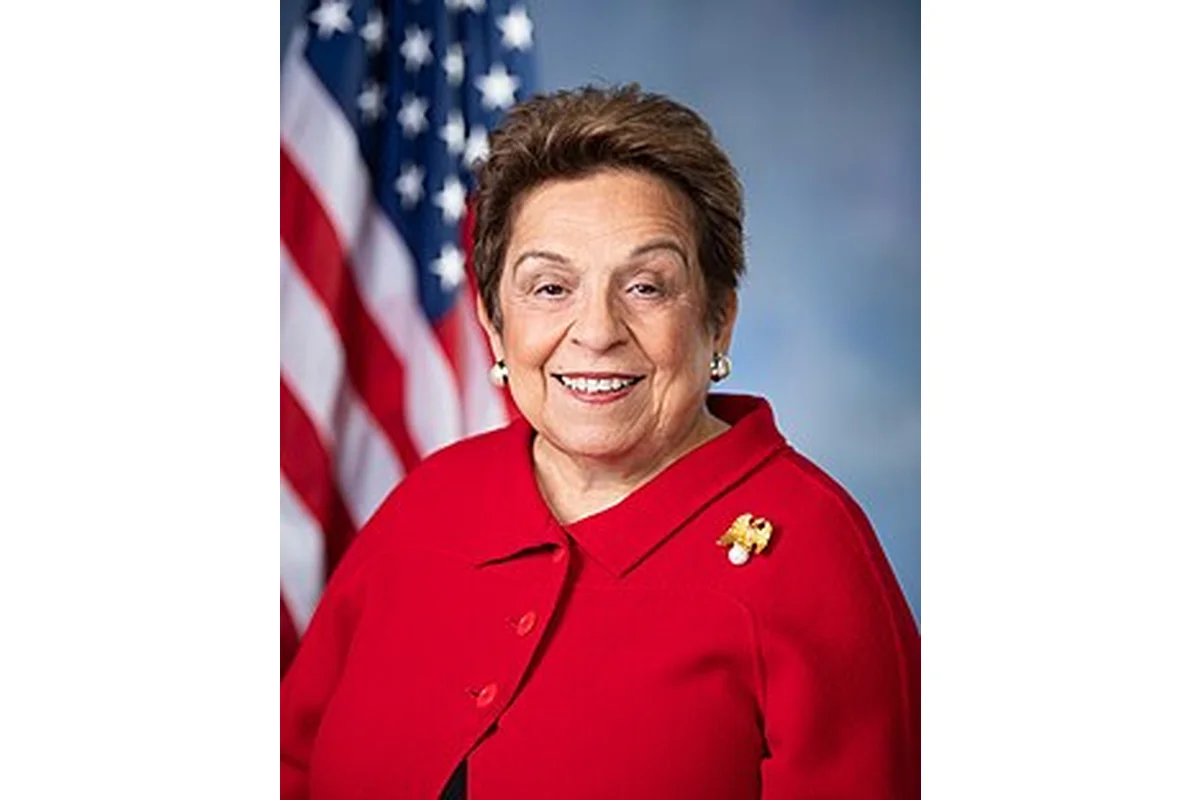
Donna Shalala Bio
Donna Edna Shalala, born February 14, 1941, is an American retired politician and academic whose career has spanned senior federal government posts, major university leadership roles, and a single term in Congress. A member of the Democratic Party, she is best known as the longest-serving United States Secretary of Health and Human Services, a position she held for all eight years of the Clinton administration. Beyond Washington, she built a parallel reputation as one of the most prominent university administrators in the country, leading Hunter College, the University of Wisconsin–Madison, and the University of Miami at different points in her career.
Shalala later returned to elected politics in her late seventies, winning Florida’s 27th congressional district in 2018 before losing her reelection bid two years later. She has received the Presidential Medal of Freedom and more than 50 honorary degrees, and she briefly served as interim president of The New School in 2023 and 2024.
Early Life and Background
Donna Edna Shalala was born in Cleveland, Ohio, on February 14, 1941, into a Maronite Catholic family of Lebanese descent. Her father worked in real estate, while her mother, one of the first Lebanese-Americans to graduate from Ohio State University, worked two jobs, attended law school at night, and taught school. Shalala has a twin sister, Diane Fritel, and the sisters grew up in a household that placed a strong value on education and hard work.
She attended West Technical High School in Cleveland, where she served as editor of the school newspaper. After graduating, she enrolled at Western College for Women, earning a bachelor’s degree in 1962. Between 1962 and 1964, she was among the earliest volunteers to serve in the Peace Corps, with a placement in a rural farming village in southern Iran, where she helped construct an agricultural college alongside other volunteers.
Shalala went on to earn a PhD from the Maxwell School of Citizenship and Public Affairs at Syracuse University in 1970, setting the stage for a long academic career that would eventually carry her into the highest levels of federal policymaking.
Path to US Politics
Shalala began her professional life as a political science professor at Baruch College, part of the City University of New York, where she also joined the American Federation of Teachers union. In 1972, she moved to Teachers College, Columbia University, where she served as a professor of politics and education until 1979. During the 1975 New York City fiscal crisis, she became the only woman on the Municipal Assistance Corporation, the group charged with stabilizing the city’s finances.
Her entry into federal government came in 1977, when President Jimmy Carter appointed her as assistant secretary for policy development and research at the U.S. Department of Housing and Urban Development. She held that post until 1980, gaining firsthand experience in executive-branch policymaking that would later shape her approach as a cabinet secretary.
After leaving HUD, Shalala returned to academic leadership as the tenth president of Hunter College in 1980, serving until 1988. She then became chancellor of the University of Wisconsin–Madison, the first woman to lead a Big Ten Conference school and only the second woman in the country to head a major research university at the time.
Donna Shalala Career
Early Career (1970–1988)
Shalala’s early career was rooted in teaching, research, and a growing reputation for institutional management. Her years at Baruch College and Teachers College gave her a strong grounding in political science and education policy, while her service on the Municipal Assistance Corporation during New York City’s fiscal crisis exposed her to high-stakes public decision-making.
Her appointment as assistant secretary at HUD during the Carter administration marked her first sustained role in the federal executive branch, and her subsequent tenure as president of Hunter College from 1980 to 1988 established her as a national figure in higher-education leadership before her move to Madison.
University of Wisconsin–Madison Chancellorship (1988–1993)
As chancellor of the University of Wisconsin–Madison from 1988 to 1993, Shalala oversaw a major research institution with roughly 42,000 students, 16,500 employees, and an annual budget of about $1 billion. She used the platform to push for campus-wide speech policies that ultimately became the subject of legal challenge.
Her tenure drew attention both for those policy debates and for her broader national profile, which soon caught the eye of President-elect Bill Clinton. In 1992, Clinton nominated Shalala to lead the Department of Health and Human Services, and the Senate confirmed her on January 22, 1993.
HHS Secretary Era (1993–2001)
Shalala served as the 18th United States Secretary of Health and Human Services from 1993 to 2001, becoming the nation’s longest-serving HHS secretary. At the start of her tenure, the department employed roughly 125,000 people and managed a budget of $539 billion. She is the first Lebanese-American to serve in a cabinet position, and in 1996 she was the designated survivor during President Clinton’s State of the Union address.
Across eight years, Shalala helped steer major health-policy debates of the Clinton era, including reforms to the welfare system and expansions of children’s health insurance. Her longevity in the role made her one of the most influential health-policy leaders of her generation.
University of Miami Presidency (2001–2015)
In 2001, Shalala became president of the University of Miami, a position she held for fourteen years. She launched a major fundraising campaign, Momentum, designed to grow the university’s endowment from roughly $750 million toward $1 billion and later $1.25 billion, and she also continued teaching at the institution during her tenure.
Her time at Miami was not without controversy, including criticism over a 2006 custodial workers’ strike and a 2013 sale of university-owned Pine Rocklands land, but she remained a nationally respected voice in higher-education policy. She announced in September 2014 that she would step down at the end of the 2014–2015 academic year.
Clinton Foundation and New School (2015–2024)
In 2015, Shalala took a leave of absence from the University of Miami to become chief executive officer of the Clinton Foundation, serving from 2015 to 2017. During the 2016 presidential campaign, she led the foundation through heightened scrutiny and oversaw the winding down of the Clinton Global Initiative before returning to full-time teaching at Miami in April 2017.
She returned to academic leadership in 2023, when she was appointed interim president of The New School in New York City, becoming the first woman to hold that post. Her interim tenure, which ran through 2024, included public criticism over statements she made following the October 7, 2023 attacks.
U.S. House of Representatives (2019–2021)
In 2018, Shalala declared her candidacy for Florida’s 27th congressional district and won the Democratic primary with 31.9 percent of the vote. She then defeated Republican María Elvira Salazar in the general election at age 77, becoming the third-oldest freshman Representative in U.S. history.
During her single term in the 116th Congress, she voted to impeach President Donald Trump in December 2019 and was later appointed by Speaker Nancy Pelosi to the COVID-19 Congressional Oversight Commission. In 2020, she lost her reelection bid to Salazar, receiving 48.6 percent of the vote to Salazar’s 51.4 percent.
Notable Events and Milestones
Shalala’s signature moments include her confirmation as the nation’s longest-serving HHS secretary, her role as the first Lebanese-American cabinet member, and her late-career entry into Congress at age 77. She also received the Presidential Medal of Freedom from President George W. Bush in 2008 and has been awarded more than 50 honorary degrees over the course of her career.
Donna Shalala Awards and Honors
Shalala has received some of the most prestigious honors available to an American public servant, including the Presidential Medal of Freedom in 2008 and the Nelson Mandela Award for Health and Human Rights in 2010. She was inducted into the National Women’s Hall of Fame in 2011 and recognized with the Harry S. Truman Legacy of Leadership Award in 2014.
She is also a member of the inaugural class of the Government Hall of Fame announced in 2019 and has earned more than 50 honorary degrees from colleges and universities across the country.
Verified Awards
Verified awards include the Presidential Medal of Freedom (2008), the Nelson Mandela Award for Health and Human Rights (2010), induction into the National Women’s Hall of Fame (2011), the Harry S. Truman Legacy of Leadership Award (2014), and selection to the Government Hall of Fame inaugural class (2019).
Other Honors
At the University of Miami, Shalala was inducted into the Iron Arrow Honor Society, the university’s highest honor, and in 2002 she was inducted into Omicron Delta Kappa. She has also received more than 50 honorary degrees, according to verified biographical sources.
Donna Shalala Family
Family Background and Heritage
Shalala was raised in Cleveland, Ohio, in a Maronite Catholic family of Lebanese descent. Her father worked in real estate, while her mother was a teacher and one of the first Lebanese-American graduates of Ohio State University. Shalala has a twin sister, Diane Fritel, with whom she shares a close family bond.
Personal Life
Shalala is a longtime resident of Miami, Florida, where she has maintained a home in addition to her professional commitments in New York and Washington. Publicly verified details about her personal relationships, spouse, or children are limited, and she has generally kept her private life out of the public spotlight.