

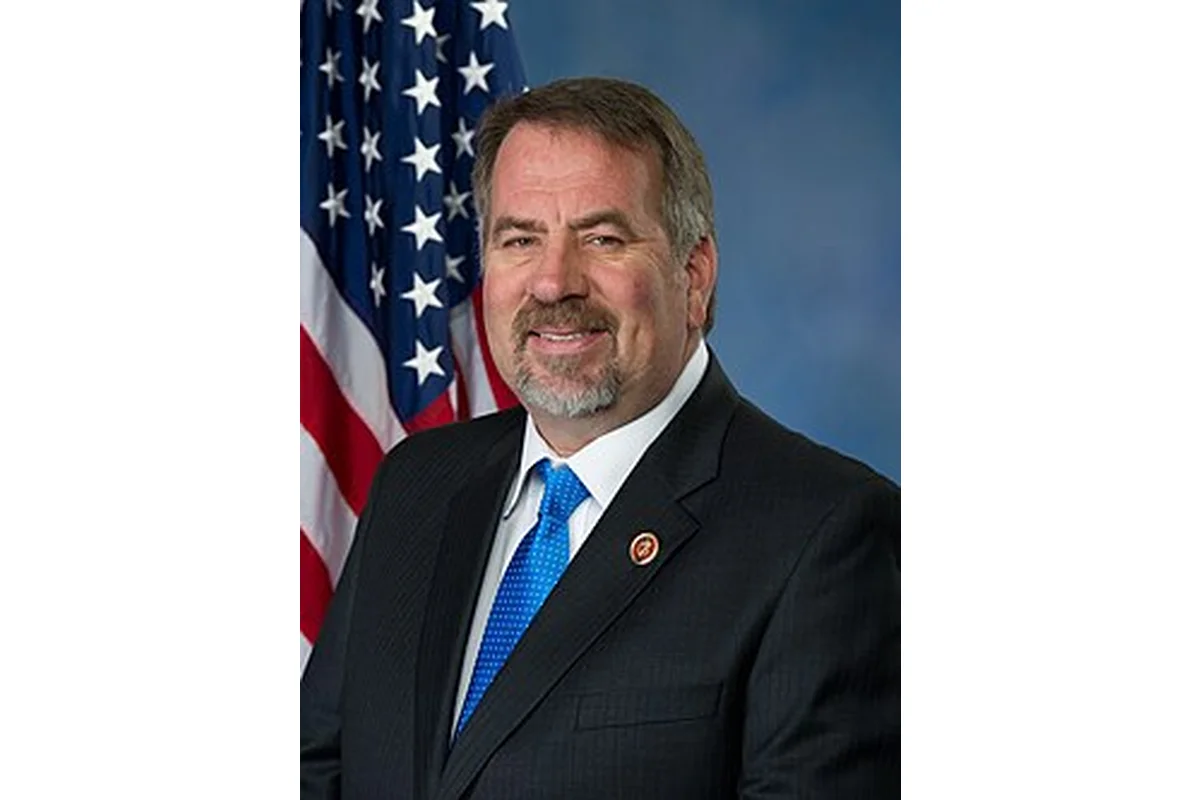
Doug LaMalfa Bio
Douglas Lee LaMalfa (2 July 1960 – 6 January 2026) was an American politician, businessman, and fourth-generation rice farmer who served as the U.S. representative for California’s 1st congressional district from 2013 until his death in 2026. A Republican, LaMalfa represented a sprawling interior Northern California district covering Chico, Redding, and Susanville. He combined his legislative work in Washington, D.C. with management of his family rice farm in the Sacramento Valley.
Before his time in Congress, he served in the California State Assembly from 2002 to 2008 and in the California State Senate from 2010 to 2012. Known for conservative positions on agriculture, immigration, and social issues, he became one of the most recognizable voices for rural Northern California in national politics.
Early Life and Background
Douglas Lee LaMalfa was born on 2 July 1960 in Oroville, California, a small city in the northern Sacramento Valley. He grew up in a farming family with deep roots in the region’s rice industry, eventually becoming a fourth-generation rice farmer. His early years were shaped by the rhythms of agricultural life in Butte County, where his family had worked the land for generations.
LaMalfa graduated from Biggs High School in 1978 and later attended Butte College before transferring to California Polytechnic State University, San Luis Obispo. He earned a bachelor’s degree in agricultural business in 1982, a course of study that prepared him for a life connected to both farming and policy. His education reinforced his understanding of the economic challenges facing family farms in California.
After college, LaMalfa returned to the family operation and became an owner and manager of the DSL LaMalfa Family Partnership, which owns and operates the family rice farm in Richvale, California. He later employed a farm manager to oversee daily operations while he served in elected office, allowing him to balance two demanding careers at the same time.
Path to US Politics
LaMalfa’s entry into politics grew out of his involvement with agricultural and conservative causes in Northern California. In the 1990s, he worked with Bernie Richter as an early supporter of Proposition 209, which ended affirmative action in California. He also worked for passage of the Protection of Marriage Act, Proposition 22, which banned same-sex marriage in the state.
After the California Supreme Court overturned Proposition 22 in the In re Marriage Cases decision, LaMalfa became an active supporter of the Proposition 8 campaign, an initiative designed to ban same-sex marriage again. In 2007, he successfully passed AB 1645, a law that prevented seizures of firearms during emergencies or natural disasters, the first pro-gun legislation signed into law in California in a decade. That same year, the California Rifle and Pistol Association named him “Legislator of the Year” for 2007.
These early legislative and campaign experiences established LaMalfa as a reliable conservative voice in Sacramento and set the stage for his move to higher office. His focus on gun rights, traditional marriage, and agricultural policy helped him build a loyal voter base across the rural counties of Northern California.
Doug LaMalfa Career
Early Career (2002–2010)
In 2002, LaMalfa ran for the California State Assembly in the 2nd district. He won the Republican primary with 59% of the vote and the general election with 67%. He was reelected in 2004 with 68% and again in 2006 with 68%, building a reputation as a dependable conservative vote in the state legislature.
During his six years in the Assembly, LaMalfa focused on issues important to his rural constituents, including water rights, agricultural subsidies, and gun ownership protections. He was a co-author of ACA 20, which sought to empower local law enforcement to act as Immigration and Customs Enforcement agents, reflecting his hardline stance on illegal immigration. In 2010, he won a seat in the California State Senate for the 4th district, defeating State Assemblyman Rick Keene in the Republican primary 58%–42% and Lathe Gill in the general election 68%–32%.
Congressional Career (2013–2026)
In January 2012, longtime 2nd district congressman Wally Herger announced his retirement after 13 terms, and Herger quickly endorsed LaMalfa as his successor. LaMalfa finished first in the June 2012 Republican primary with 38% of the vote in an eight-person race, winning 10 of the district’s 11 counties. On 6 November 2012, he defeated Democratic nominee Jim Reed 57%–43% to claim the seat, which had been renumbered as the 1st district.
LaMalfa won reelection in 2014, defeating Democratic nominee Heidi Hall with 61% of the vote. In 2016, he again defeated Jim Reed, this time with 59.1% of the vote. The 2018 cycle brought a more competitive race against Audrey Denney, whom he defeated with 54.9% of the vote after a campaign marked by a controversial altered mailer. He beat Denney again in a 2020 rematch with 57.0% of the vote.
In 2022, LaMalfa defeated Max Steiner, who described himself as a “moderate Democrat,” with 62.1% of the 246,225 votes cast. In his final campaign, he defeated Democratic candidate Rose Penelope Yee with 65.3% of the vote. Throughout his congressional tenure, LaMalfa served on the House Agricultural Committee and maintained a strongly conservative voting record, agreeing with President Joe Biden’s stated position only 11.6% of the time during the 117th Congress.
Notable Events and Milestones
Among LaMalfa’s signature legislative moments was his 2007 passage of AB 1645, which barred the seizure of firearms during emergencies and natural disasters. In Congress, he drew national attention for voting against certifying the 2020 presidential election results and for being one of 14 House Republicans to vote against legislation establishing Juneteenth as a federal holiday in 2021. In August 2023, he was the sole California Republican to vote in favor of amendments to prohibit $300 million in security assistance to Ukraine.
Doug LaMalfa Career Wins
Doug LaMalfa compiled a long string of electoral victories at the state and federal levels, winning every general election he contested from 2002 through 2024. His success rested on durable support across the rural counties of interior Northern California, where his defense of agriculture, gun rights, and traditional values consistently resonated with voters.
Congressional Highlights
LaMalfa first won California’s 1st congressional district in 2012 with 57% of the vote and held the seat for seven consecutive terms. His strongest performances came in 2024, when he won 65.3% of the vote, and in 2022, when he earned 62.1%. His 2018 and 2020 contests against Audrey Denney were his closest, with margins of 9.8 and 14.0 percentage points, respectively.
Other Wins & Achievements
Before his congressional career, LaMalfa won three terms in the California State Assembly (2002, 2004, 2006) and one term in the California State Senate (2010), each time securing at least 58% of the vote. He was named “Legislator of the Year” for 2007 by the California Rifle and Pistol Association for his work on AB 1645. In 2015, he co-sponsored a resolution to amend the U.S. Constitution to ban same-sex marriage, reflecting his long-standing conservative social positions.
Doug LaMalfa Family
Family Background and Farming Lineage
LaMalfa was born into a multi-generational farming family in Oroville, California, and became a fourth-generation rice farmer. He and his family operated the DSL LaMalfa Family Partnership, which owns and runs a rice farm in Richvale, California, near his childhood hometown. The farm remained a central part of his identity throughout his political career, and he frequently described his policy views through the lens of rural agricultural life.
Personal Life
LaMalfa was married to his wife, Jill, and the couple had four children. He commuted weekly between his home in Richvale, California, and Washington, D.C., while continuing to oversee the family farm through a hired farm manager. He was a Protestant, and his family life and farming heritage were central themes in his public messaging and campaign biography.