
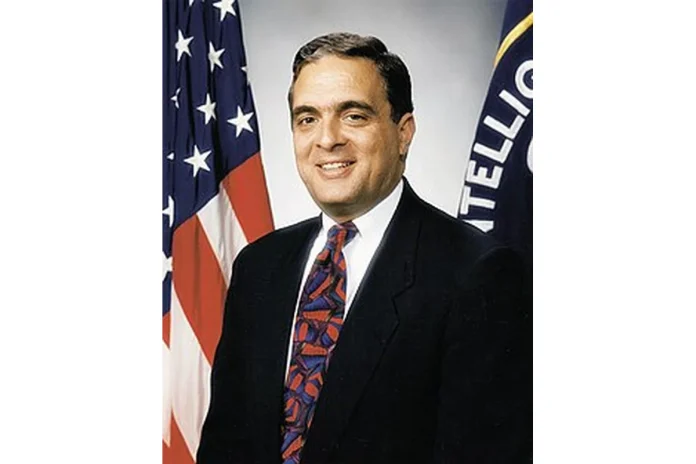
George Tenet Bio
George John Tenet, born on January 5, 1953, is an American intelligence official and academic who served as the Director of Central Intelligence (DCI) for the United States Central Intelligence Agency. Holding the post from July 1997 to July 2004, he recorded the second-longest tenure in the agency’s history, trailing only Allen Dulles, and was one of the few directors to serve under two presidents of opposing political parties. After leaving government, he became a Distinguished Professor in the Practice of Diplomacy at Georgetown University, his undergraduate alma mater, and later joined the private sector as a managing director at the investment bank Allen & Company.
Early Life and Background
George John Tenet was born in Flushing, in the Queens borough of New York City, the son of Greek immigrants Evangelia and John Tenet. His father was a member of the ethnic Greek community of Himarë, in Albania, who had worked in a French coal mine before reaching the United States through Ellis Island just before the Great Depression. His mother, who had fled communists by stowing away on a Royal Navy submarine, came to the country from Epirus, Greece. The family eventually settled in nearby Little Neck, Queens, where the brothers worked as busboys at the Twentieth Century Diner owned by their parents.
Although he and his older brother Bill were fraternal twins, the two were described as having very different personalities. Bill went on to become a cardiologist, while the louder and more talkative George earned the nickname “the mouthpiece.” As a teenager, he played basketball and softball for his Greek Orthodox church, served as an altar server, and developed a strong interest in current affairs, even receiving a personal note of encouragement from a local television host.
Path to US Politics
Tenet attended Public School 94 and Junior High School 67 before graduating from Benjamin N. Cardozo High School in 1971, where he played soccer and edited the school newspaper. He later studied at the State University of New York at Cortland before earning a Bachelor of Science in Foreign Service from the Georgetown University School of Foreign Service in 1976. He completed a Master of International Affairs at Columbia University in 1978, credentials that helped launch his career in policy and national security work.
George Tenet Career
Early Career (1978-1995)
After graduating from Columbia University, Tenet served as research director of the American Hellenic Institute from 1978 to 1979. He then directed international programs for the Solar Energy Industries Association until 1982, when he moved to Capitol Hill as a legislative assistant and later legislative director to Pennsylvania Senator H. John Heinz III. From 1985 to 1988 he served on the staff of the Senate Select Committee on Intelligence, and from 1988 to 1993 he was the committee’s staff director.
Following Bill Clinton’s election in 1992, Tenet joined the president-elect’s national security transition team and was appointed Senior Director for Intelligence Programs at the National Security Council, where he served from 1993 to 1995. In July 1995 he was named Deputy Director of Central Intelligence, and after John Deutch’s sudden resignation in December 1996, Tenet briefly served as acting director.
Director of Central Intelligence (1997-2004)
Tenet was officially confirmed as Director of Central Intelligence on July 11, 1997, by a unanimous vote in the Senate after the withdrawal of Anthony Lake. He immediately set out to re-energize the CIA, which had lost stature in the post-Cold War era and seen recruiting drop by roughly 25 percent from its peak. He focused the agency on transforming Russia and China, “rogue states” such as North Korea, Iran, and Iraq, and the emerging threat of terrorism.
He continued into the administration of George W. Bush, and over his seven years led the intelligence community through the 1998 embassy bombings in Africa, the October 2000 attack on the USS Cole, and the September 11, 2001 attacks. In 1999 he launched a dedicated plan against al-Qaeda, placing Cofer Black in charge of the Counterterrorist Center and Richard Blee in charge of the Bin Laden unit, and the following summer oversaw early CIA flights of the Predator drone over Afghanistan.
Post-9/11 Era (2001-2004)
Four days after 9/11, Tenet presented the Worldwide Attack Matrix at Camp David, a blueprint for the campaign that became known as the war on terror, and dispatched CIA teams into Afghanistan to work with military Special Operations units. He also rebuilt the agency’s paramilitary component, whose officers were the first Americans into both Afghanistan and Iraq and who organized and led the Northern Alliance and Kurdish forces. The first CIA casualty of the post-9/11 era, Johnny Micheal Spann, was killed at the Battle of Qala-i-Jangi on November 25, 2001, and Tenet personally informed the staff of his death.
His tenure became closely identified with the intelligence disputes surrounding the Iraq War, including his December 2002 assurance to President Bush that the case for Iraqi weapons of mass destruction was a “slam dunk,” and the October 2002 National Intelligence Estimate on Iraq that helped persuade Congress to authorize the use of force. After the invasion, no significant WMD stockpiles were found, and a 2005 CIA Inspector General report later concluded that Tenet “bears ultimate responsibility” for the intelligence community’s failure to develop a plan to counter al-Qaeda before 9/11, a finding he rejected as “flat wrong.”
Notable Events and Milestones
Among Tenet’s signature moments were brokering a short-lived Israeli-Palestinian ceasefire in 2001 and his strong opposition to the release of convicted spy Jonathan Pollard, a position he took to the brink of resignation. He also testified about the 1999 accidental bombing of the Chinese embassy in Belgrade, the only strike of the Kosovo campaign directed by the CIA, attributing the incident to a 100-yard database error rather than intent.
George Tenet Career Recognition
Tenet’s service was recognized with several major awards, including the Presidential Medal of Freedom in 2004, the Golden Plate Award of the American Academy of Achievement in 1998, and the Washington Institute’s Scholar-Statesman Award in 2018. He also received honorary recognition from Georgetown and Columbia for his contributions to public service and the intelligence profession.
Honors and Major Awards
On December 14, 2004, President George W. Bush presented Tenet with the Presidential Medal of Freedom alongside Tommy Franks and Paul Bremer, citing his early recognition of the terrorist threat to the United States. The decision drew criticism from some Democratic lawmakers, including Senator Carl Levin and Senator John Kerry’s office, who questioned the choice given the controversies of his tenure.
Other Achievements
Beyond his government service, Tenet served as Distinguished Professor in the Practice of Diplomacy and Senior Research Associate at Georgetown’s Institute for the Study of Diplomacy for three years beginning in 2005. In 2007 he published his memoir, “At the Center of the Storm: My Years at the CIA,” written with Bill Harlow, which became a top-selling book in its first week of release.
George Tenet Family
Family Background and Heritage
Tenet is the son of Greek immigrants John Tenet and Evangelia Tenet, and he grew up in a tight-knit Greek American household in Queens, New York. He and his fraternal twin brother Bill worked at the family’s Twentieth Century Diner, and the family remained active in their Greek Orthodox parish throughout his youth.
Personal Life
Tenet is married to A. Stephanie Glakas-Tenet, and the couple has one son, John Michael. In his June 2004 resignation letter to President Bush, Tenet cited the well-being of his family as the central reason for his decision to leave the CIA after seven years at its helm.