

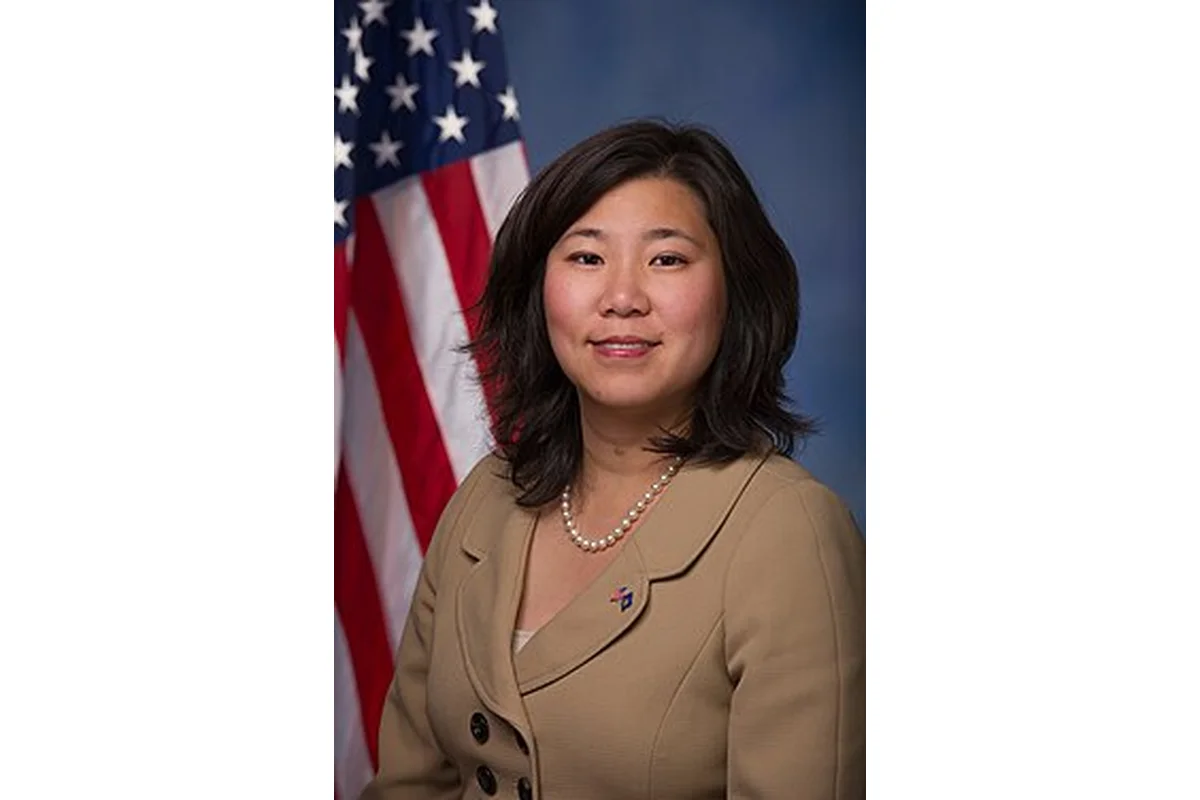
Grace Meng Bio
Grace Meng (born October 1, 1975) is an American lawyer and politician serving as the U.S. representative for New York’s 6th congressional district since 2013. A member of the Democratic Party, Meng represents a Queens-based district that includes neighborhoods such as Flushing, Forest Hills, Jackson Heights, Bayside, and Elmhurst. She previously served in the New York State Assembly representing the 22nd district from 2009 to 2012 and is the first Asian American elected to Congress from New York.
Throughout her career, Meng has focused on issues including education, immigration, consumer protection, and combating anti-Asian hate. A practicing attorney before entering politics, she has built a reputation for constituent service and legislative work on issues ranging from senior citizen tax relief to international religious freedom.
Early Life and Background
Grace Meng was born on October 1, 1975, in Queens, New York, to a Taiwanese American family. She is the daughter of Jimmy Meng, the first Asian American to serve in the New York State Assembly, and Shiao-Mei Meng. Meng was raised in the Bayside and Flushing sections of Queens, areas with large and diverse immigrant communities that helped shape her early interest in civic life.
She is of waishengren Taiwanese descent, and her family background gave her direct exposure to community organizing and electoral politics through her father’s career. Meng attended Nathaniel Hawthorne Middle School and later Stuyvesant High School, where she initially planned to become a teacher, according to classmates who knew her during those years.
She went on to earn a Bachelor of Arts degree from the University of Michigan before attending the Benjamin N. Cardozo School of Law at Yeshiva University, where she received her Juris Doctor. One of her early mentors was Susan Wu Rathbone, founder of the Queens Chinese Women’s Association, who encouraged her involvement in local community issues.
Path to US Politics
After completing her education, Grace Meng worked as a lawyer, building a professional background that later supported her transition into public service. Her family’s deep ties to Queens politics, especially through her father Jimmy Meng’s 2004 election to the New York State Assembly, provided a natural entry point into electoral politics.
In 2006, Meng ran for the same Assembly seat her father held, but her name was removed from the ballot after Democrat Ellen Young challenged her residency status. Young succeeded Jimmy Meng and took office in January 2007. Meng spent the next two years rebuilding her political profile and resolving her district residency issues.
She ran again for the Assembly in 2008 and defeated Young in the Democratic primary on September 9, winning 59 percent to 41 percent. Her primary victory was widely noted as a significant moment for Asian American political representation in Flushing. She then won the November general election decisively, beginning her formal political career.
Grace Meng Career
Early Career (2009–2011)
Grace Meng was sworn into the New York State Assembly in 2009, representing the 22nd district and quickly establishing herself as an active legislator. That same year, she was named one of City & State’s “New York City Rising Stars: 40 Under 40,” recognizing her rapid rise in state-level politics. She authored the Reverse Mortgage Act of 2009, which ensured that proceeds from reverse mortgages would not be counted as income, helping senior citizens qualify for partial property tax exemptions.
During her time in the Assembly, Meng saw seven of her bills signed into law, demonstrating a productive first term. In 2010, she was reelected without opposition, allowing her to focus on legislative priorities in Albany without the demands of a competitive campaign.
2012 Congressional Election Breakthrough
In June 2012, Grace Meng entered the Democratic primary for New York’s 6th congressional district, facing fellow Assembly member Rory Lancman and New York City Council member Elizabeth Crowley. She won the primary with the endorsement of the Queens County Democratic Party, positioning herself as the likely successor to retiring Congressmember Gary Ackerman.
During the campaign, Meng emphasized creating jobs, improving transportation, and expanding tourism in Queens. A New York Times reporter wrote that she was “poised to become the biggest political star from New York City’s fastest-growing demographic group,” reflecting the historic nature of her candidacy. She also drew support from the Henan Association of Eastern America, a hometown association co-founded by her grandmother.
On November 6, 2012, Meng defeated Republican New York City Councilmember Dan Halloran, becoming the first Asian American elected to Congress from New York. Her victory was a defining milestone in her career and a moment of historic representation for the state’s Asian American community.
U.S. House Era (2013–Present)
Grace Meng was inaugurated on January 3, 2013, and immediately helped form the Bipartisan Freshman Caucus, arguing that “the American people are just sick and tired of blaming each other without getting anything done.” Her early legislative efforts included introducing H.R. 4028 in 2014 to amend the International Religious Freedom Act of 1998 to include cemetery desecration as a recognized violation of religious freedom.
In February 2017, Meng became Vice Chair of the Democratic National Committee during a meeting in Atlanta. That same year, she boycotted the presidential inauguration. In 2019, she reintroduced the Community College Student Success Act to improve graduation rates at under-resourced public community colleges and introduced the Menstrual Products Right to Know Act, which would require manufacturers to label ingredients in menstrual products.
In February 2021, Meng introduced House Resolution 151, “Condemning all forms of anti-Asian sentiment as related to COVID-19,” in response to rising hate crimes against Asian Americans. The resolution drew initial support from 140 co-sponsors and, by early March, 46 additional Democrats. According to a FiveThirtyEight analysis, Meng voted with President Joe Biden’s stated position 100 percent of the time during the 117th Congress.
More recently, Meng has continued advocating for accountability in federal agencies. In July 2025, she introduced a resolution requiring ICE agents and officers to display badge numbers. She has also voted in favor of military aid packages for Ukraine, Israel, and Taiwan in April 2024, while supporting humanitarian aid initiatives in Gaza.
Notable Events and Milestones
Grace Meng’s most significant milestone came on November 6, 2012, when she became the first Asian American elected to Congress from New York, defeating Republican Dan Halloran. Her legislative record includes the Reverse Mortgage Act of 2009 and seven Assembly bills signed into law. In November 2013, she was robbed and assaulted by a purse-snatcher in Washington, D.C., suffering injuries that required treatment at George Washington University Hospital.
Grace Meng Career Wins
Grace Meng has built a strong record of electoral victories since entering politics in 2008. Her career wins include two Assembly election victories in New York’s 22nd district, a congressional primary win in 2012, and consecutive successful campaigns for New York’s 6th congressional district from 2012 onward.
Congressional Election Highlights
Meng first won her congressional seat on November 6, 2012, by defeating Republican Dan Halloran. In 2014, 2016, and 2018, she retained her seat without facing a Democratic primary challenger. In 2020, she won the primary with 65.5 percent of the vote against two challengers and went on to defeat a Republican in the general election.
She was unopposed in the Democratic primary in both 2022 and 2024, demonstrating continued strong support within her party. Looking ahead, Chuck Park has announced a Democratic primary challenge against her for the 2026 election cycle.
Other Wins & Achievements
In addition to her electoral victories, Meng was recognized in 2009 as one of City & State’s “New York City Rising Stars: 40 Under 40.” She has earned a 100 percent rating from NARAL Pro-Choice America in both 2021 and 2024. Her legislative accomplishments include seven bills signed into law during her Assembly tenure and authorship of the Reverse Mortgage Act of 2009.
Grace Meng Family
Family Background and Political Lineage
Grace Meng was born into a Taiwanese American family with deep roots in Queens civic life. Her father, Jimmy Meng, became the first Asian American elected to the New York State Assembly in 2004, serving one term before declining to seek reelection in 2006. Her mother is Shiao-Mei Meng. The family’s grandmother co-founded the Henan Association of Eastern America, a local hometown association that has supported Meng’s campaigns.
Her father’s 2012 arrest during an FBI sting and subsequent guilty plea to wire fraud in a bribery scheme drew public attention to the family, though Grace Meng herself faced no charges. Despite the controversy, she continued her political career and was elected to Congress that same year.
Personal Life
Grace Meng married Wayne Kye, a Korean American dentist and assistant professor at NYU, in June 2005. The couple resides in Queens, New York, with their two sons, Tyler Kye and Brandon Kye. The family attends a Protestant church in Forest Hills, Queens.
In November 2013, Meng was robbed and assaulted by a purse-snatcher near Eastern Market in Washington, D.C. She suffered injuries to her head, left knee, hand, and face and was treated at George Washington University Hospital. The incident drew attention to urban safety concerns in the capital.