

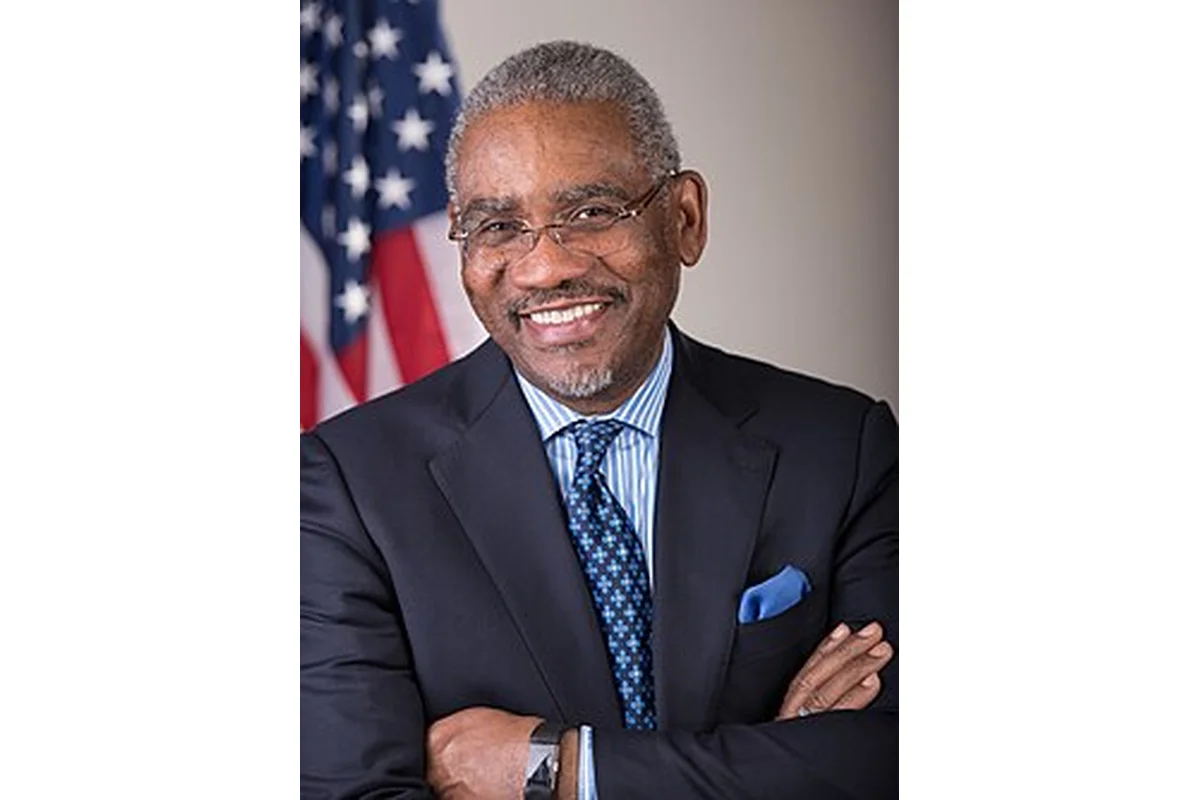
Gregory Meeks Bio
Gregory Weldon Meeks (born September 25, 1953) is an American lawyer and Democratic politician who has served as the United States representative for a southeastern Queens congressional district since 1998. A former member of the New York State Assembly from 1993 to 1998, Meeks chairs the Queens County Democratic Party and previously chaired the House Committee on Foreign Affairs from 2021 to 2023, where he now serves as the ranking member. He is widely regarded as a prominent voice on foreign policy, immigration, and economic issues affecting working-class communities.
Beyond his committee work in Washington, Meeks is known for his longstanding ties to the African-American and West Indian American neighborhoods of Queens, including Jamaica, Laurelton, Rosedale, and the Rockaways. He is a member of Alpha Phi Alpha fraternity and has built a career that bridges legal practice, local politics, and national legislative leadership.
Early Life and Background
Gregory Weldon Meeks was born in East Harlem, a neighborhood in New York City, and raised in one of its public housing projects. Growing up in a working-class environment shaped his early awareness of economic and racial inequality, themes that would later influence his political career. His great-grandparents lived in South Carolina when slavery was abolished, and DNA analysis indicates that Meeks descends mainly from people of Sierra Leone, giving him deep African-American roots that he has often referenced in public life.
Meeks pursued higher education at Adelphi University, where he earned a Bachelor of Arts degree, before continuing on to Howard University School of Law to receive his Juris Doctor. While at Howard, he joined Alpha Phi Alpha, a historically Black fraternity with a long tradition of public service. These formative years in New York City and Washington, D.C., exposed him to both urban politics and a national network of Black professional leaders.
Path to US Politics
Before entering elective office, Meeks built a career in public service and the law. He worked as an assistant district attorney in New York, served with the Special Narcotics Prosecutor for the City of New York, and joined the Investigations Commission focused on official misconduct and organized crime. He later served as a Supervising Judge for the New York State Workers’ Compensation System, giving him direct experience with labor, injury, and compensation disputes.
In 1992, Meeks successfully ran for the New York State Assembly, representing the 31st District from 1993 to 1998. His time in Albany allowed him to develop legislative skills and a constituency base in Queens. When longtime Representative Floyd Flake announced his retirement in 1997, Meeks ran for the open congressional seat and won, taking office in January 1998 and beginning what would become one of the longest tenures in New York’s House delegation.
Gregory Meeks Career
Early Career (1998–2006)
Meeks took office in 1998 representing a Queens-centered district, joining a new generation of Democrats in the House. He established himself early as an advocate for his constituents, focusing on housing, education, and small-business concerns in southeastern Queens. Over his first several terms, he built relationships with local civic organizations, faith leaders, and labor unions that helped solidify his political base.
During this period, Meeks also became more engaged in foreign policy matters, traveling abroad and developing an interest in the Caribbean and Africa that would later define his committee work. He was an early and visible critic of the Iraq War and used his seat on the Financial Services Committee to press for consumer protections and disaster recovery aid after the September 11, 2001 attacks.
Foreign Affairs Committee Rise (2007–2020)
Meeks joined the House Committee on Foreign Affairs and gradually rose through its ranks, becoming a senior voice on international affairs. In August 2007, he joined a bipartisan congressional delegation, alongside Representatives Silvestre Reyes, Rodney Frelinghuysen, Heather Wilson, and Dutch Ruppersberger, that visited American troops in the southern Philippines to review U.S.-Philippines security cooperation.
On March 3, 2015, Meeks participated in a Democratic boycott of the speech delivered by Israeli Prime Minister Benjamin Netanyahu to a joint session of Congress, a decision that drew national attention. After Eliot Engel lost his primary in 2020, Meeks declared his candidacy for the chair of the House Foreign Affairs Committee. On December 3, 2020, he defeated Representative Joaquin Castro in a House Democratic Caucus vote, 148 to 78, and was formally selected to lead the committee.
Foreign Affairs Chair Era (2021–2023)
As chair of the House Foreign Affairs Committee from 2021 to 2023, Meeks helped shape the Democratic foreign policy agenda during the Biden administration. He voted with President Joe Biden’s stated position 100 percent of the time in the 117th Congress, according to a FiveThirtyEight analysis, making him one of the most reliable administration allies in the House.
In November 2021, Meeks called for raising the cap on State and Local Tax (SALT) deductions, arguing that the existing limit unfairly hurt middle-class homeowners in high-tax states like New York. In August 2022, he traveled to Malaysia with House Speaker Nancy Pelosi and other members of Congress as part of Pelosi’s Asia tour, discussing security challenges, economic opportunities, and governance priorities with Malaysian leaders. The following month, he represented Pelosi at the P20 Bali summit, delivering the keynote address at a plenary session focused on defending democratic values, combating climate change, and strengthening global food and energy security.
Ranking Member Era (2023–Present)
After Republicans regained the House majority in 2023, Meeks transitioned to the role of ranking member on the House Foreign Affairs Committee, where he continues to serve. In that capacity, he has remained an influential voice on U.S. policy toward the Caribbean, Africa, and the Middle East, and a leading Democratic critic of the foreign policy direction of successive Republican administrations.
Meeks has also retained his leadership of the Queens County Democratic Party, guiding local political strategy in one of the most diverse regions of New York City. He is positioned to become the dean of New York’s House delegation following the planned 2026 retirements of Representatives Jerry Nadler and Nydia Velázquez, a milestone that would underscore his longevity and influence within the state’s Democratic political establishment.
Notable Events and Milestones
One of Meeks’s signature moments came on the day of the fall of Kabul in 2021, when he released a statement declaring the Taliban victory “inevitable” absent a major new U.S. troop commitment, a candid assessment that drew both praise and criticism. His 2020 victory in the caucus race to lead the Foreign Affairs Committee also stands as a defining milestone, marking his arrival as a senior figure in House Democratic leadership. Earlier, his participation in the 2015 boycott of Prime Minister Netanyahu’s address to Congress cemented his reputation as an independent voice on Middle East policy.
Gregory Meeks Family
Family Background and Heritage
Meeks has African-American heritage, and according to DNA analysis, he descends mainly from people of Sierra Leone, reflecting a lineage that traces back to West Africa. His great-grandparents lived in South Carolina at the time slavery was abolished, anchoring his family history in the post-Emancipation South. These roots have informed his advocacy for civil rights, reparations discussions, and stronger U.S. engagement with African nations.
Personal Life
Meeks is married to Simone-Marie Meeks, his wife. He has spent much of his adult life in the Queens community he represents, and his family life has remained largely out of the public spotlight compared with his legislative work. Throughout his career, he has frequently cited his upbringing in East Harlem public housing as the foundation for his commitment to affordable housing, education access, and economic mobility for working families.