

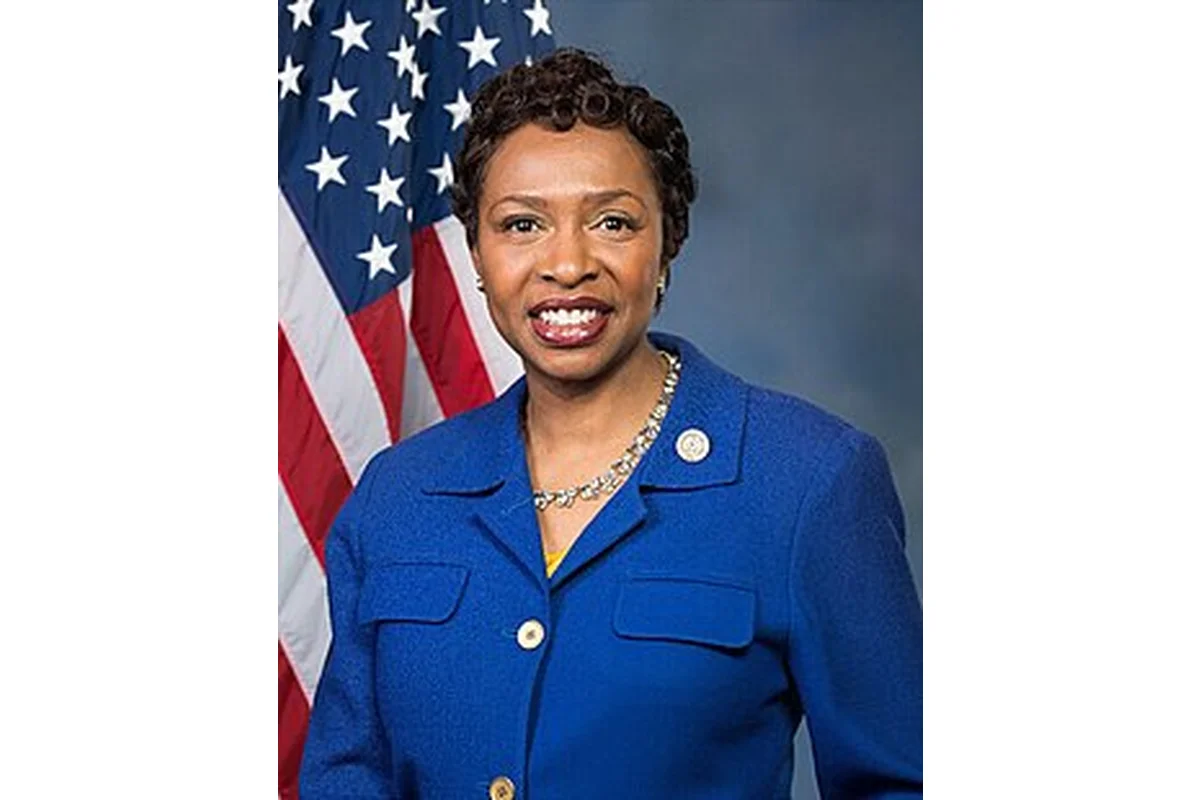
Yvette Clarke Bio
Yvette Diane Clarke (born November 21, 1964) is an American politician who has served as the U.S. representative for New York’s 9th congressional district since 2013. A member of the Democratic Party, she first entered Congress in 2007, representing New York’s 11th congressional district until redistricting reshaped the seats she covers. Clarke represented the 40th district in Brooklyn on the New York City Council from 2002 to 2006, building a career focused on civil rights, immigration reform, consumer protection, and cybersecurity.
Born in Flatbush, Brooklyn, to Jamaican immigrant parents, Clarke has been a steady voice for Caribbean-American communities in New York City. Her legislative work in Washington has ranged from introducing the Homeland Security Cybersecurity Boots-on-the-Ground Act to authoring the Deepfakes Accountability Act, both of which reflect her interest in technology and public safety.
Early Life and Background
Yvette Diane Clarke was born on November 21, 1964, in Flatbush, Brooklyn, to Lesley Clarke and Una S. T. Clarke, both immigrants from Jamaica. She grew up in a household that valued public service, a theme that would shape her own path into politics. Her mother, Una Clarke, later became a member of the New York City Council, giving young Yvette an early look at how local government worked.
Clarke graduated from Edward R. Murrow High School in Brooklyn before earning a scholarship to attend Oberlin College in Ohio. She studied there from 1982 to 1986, and during her college years she spent a summer interning in the Washington, D.C. office of Representative Major Owens, working on legislative issues tied to Caribbean-American trade. That internship offered an early introduction to Congress and to the political career she would later pursue.
Reports later noted that Clarke did not complete her Oberlin degree at the time, though she has said she took courses at Medgar Evers College and has discussed finishing her studies through independent academic work. Her educational path, like much of her early life, reflected a mix of scholarship, public service, and family example.
Path to US Politics
Before entering elected office, Clarke built a career in community work and public administration. She worked as a childcare specialist and trained community residents to care for the children of working parents, an experience that grounded her interest in social services. She then served as an assistant to State Senator Velmanette Montgomery of Brooklyn and Assemblywoman Barbara Clark of Queens, learning the daily operations of state and local government.
Clarke also worked as director of business development for the Bronx Overall Economic Development Corporation and was the second director of the Bronx portion of the New York City Empowerment Zone. These roles gave her direct experience with economic policy and urban development, skills that would later inform her work in the City Council and in Congress.
In 2001, Clarke was elected to the 40th district of the New York City Council, succeeding her mother, former City Council member Una S. T. Clarke. Theirs was the first mother-to-daughter succession in the history of the city council. During her time on the council, Clarke cosponsored resolutions opposing the war in Iraq, criticizing the federal USA PATRIOT Act, and calling for a national moratorium on the death penalty. She was a frequent critic of Bush administration policies and later voted against extending provisions of the Patriot Act after the election of President Barack Obama.
Yvette Clarke Career
Early Career (2001–2006)
Clarke joined the New York City Council in 2002 representing the 40th district in Brooklyn, where she served until 2006. Her early work on the council focused on women’s rights, poverty programs, and opposition to federal policies she viewed as overreaching. She built a reputation as a vocal critic of the Bush administration and a defender of civil liberties in New York City.
In 2004, Clarke made her first run for Congress in the 11th district against incumbent Major Owens, the same representative for whom she had interned in college. Her campaign followed an unsuccessful 2000 bid by her mother for the same seat. Clarke lost the 2004 Democratic primary to Owens, who won 45.4 percent of the vote to her 28.9 percent in a multi-candidate race. After Owens declined to seek reelection, Clarke announced her intention to run again in 2006.
First Congressional Campaigns (2006–2012)
On September 12, 2006, Clarke won the Democratic nomination for the 11th district with 31.20 percent of the vote in a four-person primary, defeating then-Councilman David Yassky, State Senator Carl Andrews, and Christopher Owens, the son of Major Owens. In the November 7 general election, she was elected to the House of Representatives with 89 percent of the vote against Republican nominee Stephen Finger, giving her a strong start in Congress.
Clarke was reelected on November 4, 2008, by a large margin, and again on November 2, 2010, also by a large margin. In 2012, she faced a Democratic primary challenge from Sylvia Kinard, an attorney and ex-wife of former New York City Comptroller Bill Thompson. Clarke defeated Kinard with 88.3 percent of the vote and went on to defeat Republican nominee Daniel Cavanagh in the November general election.
Redistricting and 9th District Era (2013–Present)
Following redistricting in 2013, Clarke began representing the redrawn 9th congressional district, which includes Sheepshead Bay, Gerritsen Beach, Brownsville, Crown Heights, East Flatbush, Flatbush, Kensington, Midwood, Prospect Heights, Prospect Lefferts Gardens, and Park Slope. The new district gave her a broader Brooklyn base and a profile that blended long-established neighborhoods with growing immigrant communities.
In 2014, Clarke was reelected with 89.5 percent of the vote, again defeating Daniel Cavanagh. Two years later, in 2016, she ran unopposed in the primary and defeated Alan Bellone in the November general election with 92.4 percent of the vote. In 2018, she narrowly defeated primary challenger Adem Bunkeddeko with 51.9 percent of the vote before going on to defeat Republican nominee Lutchi Gayot in the November 6 general election.
In 2020, Clarke faced a four-way Democratic primary against Adem Bunkeddeko, Chaim Deutsch, and former army veteran and Democratic Socialists of America member Isiah James. She has continued to serve in the House, focusing on cybersecurity, immigration reform, climate policy, and the rights of Caribbean-American constituents.
Notable Events and Milestones
Among Clarke’s most significant legislative moments, she introduced the Homeland Security Cybersecurity Boots-on-the-Ground Act on September 17, 2013, to strengthen the Department of Homeland Security’s cybersecurity workforce. In 2019, she teamed up with Senators Ron Wyden and Cory Booker to introduce the Algorithmic Accountability Act, which would push companies to study bias in their technology. She has also introduced multiple versions of the Deepfakes Accountability Act, first in 2019 and again in 2023, to address the national security risks of manipulated digital media.
Yvette Clarke Political Career Wins
Yvette Clarke has built a long record of electoral victories at both the city and federal levels, beginning with her 2001 election to the New York City Council. She has won every congressional general election since 2006 by wide margins, often running unopposed or defeating Republican challengers with more than 80 percent of the vote. Her strongest showings include her 89 percent win in 2006, her 89.5 percent win in 2014, and her 92.4 percent win in 2016.
Congressional Election Highlights
Clarke first won her U.S. House seat in 2006, taking 89 percent of the vote in the general election. She has since been reelected in 2008, 2010, 2012, 2014, 2016, 2018, and 2020, with consistently strong margins in both primaries and general elections. Her 2016 win, in which she ran unopposed in the primary and took 92.4 percent of the November vote, stands as one of the most decisive victories of her career.
Other Wins and Achievements
Beyond her election victories, Clarke’s achievements include securing passage of legislation in 2009 that improved the process for individuals wrongly identified on the No Fly List, which passed the House 413-3. She has also earned high marks from environmental and civil rights organizations for her voting record, including 100 percent ratings from Environment America, the League of Conservation Voters, and the Sierra Club in 2011 on clean water and conservation issues.
Yvette Clarke Family
Family Background and Political Lineage
Yvette Diane Clarke comes from a Jamaican immigrant family with deep roots in Brooklyn politics. Her father, Lesley Clarke, and her mother, Una S. T. Clarke, both emigrated from Jamaica before settling in New York City. Her mother served on the New York City Council representing the 40th district, and Clarke’s own election to the same seat in 2001 created the first mother-to-daughter succession in city council history.
Personal Life
Clarke grew up in Flatbush, Brooklyn, in a household shaped by immigration, community service, and political engagement. Her family’s Caribbean roots and her mother’s career in elected office influenced her decision to enter public service. She has continued to advocate for the Caribbean-American community in her district, an area with deep cultural ties to Jamaica and the wider Caribbean.