
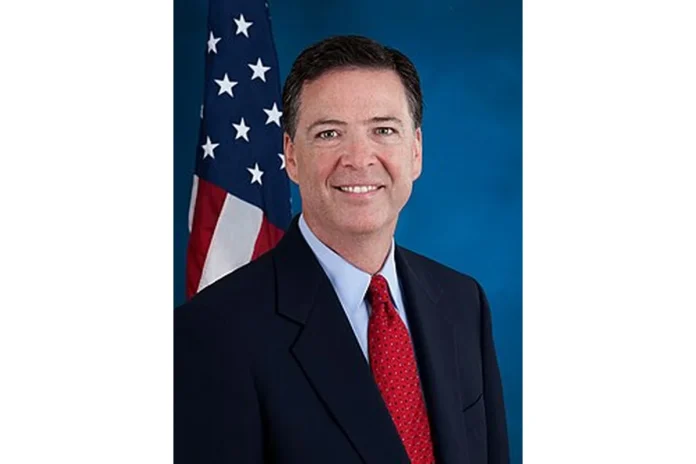
James Comey Bio
James Brien Comey Jr. (born December 14, 1960) is an American lawyer and former government official who served as the seventh Director of the Federal Bureau of Investigation from 2013 until his dismissal in May 2017. He previously held senior positions at the U.S. Department of Justice, including U.S. Attorney for the Southern District of New York and United States Deputy Attorney General. After leaving government service, he moved through the private sector, academia, and writing, producing memoirs and legal thrillers. Comey became a prominent national figure for his public handling of investigations into Hillary Clinton’s emails and Russian interference in the 2016 election, and for his subsequent firing by President Donald Trump.
Early Life and Background
James Brien Comey Jr. was born in Yonkers, New York, on December 14, 1960, to Joan Marie Comey and J. Brien Comey. His grandfather, William J. Comey, was an officer and later commissioner of the Yonkers Police Department. The family moved to Allendale, New Jersey, in the early 1970s, where his father worked in corporate real estate and his mother worked as a computer consultant and homemaker. Comey is of Irish heritage and was raised in a Roman Catholic household, later becoming a member of the United Methodist Church.
In 1977, Comey and his brother were victims of a home invasion by a criminal known as the Ramsey Rapist, an experience that shaped his early years. He attended Northern Highlands Regional High School in Allendale, where he completed his secondary education. He then enrolled at the College of William and Mary, graduating with honors in 1982 with majors in chemistry and religion. His senior thesis compared the theologian Reinhold Niebuhr and the televangelist Jerry Falwell, focusing on their shared commitment to public action. He went on to earn his J.D. from the University of Chicago Law School in 1985.
Path to U.S. Politics
After law school, Comey clerked for United States District Judge John M. Walker Jr. in Manhattan and joined Gibson, Dunn and Crutcher as an associate. From 1987 to 1993, he served in the U.S. Attorney’s Office for the Southern District of New York, where he rose to Deputy Chief of the Criminal Division and helped prosecute the Gambino crime family. In 1996, he became Managing Assistant U.S. Attorney in charge of the Richmond Division of the Eastern District of Virginia and served as deputy special counsel to the Senate Whitewater Committee. He also acted as lead prosecutor in the case concerning the 1996 Khobar Towers bombing in Saudi Arabia.
These roles built Comey’s reputation as a steady, nonpartisan prosecutor. He was a registered Republican for most of his life, donating to Senator John McCain’s 2008 presidential campaign and Governor Mitt Romney’s 2012 campaign. In January 2002, he was appointed U.S. Attorney for the Southern District of New York, a position he held until December 2003. President George W. Bush then named him United States Deputy Attorney General, where he served from December 2003 to August 2005. These senior Justice Department posts set the stage for his later appointment as FBI Director and his rise to national prominence.
James Comey Career
Early Career (1985–2001)
Comey began his legal career in 1985 as a law clerk for Judge John M. Walker Jr. in the Southern District of New York, followed by private practice at Gibson, Dunn and Crutcher. He then joined the U.S. Attorney’s Office for the Southern District of New York, where he worked from 1987 to 1993 and rose to Deputy Chief of the Criminal Division. In that role, he helped prosecute members of the Gambino crime family, gaining early recognition for his work on organized crime cases.
In 1996, Comey moved to the Eastern District of Virginia as Managing Assistant U.S. Attorney in the Richmond Division. He served as deputy special counsel to the Senate Whitewater Committee and prosecuted the case arising from the 1996 Khobar Towers bombing in Saudi Arabia. While based in Richmond, he also taught as an adjunct professor of law at the University of Richmond School of Law, balancing prosecution work with academic engagement.
Justice Department Leadership (2002–2005)
As U.S. Attorney for the Southern District of New York from January 2002 to December 2003, Comey handled several high-profile matters. He led the prosecution of three men involved in one of the largest identity fraud cases in American history, a scheme that cost thousands of victims more than three million dollars. He also secured the indictment and 2004 conviction of Adelphia Communications founder John Rigas on bank fraud, wire fraud, and securities fraud charges tied to three-point-three billion dollars in false loans. Rigas was sentenced to fifteen years in federal prison in 2005, in what was called one of the most elaborate corporate frauds in U.S. history.
Comey served as lead prosecutor in the 2003 securities fraud case against Martha Stewart and indicted ImClone CEO Samuel Waksal for tax evasion on fifteen million dollars in contemporary art. He also led the prosecution of banker Frank Quattrone and unveiled Operation Project Meltdown, a money-laundering investigation that broke up a Colombian narcotics cartel’s scheme to ship gold and diamonds from New York’s West 47th Street jewelers. Promoted to United States Deputy Attorney General in December 2003, he served as the Justice Department’s second-in-command until August 2005, overseeing major national security and law enforcement operations.
FBI Director Era (2013–2017)
After years in the private sector at Lockheed Martin and Bridgewater Associates, Comey was appointed by President Barack Obama as the seventh Director of the FBI in September 2013. During his tenure, he oversaw the FBI’s investigation into Hillary Clinton’s use of a private email server for official communications, including messages later determined to contain classified information. His public handling of the investigation, including his decision to reopen the matter shortly before the 2016 presidential election, drew intense criticism and became a major source of controversy.
On June 14, 2018, DOJ Inspector General Michael E. Horowitz released a report criticizing Comey’s actions during the 2016 election. Comey also oversaw the FBI’s counterintelligence probe into Russian interference in the 2016 election, requesting additional resources to expand the investigation shortly before his dismissal. In 2015, he raised public concern about the Office of Personnel Management data breach, ultimately estimating that the records of 18 million people had been exposed.
Dismissal and Aftermath (2017–Present)
On May 9, 2017, President Donald Trump fired Comey upon the recommendation of the Department of Justice, with the White House citing his handling of the Clinton email investigation. Comey later learned of his termination from television news reports while delivering a speech at the FBI’s Los Angeles Field Office. In congressional testimony, he stated that he believed he was fired because of the Russia investigation, and his memos documenting private meetings with the president became central to the subsequent special counsel inquiry.
After leaving government, Comey taught ethical leadership at Howard University and at his alma mater, the College of William and Mary. He joined the Kettering Foundation as a senior fellow and published several books, including the memoir A Higher Loyalty, Saving Justice, and the legal thrillers Central Park West, Westport, and FDR Drive. His tenure as FBI director was depicted in the 2020 Showtime mini-series The Comey Rule, in which he was portrayed by Jeff Daniels. In September 2025, Comey was indicted by a federal grand jury on charges of making false statements and obstruction; he pleaded not guilty, and the case was dismissed by a federal judge on November 24, 2025.
Notable Events and Milestones
Comey’s signature moment came when he was dismissed as FBI Director in May 2017, an event compared to the Saturday Night Massacre during Watergate. His prepared memos documenting private meetings with President Trump, including a request to end the investigation into Michael Flynn, became key evidence in debates over potential obstruction of justice. He was also a 2009 short-list candidate for the U.S. Supreme Court seat vacated by Justice David Souter, and in 2013 he signed an amicus brief supporting same-sex marriage in Hollingsworth v. Perry.
James Comey Family
Family Background and Public Service Lineage
Comey was born to Joan Marie and J. Brien Comey, with his grandfather, William J. Comey, having served as an officer and later commissioner of the Yonkers Police Department. The family’s background in law enforcement shaped his early exposure to public service, and his Irish heritage has been a recurring theme in his public remarks about community and policing.
Personal Life
Comey met his wife, Patrice Failor, when both were students at the College of William and Mary, and they married in 1987. The couple has five children and experienced the loss of a son in infancy; Comey has said that the tragedy taught him to make something good happen afterward. They have also served as foster parents. Their oldest daughter, Maurene Comey, graduated from Harvard Law School in 2013 and worked as an assistant U.S. attorney in the Southern District of New York. As of 2023, the family resides in McLean, Virginia. Comey was diagnosed with stage 3 colon cancer in 2006 and had a malignant tumor removed from his colon during that year.