

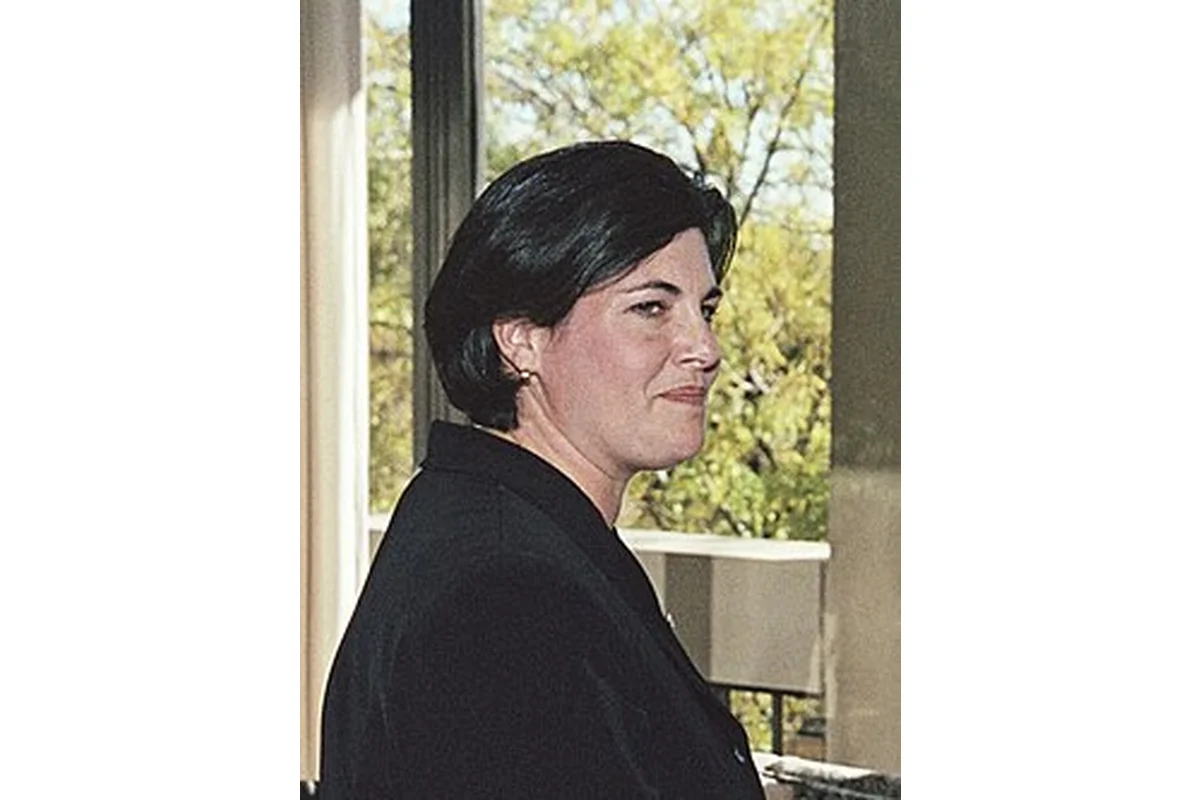
Jane Swift Bio
Jane Maria Swift (born February 24, 1965) is an American politician and nonprofit executive who built a notable career in Massachusetts government before transitioning to leadership roles in education technology. She served as the 69th lieutenant governor of Massachusetts from 1999 to 2003 and, concurrently, as acting governor from April 2001 to January 2003. Swift was the first woman to perform the duties of governor of Massachusetts, and at age 36, she became the youngest female governor in United States history. A member of the Republican Party, she is also remembered for her long-standing commitment to education reform and her later work in the nonprofit sector.
Early Life and Background
Jane Maria Swift was born on February 24, 1965, in North Adams, Massachusetts, and grew up in a large extended family in the same small Berkshire County city. Her maternal grandmother immigrated to the United States from northern Italy after World War I, and her paternal grandfather was a Plymouth, Massachusetts native with roots in Ireland as well as on the Mayflower. Swift’s father, Jack Swift, ran the family HVAC business and was active in the Berkshire County Republican Party, and it was from him that she developed an early interest in politics. Her mother, a graduate of North Adams State College, worked as a teacher in area public and parochial schools, giving Swift close exposure to issues in education from a young age.
Swift attended North Adams public schools and went on to graduate from Trinity College in Hartford, Connecticut, in 1987 with a degree in American studies. During her college years, she held work-study jobs in the college dining hall and with the Religion and Philosophy Department, played on the women’s rugby team, and was a member of the Kappa Kappa Gamma sorority. Those experiences helped shape her interest in public service, governance, and the reform of public institutions.
Path to US Politics
Swift’s entry into politics came quickly after college. In 1990, at the age of 25, she became the youngest woman ever elected to the Massachusetts Senate, representing the Berkshire, Hampshire, Franklin, and Hampden district. She served in that role from 1991 to 1997 and was particularly active in education reform. According to Governor Bill Weld’s chief of staff, she was widely regarded as one of the best senators in the chamber, and her work helped her develop core political themes of increased accountability, smaller government, fiscal responsibility, and reforming education and social services.
During her time in the state Senate, Swift was instrumental in the passage of the Education Reform Act of 1993, which created the Massachusetts Comprehensive Assessment System, one of the nation’s first statewide programs for quantifying academic performance. In 1996, rather than seek re-election to the Senate, she was the Republican nominee for United States Congress in Massachusetts’s 1st congressional district, though she lost to the popular two-term incumbent Democratic Congressman John Olver by four points. After the campaign, she went on to serve as an executive with the Massachusetts Port Authority before Governor Weld appointed her as Massachusetts’ consumer affairs secretary in 1997.
Jane Swift Career
Early Career (1990–1997)
Swift’s early career was defined by her rapid rise in the Massachusetts Senate, where she was elected in 1990 at age 25 and represented a sprawling western Massachusetts district. Her reputation as a reform-minded legislator grew quickly, especially through her work on the Education Reform Act of 1993. That legislation created the Massachusetts Comprehensive Assessment System and positioned Swift as a leading voice for accountability in public education.
By 1996, Swift was ready for a new challenge, and she became the Republican nominee for United States Congress in Massachusetts’s 1st congressional district. Although she lost to Democratic incumbent John Olver by four points, the campaign helped raise her statewide profile. Her subsequent role as an executive with the Massachusetts Port Authority, followed by her appointment as consumer affairs secretary under Governor Weld, gave her valuable executive-branch experience that paved the way for her next career move.
Lieutenant Governor Era (1999–2001)
In 1998, Swift was elected lieutenant governor of Massachusetts in a campaign that drew attention for both her relative youth and the fact that she was pregnant with her first child, Elizabeth, whom she gave birth to just a few weeks before election day. As lieutenant governor, she faced significant scrutiny as a high-profile working mother, including criticism for using staff members to watch her daughter and for her Massachusetts State Police detail’s use of a helicopter to avoid Thanksgiving traffic while traveling to her home in The Berkshires when her baby was sick.
Swift requested an ethics ruling on the matter, was found to be in violation of state guidelines for the babysitting, and paid a fine of $1,250. She was cleared, however, of wrongdoing on the question of the helicopter’s use and on allegations that staffers helped her move from one Boston-area apartment to another. Two decades later, Boston reporter Joanna Weiss reflected on the gender bias that had shaped public criticism of Swift throughout her tenure in office.
Acting Governor Era (2001–2003)
Swift became acting governor of Massachusetts in April 2001 when Governor Paul Cellucci was appointed United States Ambassador to Canada by President George W. Bush. Under Massachusetts law, a vacancy in the governor’s office is filled by the lieutenant governor, who serves as acting governor without formally taking on the office. At the time, Swift was pregnant with twins, and she became the first sitting governor in United States history to give birth when her twin daughters, Lauren and Sarah Hunt, were born one month into her term of office. She made national headlines when she continued to exercise executive authority during her maternity leave, including chairing a meeting of the Massachusetts Governor’s Council by teleconference while on bed rest for preterm labor.
Swift won widespread praise for her response to the September 11, 2001 attacks and for her management of the fiscal crisis that followed in Massachusetts. On the day of the attacks, she insisted that polls remain open for a special congressional primary election, and she later led a comprehensive statewide response to prevent further acts of terrorism. She also led 45 governors in urging Congress to create the Department of Homeland Security, and the Boston Herald summarized her response to the crisis by stating that acting Governor Jane Swift had had her finest hour during the emergency, calling her steady, stable, calming, and decisive. Faced with a widening budget deficit in the aftermath of the attacks, Swift cut nearly $300 million in programs and vetoed nearly $600 million in proposed spending, and she received high praise from the Massachusetts High Tech Council for managing the crisis without resorting to massive tax increases. The Cato Institute awarded her a grade of B in 2002 for her fiscal policies in their biennial Fiscal Policy Report Card on America’s Governors.
Despite these achievements, Swift’s tenure was not without controversy. In February 2002, she drew criticism for her refusal to commute the thirty-to-forty-year sentence of Gerald Amirault, convicted in the 1986 Fells Acres day care sexual abuse trial, going against the unanimous recommendation of the state parole board. In October 2001, she announced she would run for a full term as governor in the 2002 election, and in January 2002 she named Patrick Guerriero, her deputy chief of staff, as her running mate. Guerriero became the nation’s first openly gay candidate for lieutenant governor. However, Swift’s popularity was damaged by political missteps and personal controversies, and many Republicans viewed her as unable to win a general election against a Democrat. On March 19, 2002, Swift declared that she had decided not to seek her party’s nomination, citing family reasons, and three hours later, Mitt Romney announced his candidacy and went on to defeat Democrat Shannon O’Brien in the general election. Her official portrait was unveiled in the Massachusetts State House in 2005.
Notable Events and Milestones
Swift’s signature moments include becoming the first woman to perform the duties of governor of Massachusetts and, at 36, the youngest female governor in United States history. She was the first sitting governor in U.S. history to give birth while in office, and she received bipartisan recognition for her leadership in the immediate aftermath of September 11, 2001, as well as for pressing Congress to create the Department of Homeland Security.
Jane Swift Post-Political Career
After leaving public office, Swift moved back to the Berkshires while continuing to work in Boston and across the United States as an education executive, consultant, and venture capital partner with expertise in education technology. She has received six honorary doctorates, served as a fellow at Harvard University’s John F. Kennedy School of Government, and was a lecturer in Leadership Studies at Williams College. Swift is a frequent speaker on the role of women in public service and the challenges of integrating work and family, and is a contributor to Working Mother Magazine.
Nonprofit and Education Leadership
Swift served as Chief Executive Officer of Middlebury Interactive Languages from August 2011 until April 2017. On July 1, 2019, she became the president and executive director of LearnLaunch, a nonprofit education innovation organization. Today, she serves as President of Education at Work, the national leader in work-based learning opportunities for post-secondary students seeking resume-worthy work experience and upskilling, and she continues to serve on public and private sector boards.
Jane Swift Family
Family Background and Political Lineage
Swift was raised in a large extended family in North Adams, Massachusetts, with deep roots in New England and the broader immigrant history of the United States. Her father, Jack Swift, ran the family HVAC business and was active in the Berkshire County Republican Party, and her mother, a graduate of North Adams State College, was a teacher in area public and parochial schools. That combination of small-business, public service, and education shaped Swift’s lifelong interest in policy and reform.
Personal Life
In 1994, Swift married Charles T. Hunt III, a dairy farmer and physical education teacher, who became the first First Gentleman in Massachusetts history. The couple had three daughters: Elizabeth, Lauren, and Sarah Hunt, two of whom were born during her tenure as acting governor. The family owned and operated Cobble Hill Farm, a horse boarding facility and riding school in Williamstown, Massachusetts, before relocating to Vermont. Charles T. Hunt III died on December 21, 2021, from kidney disease.