

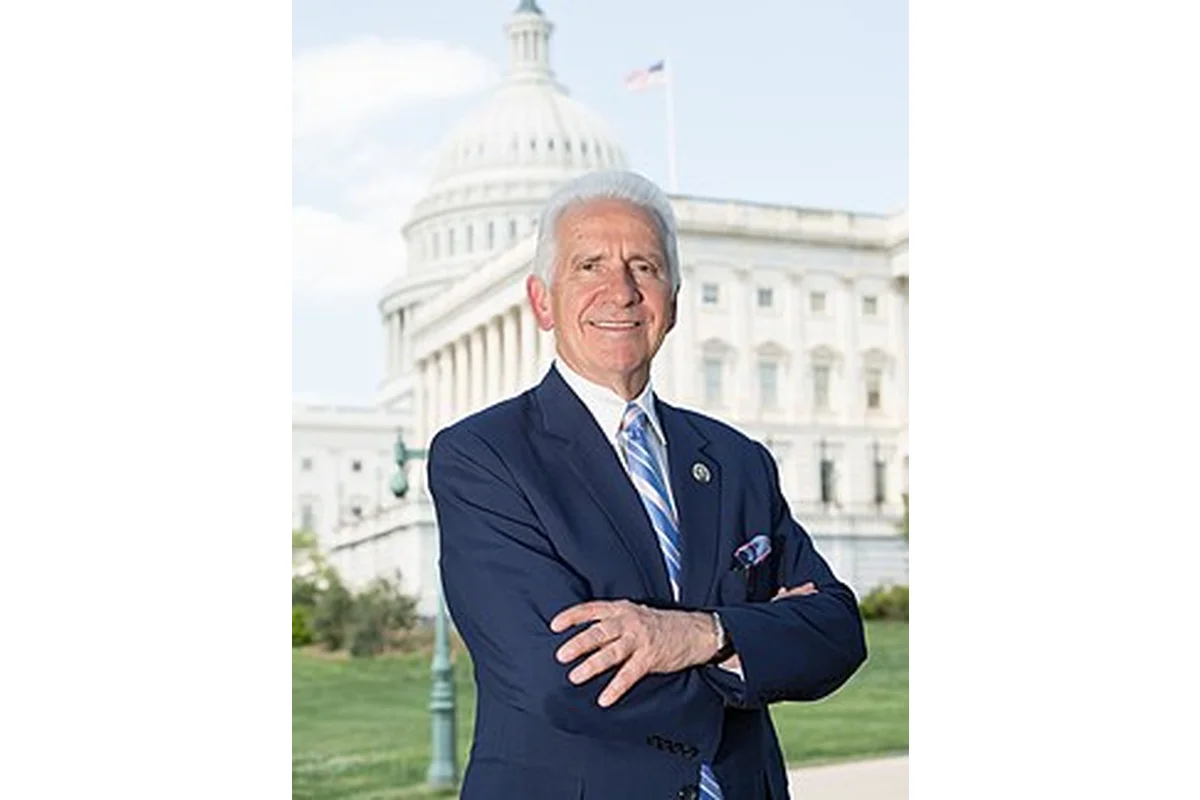
Jim Costa Bio
James Manuel Costa is an American politician who has represented California’s Central Valley in the United States House of Representatives since 2005. A member of the Democratic Party, he currently serves the 21st congressional district, which includes much of Fresno and the surrounding agricultural region. Over the course of his career, Costa has built a reputation for working on agricultural, water, and rural-development issues that affect the San Joaquin Valley.
Before his time in Congress, Costa spent more than two decades in the California State Legislature, first in the State Assembly and later in the State Senate. He has chaired the Blue Dog Coalition and held senior positions on the House Agriculture and Natural Resources Committees.
Early Life and Background
James Manuel Costa was born on April 13, 1952, in Fresno, California. He is the son of Manuel Costa and Lena Cardoso Costa. All four of his grandparents emigrated from the Azores, a Portuguese archipelago in the North Atlantic Ocean, during the early twentieth century. Three of his grandparents could neither read nor write when they arrived and initially worked as laborers on dairy farms before eventually starting their own operations. His parents grew up speaking Portuguese and did not learn English until they began school, and Costa himself worked on the family farm during his youth.
Costa attended San Joaquin Memorial High School, a private Catholic school in Fresno, and graduated in 1970. He then enrolled at California State University, Fresno, commonly known as Fresno State, where he earned a Bachelor of Arts degree in political science in 1974. While in college, he joined the Sigma Alpha Epsilon fraternity and completed an internship in the office of United States Representative B. F. Sisk.
After graduating, Costa worked as an aide to United States Representative John Krebs, focusing on policy matters that affected California’s Central Valley. He later served as chief of staff to California State Assemblyman Rick Lehman, who would go on to serve in Congress as well.
Path to US Politics
Costa’s entry into public life began at the state level. In 1978, at the age of 26, he was elected to the California State Assembly, becoming the youngest member of the state legislature at that time. He represented a portion of Fresno County in the Assembly for sixteen years, during which he also served as Majority Caucus Chair. His early legislative work laid the foundation for his long career in California politics.
In 1994, Costa transitioned to the California State Senate, where he served for eight years until 2002. During this period, he sponsored the Costa-Hawkins Rental Housing Act, a bill signed into law in 1995 that limits the application of rent control to certain types of properties. From 2000 to 2001, he also served as president of the National Conference of State Legislatures, giving him a national platform on state policy issues.
By the early 2000s, Costa was ready to move to federal office. When longtime Democratic Representative Cal Dooley announced his retirement from the 20th congressional district in 2004, Costa entered the primary and won the Democratic nomination with the support of senior party figures, including Senator Dianne Feinstein. He went on to defeat Republican state senator Roy Ashburn in the general election, beginning what would become one of the longest tenures in modern Central Valley congressional history.
Jim Costa Career
Early Career (1978–2002)
Jim Costa’s political career began in 1978 with his election to the California State Assembly, where he represented part of Fresno County for sixteen years. During his time in the Assembly, he rose to become Majority Caucus Chair, helping to set the legislative agenda for his party. He earned a reputation for working on issues related to agriculture, water, and rural economic development.
In 1994, Costa moved to the California State Senate, where he served until 2002. His eight years in the Senate included a high-profile stint as president of the National Conference of State Legislatures from 2000 to 2001, a role that connected him with lawmakers from across the country. His legislative work in Sacramento, including the passage of the Costa-Hawkins Rental Housing Act in 1995, helped establish him as a major figure in California politics.
US House of Representatives Breakthrough (2004–2012)
Costa entered Congress in 2005 after winning a competitive race for California’s 20th congressional district. He was re-elected without opposition in 2006, the same year Democrats regained control of the House, and went on to chair the Natural Resources Committee’s Energy and Mineral Resources Subcommittee. He also joined the House Agriculture Committee, where he would eventually hold senior positions.
In 2008, Costa was re-elected with 74 percent of the vote, the highest percentage for a Democratic incumbent outside California’s major urban centers. Two years later, in 2010, he faced his closest race yet against Republican Andy Vidak, eventually winning with about 51.8 percent of the vote. The narrow margin reflected the political competitiveness of the Central Valley, where Costa’s work on agricultural and water issues had made him a strong but sometimes contested figure.
California’s 16th Congressional District Era (2013–2022)
Following redistricting after the 2010 census, Costa announced in February 2012 that he would run in the newly drawn 16th congressional district, a more compact seat that included most of Fresno and most of Merced. He won the general election that year with 54 percent of the vote, even as outside groups spent heavily to challenge him.
Costa faced unexpectedly close races in 2014 and 2016 against Republican Johnny Tacherra, a dairy farmer from rural Fresno County. In 2014, he trailed on election night but ultimately won by roughly 1,300 votes after extended counting. He later defeated Tacherra again in 2016 with 58 percent of the vote, and in 2018 he beat Republican Elizabeth Heng with 57.5 percent during a strong Democratic year in California. In 2020, he won a fourth term in the 16th district with 59.4 percent of the vote against Republican Kevin Cookingham.
During this period, Costa chaired the Blue Dog Coalition in the 116th Congress and the Subcommittee on Livestock and Foreign Agriculture in the 117th Congress. He also became known for his work on issues such as high-speed rail, immigration reform for farmworkers, and veteran burial rights for Hmong and Laotian American veterans. In December 2017, he introduced legislation allowing certain Hmong and Laotian American veterans to be buried in United States national cemeteries, a bill that was enacted in March 2018 as part of the Consolidated Appropriations Act of 2018.
21st Congressional District Era (2023–Present)
After another round of redistricting in 2021, Costa was moved into the redrawn 21st congressional district starting in 2023. The seat covers much of Fresno and the surrounding Central Valley. In 2022, he defeated former FBI agent Michael Maher with 54.2 percent of the vote, and in 2024 the two met in a rematch that Costa again won, this time with 52.6 percent of the vote to Maher’s 47.4 percent.
Costa remains an active member of the House Agriculture and Natural Resources Committees, where he continues to focus on Central Valley priorities. He has been a vocal advocate for federal investment in high-speed rail, water infrastructure, and immigration pathways for undocumented farmworkers, including co-sponsoring the Farmworker Modernization Act and the American Dream and Promise Act. In July 2024, he publicly called for President Joe Biden to withdraw from the 2024 presidential race, and in March 2025 he was one of ten House Democrats who joined Republicans in voting to censure Representative Al Green.
Notable Events and Milestones
One of Costa’s signature legislative achievements was the Costa-Hawkins Rental Housing Act of 1995, which limited the application of rent control in California. He has also played a central role in shaping federal farm policy through senior positions on the House Agriculture Committee, and his repeated, often narrow victories in competitive Central Valley districts have made him a symbol of Democratic resilience in rural California.
Jim Costa Family
Family Background and Political Lineage
Costa comes from a Portuguese American family with deep roots in California’s Central Valley. All four of his grandparents emigrated from the Azores in the early twentieth century, eventually establishing dairy farms in the region. His parents, Manuel Costa and Lena Cardoso Costa, raised him on the family farm in Fresno, where he developed the understanding of agricultural issues that would later define his political career. His early work as a congressional aide and legislative chief of staff gave him practical experience in government that helped launch his own political career.
Personal Life
Costa is a Roman Catholic and has been described as a liberal Catholic who supports abortion rights. He has lived most of his life in Fresno, the city where he was born and where his congressional district is based.