
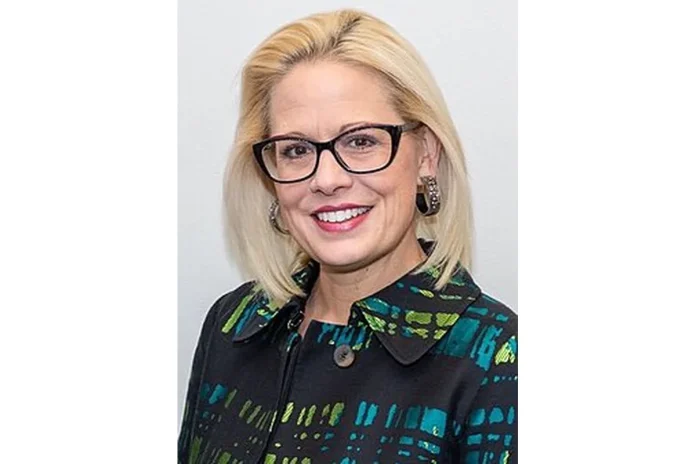
Kyrsten Sinema Bio
Kyrsten Lea Sinema is an American politician, lawyer, and former social worker who served as a United States senator from Arizona from 2019 to 2025. She previously served three terms in the Arizona House, one term in the Arizona Senate, and three terms in the U.S. House of Representatives. Originally active in the Arizona Green Party, Sinema joined the Democratic Party in 2004 and later changed her registration to independent in December 2022 while continuing to caucus with Senate Democrats. Known for a centrist, often bipartisan approach, she was the first openly bisexual person elected to the U.S. Senate and the first woman to represent Arizona in the Senate.
Early Life and Background
Kyrsten Lea Sinema was born on July 12, 1976, in Tucson, Arizona. She is the daughter of Dan Sinema and Marilyn (Wiley) Sinema. Sinema attended Walton High School in Georgia before enrolling at Brigham Young University, where she earned a Bachelor of Arts degree. She later pursued advanced study at Arizona State University, completing a Master of Social Work, a Juris Doctor, a PhD, and a Master of Business Administration.
Sinema has spoken publicly about a difficult childhood, including periods of homelessness before her family achieved greater stability. Those early experiences shaped her interest in social work, public policy, and advocacy for vulnerable populations. Her academic training across law, social work, and business provided a foundation for the issues she would later champion in elected office, including housing, education access, and economic opportunity.
Path to US Politics
Sinema began her political activism in the Arizona Green Party, becoming its local spokesperson and working to repeal the death penalty and organizing antiwar protests. By the time the Iraq War began, she had organized 15 antiwar rallies and also opposed the war in Afghanistan. In 2000, she worked on Ralph Nader’s presidential campaign before running unsuccessfully for local offices as an independent in 2001 and 2002.
In 2004, Sinema joined the Democratic Party and won a seat in the Arizona House of Representatives for the 15th legislative district. She was reelected three times, becoming assistant Minority Leader in 2009 and 2010, and was elected to the Arizona Senate in 2010, defeating Republican Bob Thomas 63 to 37 percent. Her early legislative record was widely viewed as progressive, particularly on LGBT rights and social welfare.
Kyrsten Sinema Career
Early Career (2004–2012)
Sinema’s early career in the Arizona Legislature established her as a leading progressive voice. In 2006, she sponsored a bill urging adoption of the DREAM Act and co-chaired Arizona Together, the statewide campaign that defeated Proposition 107, which would have banned recognition of same-sex marriage and civil unions. She led the campaign against Proposition 102 in 2008, chairing Protect Arizona’s Freedom and helping defeat Ward Connerly’s initiative to eliminate racial-preference programs.
In 2008, Sinema completed the Harvard University John F. Kennedy School of Government program for senior executives in state and local government as a David Bohnett LGBTQ Victory Institute Leadership Fellow. In June 2009, she was one of 32 state legislators appointed by President Barack Obama to the White House Health Reform Task Force, which helped shape the Affordable Care Act, and was invited to attend the bill signing in March 2010.
US House Breakthrough (2012–2018)
On January 3, 2012, Sinema announced her bid for Congress in Arizona’s 9th congressional district and won the three-way Democratic primary with nearly 42 percent of the vote. In the general election, she defeated Republican nominee Vernon Parker by 4 percentage points. She was the first openly bisexual person and second openly LGBT woman, after Senator Tammy Baldwin, elected to the United States Congress.
Following her election, Sinema shifted toward the political center, joining the conservative Democratic Blue Dog Coalition and the bipartisan Problem Solvers Caucus, amassing a reliably moderate-Democratic voting record. She was reelected in 2014 with about 55 percent of the vote and in 2016 with 61 percent, building a record that included support for the DREAM Act and work on the House Financial Services Committee.
Sinema also became known for high-profile stances, including voting with Republicans in July 2018 against abolishing U.S. Immigration and Customs Enforcement. Her independence from party-line voting foreshadowed the swing-vote role she would play in the Senate.
US Senate Era (2019–2025)
Sinema was sworn in as a United States senator on January 3, 2019, taking the oath on copies of the U.S. Constitution and the Constitution of Arizona rather than a traditional Bible. She defeated Republican Martha McSally in the 2018 election to succeed retiring Senator Jeff Flake, becoming the first woman elected to the Senate from Arizona and only the second openly LGBT woman to serve in the chamber.
During her Senate tenure, Sinema became a key swing vote in a closely divided chamber. She voted to confirm William Barr as attorney general, voted to convict Donald Trump in both impeachment trials, and supported the Respect for Marriage Act, which passed the Senate 61–36 in December 2022. At the same time, she opposed the inclusion of a $15 federal minimum wage in COVID-19 relief legislation and joined Republicans in voting against changing the filibuster to pass voting rights bills, drawing a formal censure from the Arizona Democratic Party in January 2022.
On March 5, 2024, Sinema announced she would not seek reelection and would retire at the end of her term, saying her approach to fostering compromise seemed to be a model of the past. She was succeeded by Democrat Ruben Gallego in 2025.
Notable Events and Milestones
Sinema’s signature achievements include being the first openly bisexual person and the first woman elected to the U.S. Senate from Arizona, as well as her central role in the bipartisan passage of the Respect for Marriage Act. Her dramatic thumbs-down vote against a $15 minimum wage in March 2021 drew national attention and comparisons to the late Senator John McCain. In December 2022, she became the only sitting U.S. elected official to attend the 2022 Bilderberg Conference before announcing that same month she had left the Democratic Party and registered as an independent.
Kyrsten Sinema Career Wins
Over two decades in elected office, Kyrsten Lea Sinema compiled a record of competitive victories at the state and federal levels, including three Arizona House terms, one Arizona Senate term, three U.S. House terms, and a single U.S. Senate term. She won a U.S. Senate seat in 2018, a U.S. House seat in 2012, and a series of state legislative races beginning in 2004.
US House Highlights
Sinema won Arizona’s 9th congressional district in 2012, 2014, and 2016. Her 2012 victory over Republican Vernon Parker came by about 4 percentage points after a bitterly fought race, while her 2014 win against Republican Wendy Rogers came by roughly 13 points. She closed out her House tenure in 2016 with a 61-percent victory over Republican Dave Giles.
Other Wins and Achievements
Before her federal runs, Sinema won a seat in the Arizona House of Representatives in 2004 and won reelection three times. In 2010, she won a seat in the Arizona Senate, defeating Republican Bob Thomas 63 to 37 percent. Her 2018 U.S. Senate victory over Martha McSally marked her highest-profile win and made history as the first time a woman was elected to the Senate from Arizona.
| Position | Wins | Year |
|---|---|---|
| U.S. Senator (Arizona) | 1 | 2018 |
| U.S. Representative (AZ-9) | 3 | 2012, 2014, 2016 |
| Arizona State Senator (15th District) | 1 | 2010 |
| Arizona State Representative (15th District) | 3 | 2004, 2006, 2008 |
Kyrsten Sinema Family
Family Background and Personal Lineage
Kyrsten Lea Sinema is the daughter of Dan Sinema and Marilyn (Wiley) Sinema. She has spoken publicly about childhood hardships, including a period of family homelessness, experiences that influenced her later focus on social policy and economic opportunity.
Personal Life
Sinema married her Brigham Young University classmate Blake Dain, and the couple later divorced, with their marriage ending in 1999. She is openly bisexual, a fact she first publicly acknowledged in 2005 after a speech in the Arizona Legislature. Sinema has rejected the label of atheist, despite being widely reported to be the only religiously unaffiliated member of Congress during her tenure. In late 2025, an alienation of affection lawsuit was filed against her related to her relationship with a former bodyguard.