

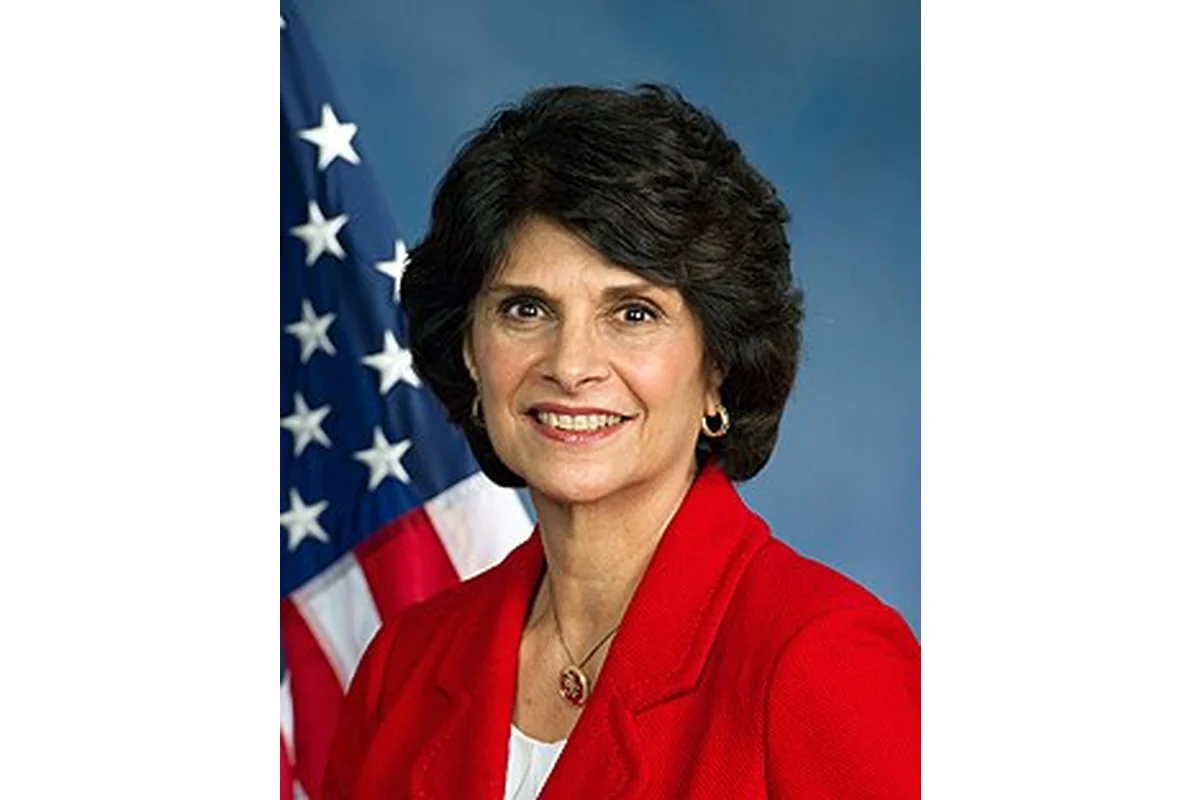
Lucille Roybal-Allard Bio
Lucille Elsa Roybal-Allard (born June 12, 1941) is an American politician who served as a United States Representative from California from 1993 to 2023. A member of the Democratic Party, she represented parts of southern Los Angeles and several adjacent eastern suburbs, including Downey, Bell, and Bell Gardens. Over three decades in Congress, she became one of the most prominent Latina lawmakers in the country and a leading voice on immigration, public health, and labor issues.
Before her time in Washington, Roybal-Allard worked as a public relations officer and a fundraising executive, and she served in the California State Assembly from 1987 to 1992. She is the daughter of long-serving Congressman Edward R. Roybal and is married to Edward Allard III. On December 20, 2021, she announced her retirement at the end of the 117th Congress.
Early Life and Background
Lucille Elsa Roybal-Allard was born on June 12, 1941, in Boyle Heights, California, a historic neighborhood in East Los Angeles. She is the daughter of Edward R. Roybal, who later served in Congress from 1963 to 1993, and Lucille Beserra Roybal. Growing up in a politically engaged family, she gained early exposure to public service and community advocacy through her father’s work on behalf of working-class and Latino neighborhoods.
She attended Ramona Convent Secondary School in Alhambra, California, graduating in 1959. She went on to study at California State University, Los Angeles, where she earned a Bachelor of Arts degree. Her education in Los Angeles helped shape her understanding of the region’s diverse communities, and it laid the foundation for her later career in government and political organizing.
Path to US Politics
Before entering elected office, Roybal-Allard built a professional career as a public relations officer and a fundraising executive. These roles gave her experience in communications, coalition building, and campaign strategy, all of which proved useful in her later political life. She became active in Democratic Party politics in Southern California, working on local and state-level initiatives.
Her first elected position came in 1987, when she won a special election to the California State Assembly on May 12, 1987. She replaced Gloria Molina, who had resigned after being elected to the Los Angeles City Council. Roybal-Allard served in the State Assembly until 1992, focusing on issues that affected her district and gaining a reputation as a pragmatic and effective legislator. Her time in Sacramento prepared her to run for federal office when a new congressional seat opened in her home region.
Lucille Roybal-Allard Career
Early Career (1987–1992)
Roybal-Allard’s first major political victory came on May 12, 1987, when she won a special election to the California State Assembly. She represented a district in Southern California and spent the next five years working on state-level policy, including health, education, and immigrant community concerns. Her Assembly tenure gave her direct legislative experience and helped her establish strong relationships with local leaders and activists.
During this period, she also continued her work in public relations and fundraising, skills that would later support her congressional campaigns. By 1992, she had built a strong base of support in the Latino community and among working families in her region, setting the stage for her move to federal office.
Congressional Breakthrough (1993–2002)
In 1992, Roybal-Allard won the Democratic nomination for the newly created 33rd congressional district, which included a portion of the area her father had represented for 30 years. She won the general election decisively and took office in 1993. She was the first Democratic Mexican-American woman to serve in Congress and, together with Nydia Velazquez, became one of the first Latina Democrats elected to a full term in the House.
During the 1990s, she became increasingly involved in caucus leadership. She chaired the California Democratic congressional delegation in 1998–1999. She also became the first woman to chair the Congressional Hispanic Caucus, a milestone that highlighted her growing influence in national Democratic politics. Her early congressional work focused on appropriations, immigration, and children’s health, and she became a trusted voice on issues affecting low-income and immigrant communities.
Appropriations and Senior Leadership Era (2003–2022)
Roybal-Allard’s district was renumbered the 34th after the 2000 census and the 40th after the 2010 census, reflecting shifts in Southern California’s population. By the 2010 census, her district was the most Latino district in the nation, with a Latino majority of about 86.5 percent. She was reelected 14 times with no substantial opposition throughout her tenure in this heavily Democratic region.
She became the first Latina to serve on the House Appropriations Committee and the first Latina to chair one of its 12 subcommittees, often called the “cardinals.” In this role, she helped secure federal funding for major local projects, including a new federal courthouse in Downtown Los Angeles, the Metro Gold Line Light Rail Eastside Extension, the deepening of the Port of Los Angeles, and the revitalization of the Los Angeles River. She was also the founder of the Women’s Working Group on Immigration Reform and remained active in the Congressional Children’s Caucus and on Democratic Homeland Security and Livable Communities task forces.
Notable Events and Milestones
Roybal-Allard’s career includes several historic firsts: the first Democratic Mexican-American woman in Congress, the first woman to chair the Congressional Hispanic Caucus, and the first Latina to chair a House Appropriations Subcommittee. She authored the Sober Truth on Preventing Underage Drinking (STOP) Act, the original House version of the Security and Financial Empowerment (SAFE) Act addressing survivors of domestic violence, and The Children’s Act for Responsible Employment (CARE) to fight exploitative child labor in agriculture. She also introduced the Newborn Screening Saves Lives Reauthorization Act of 2013.
Lucille Roybal-Allard Career Wins
Roybal-Allard won her first congressional race in 1992 and went on to win reelection 14 times, serving 15 terms in the U.S. House of Representatives. She never faced serious opposition in her heavily Democratic district, reflecting her strong and consistent support among voters in southern Los Angeles and its eastern suburbs.
Congressional Election Highlights
Her initial victory in 1992 was a landmark moment, as she succeeded in capturing a newly drawn district that included part of the territory her father had represented. After that, she maintained a winning streak across redistrictings in 2003 and 2013, continuing to serve without interruption until her retirement was announced in December 2021.
Other Achievements and Recognition
Beyond her election wins, Roybal-Allard earned recognition for her legislative leadership and her role in founding the Women’s Working Group on Immigration Reform. She also served as chair of the California Democratic congressional delegation in 1998–1999, becoming the first woman to hold that position.
Lucille Roybal-Allard Family
Family Background and Political Lineage
Roybal-Allard comes from one of California’s most prominent political families. Her father, Edward R. Roybal, represented a Los Angeles-area district in the U.S. House of Representatives for 30 years, from 1963 to 1993. Her mother was Lucille Beserra Roybal. Growing up in this environment gave her direct exposure to the responsibilities and demands of public service, and it shaped her decision to pursue a career in politics.
Personal Life
Roybal-Allard is married to Edward Allard III. Together they have four children, two of whom are her stepchildren. She is Roman Catholic. Her personal papers and archives are preserved in the collection of the California State Archives, ensuring that her long career in public service will be documented for future researchers and historians.