

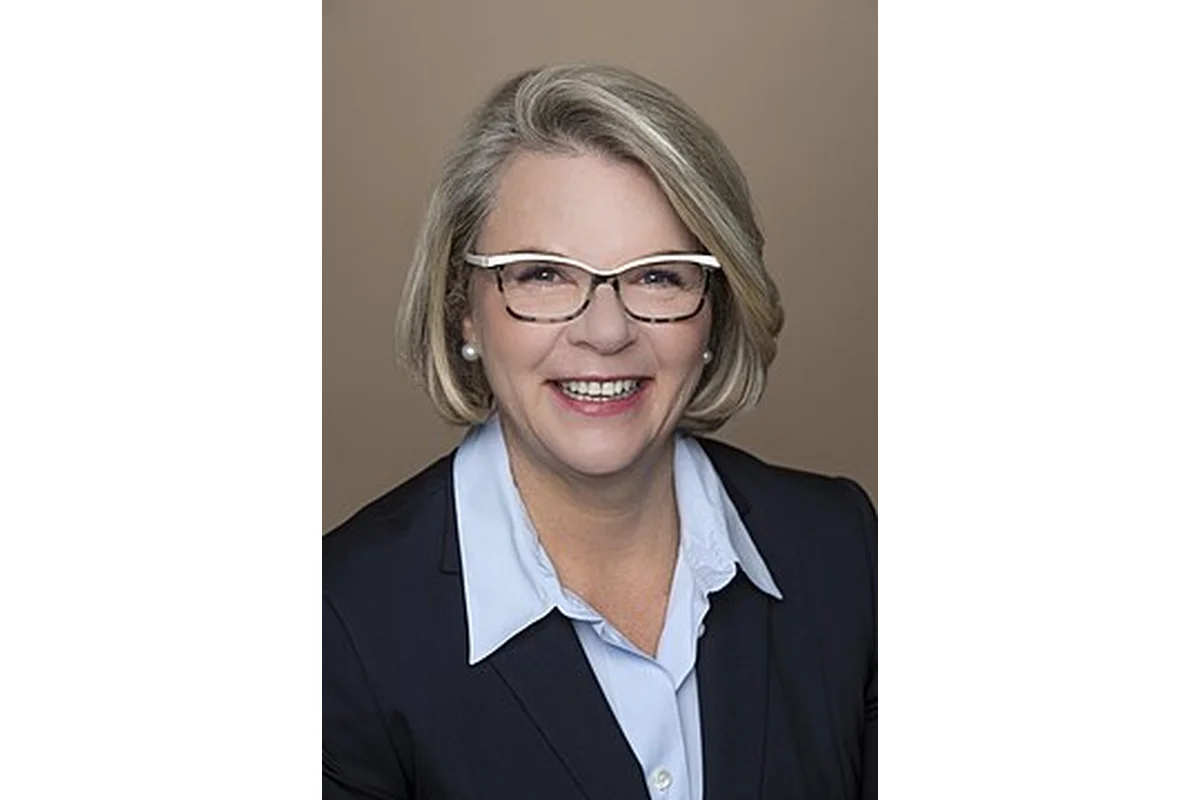
Margaret Spellings Bio
Margaret M. LaMontagne Spellings (born November 30, 1957) is an American government and non-profit executive and a former public official. She serves as president and CEO of the Bipartisan Policy Center in Washington, D.C., and previously served as the eighth United States Secretary of Education from 2005 to 2009. A long-time aide to President George W. Bush, she helped shape the 2001 No Child Left Behind Act and later led major higher education and technology policy initiatives. Over the course of her career, Spellings has worked at the highest levels of federal government, headed a state university system, and directed two prominent non-profit organizations.
Early Life and Background
Margaret M. Dudar was born on November 30, 1957, in Ann Arbor, Michigan, and later moved with her family to Houston, Texas, when she was in the third grade. She grew up in Houston and graduated from Sharpstown High School in 1975. Growing up in Texas placed her close to state politics, which would shape her future career in public service.
Spellings earned a Bachelor of Arts degree in political science from the University of Houston in 1979. During her college years, she developed an interest in education policy and government. Her academic background in political science provided a strong foundation for the policy work that would follow.
Path to US Politics
After college, Spellings joined an education reform commission under Texas Governor William P. Clements, an early entry into state-level policy work. She later served as associate executive director for the Texas Association of School Boards, gaining hands-on experience with the state’s K-12 system. These roles helped her build a network in Texas Republican politics and education reform.
Spellings became political director for George W. Bush’s first gubernatorial campaign in 1994, then served as a senior advisor to Bush during his time as Governor of Texas from 1995 to 2000. Her work on the campaign and in the governor’s office brought her into Bush’s inner circle, setting the stage for her later role in the White House.
Margaret Spellings Career
Early Career (1979–2000)
Spellings began her career in Texas state government, working on education reform under Governor Clements and at the Texas Association of School Boards. By 1994, she had joined George W. Bush’s first campaign for governor, serving as political director. After Bush won, she became a senior advisor in the governor’s office, working on education and policy issues across Texas.
During these years she helped shape Bush’s education agenda, an effort that would later define her national role. Her experience working with state lawmakers, school boards, and education stakeholders prepared her to take on larger responsibilities in federal government.
White House and No Child Left Behind (2001–2004)
When George W. Bush became President in 2001, Spellings joined his administration at the White House. She was one of the principal architects of the No Child Left Behind Act, a sweeping 2001 law that reformed federal involvement in primary and secondary education. The law required states to test students, close achievement gaps, and report progress to parents.
The law was one of the most significant education reform efforts of the era, and Spellings played a central role in its design and promotion. The act became a defining part of Bush’s domestic agenda and established Spellings as a leading national voice on education policy.
Secretary of Education (2005–2009)
Following the departure of Rod Paige, President Bush nominated Spellings to become United States Secretary of Education on November 17, 2004. The U.S. Senate confirmed her on January 20, 2005, and she was ceremonially sworn in on January 31, 2005, becoming the eighth Secretary of Education and only the second woman to hold the position. She served through the remainder of the Bush administration.
In April 2005, on PBS’s The NewsHour with Jim Lehrer, Spellings described Connecticut’s resistance to No Child Left Behind as the “soft bigotry of low expectations,” a phrase that drew wide attention. In September 2005, she launched the Secretary of Education’s Commission on the Future of Higher Education, often called the Spellings Commission, to recommend a national strategy for reforming post-secondary education.
Her tenure also included controversies, including a 2005 letter to PBS about an episode of Postcards from Buster featuring children with same-sex parents and 2007 testimony before the House Education and Labor Committee about oversight of student loan programs. She also served on the board of directors for the Apollo Group, the parent company of the for-profit University of Phoenix, while in office.
Post-Government and Texas 2036 Era (2009–Present)
After leaving the Department of Education, Spellings founded Margaret Spellings & Company, an education consulting firm in Washington, D.C. She also served as a senior advisor to the Boston Consulting Group and the U.S. Chamber of Commerce. In April 2021, she co-launched the Future of Tech Commission with Jim Steyer of Common Sense Media and former Massachusetts Governor Deval Patrick.
On October 23, 2015, Spellings was elected president of the University of North Carolina system, effective March 1, 2016, succeeding Thomas W. Ross. Her selection sparked protests on several campuses, and her tenure was marked by debates over the state’s HB2 law and the toppling of the Silent Sam statue in 2018. She announced her resignation in October 2018, effective March 1, 2019.
From 2019 to 2023, Spellings served as president and CEO of Texas 2036, a non-profit focused on long-term policy planning. She currently serves as president and CEO of the Bipartisan Policy Center, where she leads bipartisan work on major national policy issues.
Notable Events and Milestones
Among the signature moments of her career, Spellings helped craft the No Child Left Behind Act, led the Spellings Commission on higher education, and presided over the seventeen-campus University of North Carolina system. Her 2006 appearance on Celebrity Jeopardy! made her the first sitting Cabinet member to appear as a contestant on the show, and she later appeared on The Daily Show and The Colbert Report.
Margaret Spellings Career Wins
Margaret Spellings has built a record of senior leadership in American education and public policy. She helped design one of the most important federal education laws of the 21st century, led a major national commission on higher education, headed a large public university system, and directed two influential non-profit organizations.
No Child Left Behind Highlights
Spellings was a principal architect of the 2001 No Child Left Behind Act, which reshaped federal education policy and required states to measure student progress. As Secretary of Education, she defended the law publicly and shaped national conversations about school accountability. Her work on the law remains a defining achievement of her career.
Other Wins and Achievements
Spellings led the Secretary of Education’s Commission on the Future of Higher Education, served as president of the University of North Carolina system, and later led Texas 2036. She continues to influence national policy as president and CEO of the Bipartisan Policy Center.
Margaret Spellings Family
Family Background and Public Service Lineage
Spellings was born Margaret M. Dudar and grew up in a household that moved from Ann Arbor, Michigan, to Houston, Texas, during her childhood. Her early years in Texas placed her in the center of state politics and education policy, the fields that would come to define her career.
Personal Life
Spellings was previously married to Gregg LaMontagne and Robert Spellings, and both marriages ended in divorce. Public details about her children and current residence are not clearly supported by available sources.