
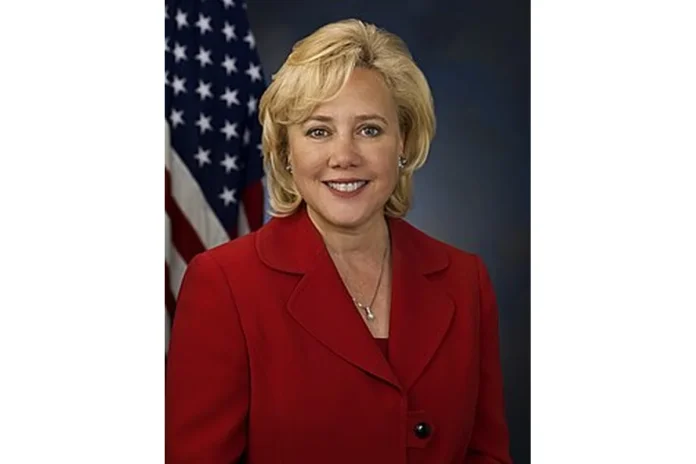
Mary Loretta Landrieu Bio
Mary Loretta Landrieu is an American entrepreneur and Democratic politician who served as a United States senator from Louisiana from 1997 to 2015. A member of the Democratic Party, she built a career in state government before rising to the U.S. Senate, where she chaired the Committee on Small Business and Entrepreneurship from 2009 to 2014 and the Committee on Energy and Natural Resources from 2014 to 2015. Landrieu came to national attention in the aftermath of Hurricane Katrina in 2005, when she publicly criticized the federal response to the disaster. As of 2026, she remains the most recent Democrat to have represented Louisiana in the U.S. Senate.
Early Life and Background
Mary Loretta Landrieu was born in Arlington County, Virginia, on November 23, 1955, and was raised in New Orleans, Louisiana. She is the daughter of Moon Landrieu, who served as mayor of New Orleans and later as U.S. Secretary of Housing and Urban Development, and the sister of Mitch Landrieu, who went on to serve as mayor of New Orleans and as Lieutenant Governor of Louisiana. Growing up in a prominent Louisiana political family gave her early exposure to public service and civic affairs.
She attended Ursuline Academy in New Orleans, where she took part in the Close Up Washington civic education program. In 1977, Landrieu graduated from Louisiana State University in Baton Rouge with a Bachelor of Arts degree in sociology. While at LSU, she was a member of Delta Gamma sorority, an experience that complemented her growing interest in community work and government.
Path to US Politics
After graduating from Louisiana State University, Landrieu worked as a real estate agent before entering state-level politics. In 1979, she was first elected to the Louisiana House of Representatives, representing a New Orleans district from 1980 to 1988. During her time in the state legislature, she drew national attention in 1995 when The Times-Picayune reported that she had awarded Tulane University tuition waivers to a former campaign manager, an episode that foreshadowed her willingness to operate in the spotlight of public scrutiny.
Landrieu first reached statewide office in 1987, winning election as Louisiana State Treasurer after longtime incumbent Mary Evelyn Parker resigned. Because no Republican filed to run, Landrieu won the Democratic primary with about 44% of the vote and was unopposed for re-election in 1991. In 1995, she gave up the treasurer’s office to run for governor, finishing third in the nonpartisan blanket primary with 18% of the vote, behind Mike Foster and Cleo Fields. That campaign positioned her for a successful run for federal office the following year.
Mary Loretta Landrieu Career
Early Career (1980–1996)
Mary Loretta Landrieu built her political foundation in Louisiana state government. She served in the Louisiana House of Representatives from 1980 to 1988, winning re-election in October 1983 with 78% of the vote in the 90th district. In 1987 she was succeeded in the seat by her brother Mitch, and the following year she transitioned to statewide office as Louisiana State Treasurer, a position she held from 1988 to 1996.
As treasurer, Landrieu won election with 44% of the vote in a competitive Democratic primary, and she was unopposed in her 1991 re-election. She declined to seek a third term in 1995 to run for governor of Louisiana, finishing third in the state’s nonpartisan blanket primary with 18% of the vote.
U.S. Senate Breakthrough (1997–2008)
Mary Loretta Landrieu was elected to the U.S. Senate in 1996, defeating state Representative Woody Jenkins of Baton Rouge in a close and controversial runoff to succeed retiring Democratic Senator John Bennett Johnston, Jr. of Shreveport. She won a narrow re-election in 2002 against state Election Commissioner Suzanne Haik Terrell of New Orleans, and her standing rose further in 2004 when she became Louisiana’s senior senator following the retirement of John Breaux.
Her national profile surged in the weeks following Hurricane Katrina in 2005. Landrieu and fellow Senator David Vitter co-sponsored the Hurricane Katrina Disaster Relief and Economic Recovery Act of 2005, a 440-page aid package worth an estimated $250 billion. The New York Times described her as a national spokeswoman for victims of the storm, and she publicly criticized what she called the staggering incompetence of the national government. She was particularly critical of President George W. Bush’s response, a stance that drew a sharp rebuttal from Bush in his 2010 memoir Decision Points.
After Democrats regained control of Congress in the 2006 mid-term elections, Landrieu joined Republican Senator Olympia Snowe of Maine in forming the Common Ground Coalition, a bipartisan group of moderate senators seeking legislative consensus. In December 2008, she was named chairwoman of the Senate Committee on Small Business and Entrepreneurship for the 111th Congress. She won a relatively comfortable third term in 2008, taking 52% to 46% over former state Treasurer John Neely Kennedy.
Senior Senate Years (2009–2015)
As chair of the Committee on Small Business and Entrepreneurship from 2009 to 2014, Mary Loretta Landrieu became one of the most active deal-makers in the Senate. She also took on the chairmanship of the Senate’s Homeland Security Appropriations Subcommittee in 2011, giving her significant influence over funding for the U.S. Coast Guard, the Department of Homeland Security, and FEMA. In 2014 she added the chairmanship of the Committee on Energy and Natural Resources, a fitting post given her work on energy issues and her support for the Keystone Pipeline.
Landrieu was a central figure in the passage of the Affordable Care Act in late 2009. She initially opposed the public health insurance option until a $300 million concession was added to the bill for Louisiana’s Medicaid system, a deal critics labeled the Louisiana Purchase. A typographical error in the legislation ultimately increased the Medicaid allocation to roughly $4.3 billion for Louisiana. Landrieu defended her vote on the Senate floor, arguing that the funding request predated President Barack Obama’s inauguration. She also voted to confirm Chief Justice John Roberts in 2005, opposed the confirmation of Samuel Alito in 2006, and voted for both Sonia Sotomayor in 2009 and Elena Kagan in 2010.
Notable Events and Milestones
One of the defining moments of Landrieu’s career was her sustained push for federal disaster relief for Louisiana after Hurricane Katrina. She authored legislation that ultimately allowed FEMA to forgive community loans from 2005, and she later added provisions to a 2013 federal spending bill to forgive the remaining balance. In 2005 she also sponsored a Senate resolution formally apologizing for the Senate’s repeated failure in the early twentieth century to pass anti-lynching legislation. In January 2010 her New Orleans office was infiltrated by conservative filmmaker James O’Keefe and three associates posing as telephone repairmen, an incident that drew national attention when the four pleaded guilty to entering federal property under false pretenses.
Mary Loretta Landrieu Career Wins
Mary Loretta Landrieu compiled an extensive record of election victories across more than three decades in Louisiana politics, including wins at the state legislative, statewide, and federal levels. Her career victories include her initial election to the Louisiana House of Representatives in 1979, her statewide wins as State Treasurer in 1987 and 1991, and three U.S. Senate victories in 1996, 2002, and 2008.
U.S. Senate Highlights
Landrieu first reached the Senate in 1996 with a close and controversial runoff victory over Woody Jenkins. She won a much tighter re-election in 2002 against Suzanne Haik Terrell, a race that cemented her reputation as a resilient statewide campaigner. Her most decisive federal victory came in 2008, when she took 52% of the vote against John Neely Kennedy. Her final Senate campaign, in 2014, ended in a 56% to 44% defeat to Republican Congressman Bill Cassidy in a runoff that concluded her tenure in January 2015.
Other Wins and Achievements
Beyond her election victories, Landrieu earned national recognition for her leadership on disaster recovery, small business policy, and bipartisan negotiation. She was recognized by the Order Sons of Italy in America as the first woman of Italian-American heritage to become a U.S. senator, an honor that underscored both her heritage and her historic role in American politics.
Mary Loretta Landrieu Family
Family Background and Political Lineage
Mary Loretta Landrieu comes from one of Louisiana’s most prominent political families. Her father, Moon Landrieu, served as mayor of New Orleans and later as U.S. Secretary of Housing and Urban Development. Her brother, Mitch Landrieu, followed his father into public service, serving as Lieutenant Governor of Louisiana and later as mayor of New Orleans. The family’s deep roots in Louisiana politics helped shape her path from the state legislature to the U.S. Senate.
Personal Life
Mary Loretta Landrieu married attorney Frank Snellings in 1988, and the couple have two children, Connor and Mary Shannon, and one grandson, Maddox. In December 2014, Frank Snellings was the subject of a profile in The Irish Times, having rediscovered his Irish family 44 years after he was adopted in Ireland by the Snellings family of Louisiana.