
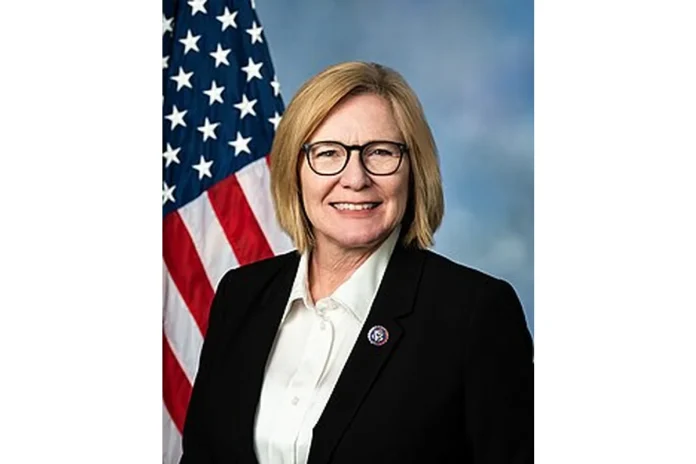
Michelle Fischbach Bio
Michelle Louise Helene Fischbach, born on November 3, 1965, is an American politician and attorney who has served since 2021 as the U.S. representative for Minnesota’s 7th congressional district. A Republican, she represents a heavily rural region that is the largest district by area in Minnesota and covers most of the western part of the state. Fischbach is a graduate of St. Cloud State University and the William Mitchell College of Law, and her policy work has centered on rural and agricultural issues, gun rights, and restrictions on abortion.
Before her time in Congress, Fischbach spent more than two decades in the Minnesota Senate, where she became the first female president of that body. She later served as the 49th lieutenant governor of Minnesota in 2018 and 2019. In 2020, she defeated longtime Democratic incumbent Collin Peterson, becoming one of the few Republicans to flip a Democratic-held House seat that cycle.
Early Life and Background
Michelle Louise Helene Fischbach was raised in Woodbury, Minnesota, where she graduated from Woodbury High School. Her early years in the Twin Cities area gave her a firm grounding in suburban community life, and her family background shaped her interest in civic affairs. As a young adult, she continued her education at the College of St. Benedict in St. Joseph, attending from 1984 to 1986.
She later transferred to St. Cloud State University, where she earned a Bachelor of Arts degree in political science and economics in 1989. Her interest in public service first took shape through an internship with U.S. Senator Rudy Boschwitz of Minnesota. That early experience on a Senate campaign introduced her to the workings of government and political organizing, and it set the stage for her later career in elected office.
Path to US Politics
Fischbach’s entry into elective politics came in 1994, when she became the first woman elected to the Paynesville City Council. Her successful city council campaign demonstrated her appeal in rural central Minnesota and gave her a platform to address local concerns. She served on the council until 1996.
In 1996, a special election was held for the Minnesota Senate seat representing her district after the resignation of DFL Senator Joe Bertram. Fischbach won that special election and was sworn in as a state senator, beginning a long career in the Minnesota Legislature. She was reelected multiple times in 1996, 2000, 2002, 2006, 2010, 2012, and 2016, building strong ties with voters in her central Minnesota district.
Michelle Fischbach Career
Early Career (1996–2010)
During her early years in the Minnesota Senate, Fischbach served as an assistant minority leader from 2001 to 2002 and again from 2007 to 2008. She also served as deputy minority leader from 2009 to 2010. In these leadership roles, she helped shape Republican strategy in a chamber where the party was often in the minority.
She also chaired the Senate’s higher education committee, focusing on policy issues affecting colleges and students across the state. Her work on higher education helped establish her reputation as a legislator willing to dig into complex policy questions. While pursuing her legislative duties, Fischbach also attended William Mitchell School of Law, earning her Juris Doctor degree in 2011.
Minnesota Senate Presidency (2011–2013)
After Republicans won a Senate majority in 2010, Fischbach’s colleagues elected her the first female president of the Minnesota Senate in 2011. She served in that role until 2013, when Republicans lost their majority. Her tenure as Senate president made her one of the highest-ranking Republican women in Minnesota state government at the time.
As Senate president, Fischbach oversaw legislative proceedings and played a central role in guiding the chamber’s agenda. Her leadership during this period strengthened her standing within the Minnesota Republican Party and prepared her for the responsibilities that would follow.
Senate President and Lieutenant Governor (2017–2019)
After Republicans regained a Senate majority following the 2016 election, Fischbach was again elected president of the Minnesota Senate on January 3, 2017. Later that year, Governor Mark Dayton appointed Lieutenant Governor Tina Smith to the U.S. Senate seat vacated by Al Franken, and Fischbach automatically ascended to the office of lieutenant governor under the Minnesota Constitution.
Fischbach initially sought to retain her Senate seat while serving as lieutenant governor, calling herself an acting lieutenant governor and declining the higher salary. The arrangement drew legal challenges, and in May 2018 she resigned from the Senate and was sworn in as lieutenant governor. In 2018, she also ran as former Governor Tim Pawlenty’s running mate in the Republican primary, but the ticket lost to Jeff Johnson and Donna Bergstrom. Fischbach left office on January 7, 2019, when Tim Walz and Peggy Flanagan were sworn in.
U.S. House of Representatives (2021–Present)
On September 3, 2019, Fischbach announced her candidacy for the Republican nomination in Minnesota’s 7th congressional district, challenging 30-year Democratic incumbent Collin Peterson. She won a five-way Republican primary and went on to defeat Peterson by 49,226 votes, the largest margin of any Republican who defeated an incumbent Democrat in 2020. Her victory was part of a broader Republican surge in rural districts.
Since taking office in January 2021, Fischbach has served on key committees in the U.S. House. In the 119th Congress, she sits on the House Rules Committee as chair of the Subcommittee on Rules and Organization of the House, and on the Ways and Means Committee, including its Oversight and Trade subcommittees. She has been a strong voice for her district on agricultural trade, gun rights, and pro-life policies.
Notable Events and Milestones
Among the most notable moments of Fischbach’s congressional career was her vote on January 7, 2021, to object to the certification of electoral votes from Arizona and Pennsylvania in the 2020 presidential election. On January 13, 2021, she voted against the second impeachment of President Donald Trump. In November 2023, she joined 100 other Republicans in voting for an amendment to defund the Office of Vice President Kamala Harris. She has also voted to provide Israel with support following the 2023 Hamas attack.
Michelle Fischbach Career Wins
Michelle Louise Helene Fischbach has built a long record of electoral success in Minnesota, winning multiple races for the state Senate before her historic victories at the state and federal levels. Her wins reflect consistent support from voters in central and western Minnesota.
Minnesota Senate Highlights
Fischbach was first elected to the Minnesota Senate in a 1996 special election and then won the 1996 general election for the seat. She went on to win reelection in 2000, 2002, 2006, 2010, 2012, and 2016, giving her more than two decades of continuous service in the chamber. In 2011, she became the first female president of the Minnesota Senate, and she was again elected to that role in 2017.
Other Wins and Achievements
In 2018, Fischbach served briefly as the 49th lieutenant governor of Minnesota, one of the highest offices held by a Republican woman in the state’s history. In 2020, she won her U.S. House race against 30-year incumbent Collin Peterson by 49,226 votes, the largest margin of any Republican who defeated an incumbent Democrat that year. As of 2026, she remains the last Republican to have held statewide office in Minnesota.
Michelle Fischbach Family
Family Background and Personal Life
Michelle Louise Helene Fischbach is married to Scott Fischbach, whom she met while working on a campaign for former U.S. Senator Rudy Boschwitz. The couple began dating while she attended St. Cloud State University, and they later moved to Paynesville, in the far southern corner of the 7th congressional district. They have since relocated to Regal, near Willmar, where they currently reside. They have two children and several grandchildren.
Spouse and Family Ties
Scott Fischbach has served as executive director of Minnesota Citizens Concerned for Life since 2001, an organization focused on pro-life advocacy. The couple share strong ties to central Minnesota, and Fischbach’s Roman Catholic faith has also been a guiding influence in her personal and political life.