
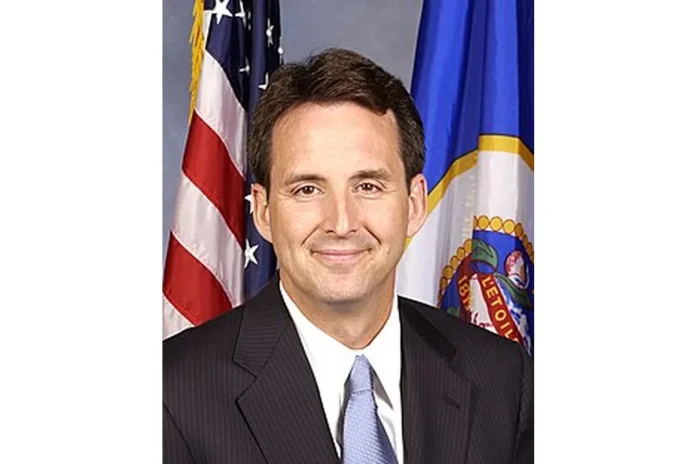
Tim Pawlenty Bio
Timothy James Pawlenty (born 27 November 1960) is an American attorney, businessman, and Republican politician who served as the 39th governor of Minnesota from 2003 to 2011. Before reaching the governor’s office, Pawlenty represented suburban Dakota County in the Minnesota House of Representatives from 1993 to 2003, including four years as House Majority Leader. As governor, he became known for budget restraint, tax restraint, and education reform, and he chaired the National Governors Association from 2007 to 2008.
After leaving office, Pawlenty sought the 2012 Republican presidential nomination, served as a national co-chair for Mitt Romney’s 2012 general election campaign, and later led the Financial Services Roundtable. He attempted a political comeback with a 2018 run for governor, losing the Republican primary to Jeff Johnson. As of 2025, Pawlenty remains the most recent Republican governor of Minnesota and continues to be active in public policy and conservative political circles.
Early Life and Background
Timothy James Pawlenty was born on 27 November 1960 in Saint Paul, Minnesota, and grew up in the Twin Cities area. He is the son of Eugene Joseph Pawlenty and Virginia Frances Pawlenty, née Oldenburg. Raised in a working family in Saint Paul, Pawlenty attended local schools and went on to earn both a Bachelor of Arts and a Juris Doctor from the University of Minnesota.
After completing his education, Pawlenty worked as a labor law attorney before moving into the private sector, eventually becoming a vice president at a software company. Those early professional years gave him a grounding in workplace law, business management, and the practical economics of running a company, all of which would later shape his approach to state policy.
Path to US Politics
Pawlenty’s entry into US politics began at the state level. In 1992, he won election to the Minnesota House of Representatives to represent District 38B, a suburban Dakota County seat. He went on to win reelection four times, building a reputation as a reliable conservative voice on fiscal and social issues.
By 1998, Pawlenty’s colleagues elevated him to House Majority Leader, a position he held from 1999 to 2003. In that role, he helped set the chamber’s legislative agenda and worked closely with party leaders in the Minnesota Senate. When the 2002 gubernatorial race opened up, he was well positioned to mount a campaign of his own.
Tim Pawlenty Career
Early Career (1993–2002)
Pawlenty’s political career began with his 1992 election to the Minnesota House of Representatives for District 38B. Over the next decade, he won four additional terms, consistently campaigning on tax restraint, education reform, and tough-on-crime policies. His work in the House helped him cultivate a base among suburban voters in Dakota County.
In 1998, Pawlenty was elected by his Republican colleagues to serve as House Majority Leader, a position he held from 1999 to 2003. He briefly considered a U.S. Senate bid in 2002 but stepped aside at the request of Vice President Dick Cheney so Norm Coleman could run unopposed in the Republican primary. Pawlenty then turned his attention to the governor’s race, defeating businessman Brian Sullivan in a hard-fought Republican primary.
2002 Gubernatorial Victory (2002–2006)
In the 2002 general election, Pawlenty faced Democratic–Farmer–Labor state senator Roger Moe and Independence Party candidate Tim Penny. Running on a pledge not to raise taxes, support for concealed carry, a 24-hour abortion waiting period, and education reform, Pawlenty won with 43.8 percent of the vote.
Once in office, he inherited a projected $4.3 billion two-year deficit, the largest in Minnesota history. Working with a Democrat-controlled Senate, he signed a package of fee increases, spending reductions, and government reorganization that eliminated the shortfall. His administration also pursued ethics reform, education policy changes, and a concealed-carry law, while also codifying the 24-hour abortion waiting period.
Reelection and Second Term (2006–2011)
Pawlenty sought a second term in 2006, facing Minnesota Attorney General Mike Hatch of the DFL, Independence Party candidate Peter Hutchinson, and Green Party candidate Ken Pentel. He won by less than one percent, even as both chambers of the legislature shifted to DFL control.
His second term was dominated by the Great Recession. He erased a $2.7 billion deficit through spending cuts, payment shifts, and one-time federal stimulus money. His final budget became the state’s first two-year period since 1960 in which net government expenditures decreased. He also signed the Next Generation Energy Act of 2007 and chaired the National Governors Association from 2007 to 2008.
Notable Events and Milestones
Beyond the governorship, Pawlenty launched a 2012 presidential campaign, finishing third in the Ames Straw Poll before withdrawing after a disappointing early performance. He endorsed Mitt Romney and served as national co-chair of Romney’s 2012 campaign, and he later led the Financial Services Roundtable. In 2018, Pawlenty ran for governor a third time with Michelle Fischbach as his running mate but lost the Republican primary to Jeff Johnson.
Tim Pawlency Family
Family Background and Personal Life
Pawlenty married Mary Anderson in 1987, and the couple has two daughters, Anna and Mara. Mary Pawlenty was appointed as a judge of the Dakota County District Court in Hastings, Minnesota, in 1994, and she later served as General Counsel at the National Arbitration Forum. Raised Roman Catholic, Pawlenty later converted to Evangelical Protestantism, an influence he has attributed to Mary and her involvement with Wooddale Church in Eden Prairie, Minnesota. He is often referred to by the monikers “TPaw” and “T-Paw.”