
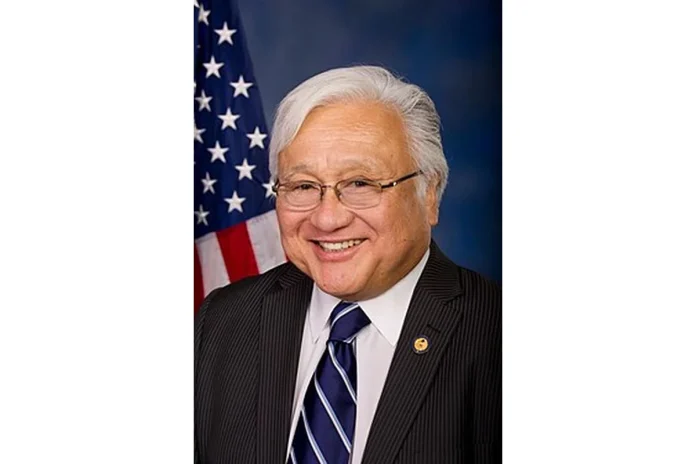
Mike Honda Bio
Michael Makoto Honda (born June 27, 1941) is an American politician and former educator who represented Silicon Valley in the United States House of Representatives from 2001 to 2017. A member of the Democratic Party, he focused his career on STEM education, technology policy, human rights, and veterans’ issues, while also securing significant federal funding for local transportation and environmental projects. Honda is a third-generation Japanese American and an advocate for civil rights, immigration reform, and progressive economic and environmental policies.
Early Life and Background
Michael Makoto Honda was born in 1941 in Walnut Grove, California, the son of Fusako (Tanouye) Honda and Giichi Honda. His grandparents had immigrated to the United States from Kumamoto Prefecture in the early 1900s, and both of his parents were born in California. When he was one year old, he and his family were forcibly relocated to Camp Amache, a Japanese-American internment camp in southeastern Colorado.
In 1953, his family returned to California, where they became strawberry sharecroppers in Blossom Valley in San Jose. Honda started at Andrew P. Hill High School before transferring to and graduating from San Jose High Academy. He then entered San Jose State University, but paused his studies from 1965 to 1967 to serve in the United States Peace Corps in El Salvador, an experience that helped him become fluent in Spanish.
Honda returned to San Jose State, where he earned a bachelor’s degree in biological sciences and Spanish in 1968 and a master’s degree in education in 1974. Over the next three decades, he built a career as a science teacher, principal at two public schools, school board member, and educational researcher at Stanford University.
Path to US Politics
Honda’s entry into public service began in 1971, when San Jose Mayor Norman Mineta appointed him to the city’s Planning Commission. In 1981, he was elected to the San Jose Unified School Board, an early step that allowed him to apply his educator’s background to civic governance and community planning.
In 1990, Honda was elected to the Santa Clara County Board of Supervisors, where he became a strong voice for working families and minority communities. He then won a seat in the California State Assembly in 1996, serving in Sacramento until 2001. During this time he built a reputation for inclusive policymaking, which positioned him to run for federal office.
In the 2000 United States House of Representatives elections, Honda won the Democratic nomination for California’s 15th congressional district, once represented by his early mentor Norm Mineta. He won the general election by a 12-point margin, beginning a long tenure in Congress representing the heart of Silicon Valley.
Mike Honda Career
Early Career (2001-2006)
After taking office in 2001, Honda was assigned to the United States House Committee on Science, Space and Technology, where he became ranking member of the Energy Subcommittee from 2005 to 2007. He also served on the United States House Committee on Transportation and Infrastructure from 2001 to 2007, where he focused on bringing federal transportation dollars to the Bay Area.
In November 2003, Democratic National Committee chair Terry McAuliffe appointed Honda as deputy chair of the DNC. In February 2005, he was elected a vice chair of the Democratic National Committee under the chairmanship of Howard Dean. He was reelected to a second term as DNC vice chair in 2009 under former Virginia Governor Tim Kaine, serving in that role until 2013.
Silicon Valley Representation (2001-2012)
Honda was re-elected in 2002, 2004, 2006, 2008, 2010, and 2012, building a strong record on education, technology, and civil rights. In 2007, Speaker of the House Nancy Pelosi appointed him to the United States House Committee on Appropriations, giving him direct influence over federal spending. From 2011 to 2013, he served as the ranking member of the Legislative Branch Appropriations Subcommittee.
As Representative for the heart of Silicon Valley, Honda became a national leader on science, technology, and nanotechnology policy. In 2002, he introduced one of the first nanotechnology bills in Congress, and in 2003 he worked with then-Science Committee Chairman Sherwood Boehlert to author the Nanotechnology Research and Development Act of 2003, which authorized billions in federal research funding. In 2008, he partnered with then-Senator Barack Obama to introduce the Enhancing STEM Education Act, portions of which were later signed into law as part of the America COMPETES Act.
Honda also focused on defense, health care, and human rights. He founded the Congressional Viral Hepatitis Caucus, served as chairman of the Congressional Asian Pacific American Caucus, and proposed US H.Res. 121 in 2007 urging Japan to formally acknowledge its responsibility for wartime comfort women. The resolution passed the House of Representatives in 2007 with no opposition voiced.
17th District Era (2013-2017)
Due to redistricting after the 2010 US census, Honda’s district was renumbered as the 17th district at the beginning of the 113th Congress on January 3, 2013. The district remained the only Asian American-majority district in the continental United States, anchored in Silicon Valley and including parts of Cupertino, Milpitas, Santa Clara, Sunnyvale, Fremont, and Newark.
In 2014, Honda was narrowly re-elected against fellow Democrat Ro Khanna, but in 2016 he lost a rematch to Khanna and left Congress in January 2017. As of August 2015, Honda had secured over $1.3 billion in federal appropriations since 2001, including significant funding for the extension of the BART system into Silicon Valley.
Notable Events and Milestones
One of Honda’s signature legislative achievements was the 2007 passage of his comfort women resolution, which called on Japan to formally acknowledge, apologize, and accept historical responsibility for the wartime atrocity. He also co-founded the Congressional Equality Caucus in 2008, when only two openly gay members served in Congress, and he became a vocal advocate for transgender rights, publicly identifying as a proud grandfather of his transgender granddaughter in 2015.
Mike Honda Career Wins
Mike Honda won eight consecutive general elections for the United States House of Representatives between 2000 and 2014, representing the people of Silicon Valley for sixteen years. He was first elected in 2000 to California’s 15th congressional district, and was re-elected in 2002, 2004, 2006, 2008, 2010, and 2012.
Election Highlights
Honda’s first congressional victory came in 2000, when he won the Democratic nomination for the 15th district and secured a 12-point general election margin. He faced his toughest challenge in 2014, when he narrowly defeated Ro Khanna in a hard-fought Democratic contest. Two years later, in 2016, he lost the rematch to Khanna.
Other Wins & Achievements
Honda was elected to the San Jose Unified School Board in 1981, the Santa Clara County Board of Supervisors in 1990, and the California State Assembly in 1996. Within the Democratic National Committee, he was appointed deputy chair in 2003 and then elected vice chair in 2005, serving in that role through 2013.
Mike Honda Family
Family Background and Heritage
Mike Honda is a third-generation Japanese American, often called a sansei. His grandparents immigrated to the United States from Kumamoto Prefecture in the early 1900s, and both of his parents, Fusako (Tanouye) Honda and Giichi Honda, were born in California. His father Giichi, nicknamed Byron, was one of 6,000 Military Intelligence Service agents even as the family endured internment during World War II.
Personal Life
Honda’s wife, Jeanne, was a kindergarten teacher at Baldwin Elementary School in San Jose. She died in 2004. He has two adult children: his son Mark, an aerospace engineer living in Torrance, and his daughter Michelle, a marketing and communications manager in San Jose. In 2015, Honda publicly identified as a proud grandfather, or jiichan, of his transgender granddaughter Malisa, an announcement that drew regional, national, and international attention.