
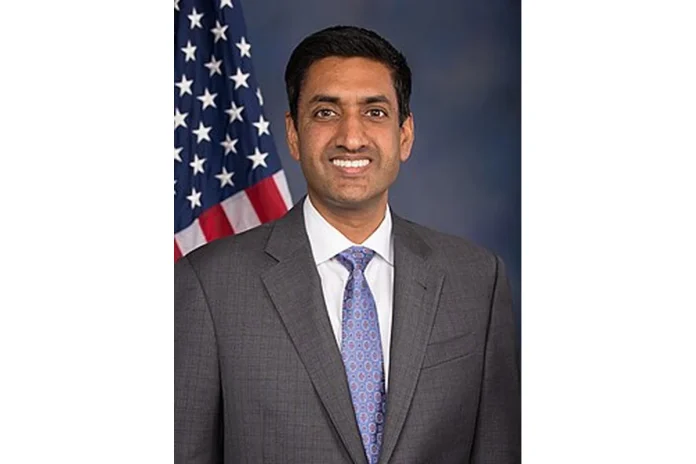
Ro Khanna Bio
Rohit “Ro” Khanna is an American politician and attorney serving as the U.S. Representative for California’s 17th congressional district since 2017. A member of the Democratic Party, he defeated eight-term incumbent Mike Honda in 2016 after an earlier 2014 campaign. Khanna served as Deputy Assistant Secretary at the U.S. Department of Commerce under President Barack Obama from 2009 to 2011 and has taught at Stanford, Santa Clara University School of Law, and San Francisco State. He is known for championing technology and manufacturing jobs, progressive economic policies, antitrust enforcement in the tech sector, and initiatives on climate, internet rights, and labor reform.
Early Life and Background
Rohit Khanna was born on September 13, 1976, in Philadelphia, Pennsylvania, to Indian parents. He grew up with a strong educational foundation, attending Council Rock High School before pursuing higher education at the University of Chicago, where he earned his Bachelor of Arts degree. Khanna then attended Yale Law School, where he earned his Juris Doctor degree, setting the stage for his future career in law and public service.
Khanna’s political philosophy has been shaped by his experiences as a first-generation American with immigrant roots. He has described himself as a “progressive capitalist” and has advocated for a “new economic patriotism” as his governing philosophy. This perspective emphasizes the importance of balancing economic growth with social justice and environmental sustainability.
Before entering electoral politics, Khanna gained experience in both the public and private sectors. He worked as a Deputy Assistant Secretary at the U.S. Department of Commerce under President Obama, where he focused on technology and innovation policy. He also worked in the private sector as a vice president for strategic initiatives at Smart Utility Systems, an energy efficiency company, and taught law at several universities.
Path to US Politics
Khanna’s political career began in 2004 when he ran one of the nation’s first anti-Iraq war campaigns for the United States House of Representatives, challenging Tom Lantos in the Democratic primary in California’s 12th congressional district. Though unsuccessful, this campaign established his progressive credentials and his opposition to the Iraq War. He received endorsements from prominent officials including Matt Gonzalez and newspapers including the San Mateo County Times.
In 2012, Khanna intended to run for the House in California’s 15th congressional district, hoping to succeed Democrat Pete Stark after his eventual retirement. He raised an impressive $1.2 million, receiving support from Governor Brown, House Minority Leader Nancy Pelosi, former Secretary of Transportation Norman Mineta, and other notable figures. Although Eric Swalwell ultimately won that seat, Khanna’s strong fundraising demonstrated his viability as a candidate.
In 2013, Khanna announced his candidacy for California’s 17th congressional district, challenging incumbent Mike Honda. He assembled a campaign team composed of top members of President Obama’s reelection team, including Jeremy Bird and Steve Spinner. Backed by executives at Google, Facebook, Yahoo! and other tech companies, and supported by editorial boards of major newspapers, Khanna mounted a strong campaign but ultimately lost the 2014 election by a narrow margin of 51.8% to 48.2%.
Ro Khanna Career
Early Career (2004-2016)
Khanna’s early political career was marked by his progressive stance on key issues. In 2004, he ran an anti-war campaign that distinguished him from many mainstream Democrats at the time. This established his reputation as a principled progressive willing to challenge establishment figures. Between 2004 and 2016, he built a strong fundraising network, particularly within the technology sector, which would become a hallmark of his political career.
In 2012, Khanna positioned himself as a candidate focused on economic issues and job creation. His fundraising for the fourth quarter of 2011 exceeded that of all but two House candidates nationwide, demonstrating his ability to attract significant financial support. Although he did not win that race, the experience and connections he proved invaluable for his subsequent campaigns, particularly his successful 2016 bid against Mike Honda.
Congressional Breakthrough (2016-Present)
Khanna’s breakthrough came in 2016 when he defeated eight-term incumbent Mike Honda in the general election, winning 61% to 39%. Notably, he took no donations from PACs or corporations for his campaign, raising funds only from individuals. He ran on a platform focused on “moving the Democratic Party to a more progressive stance” and held his first town hall as a congressman on February 22, 2017, at Ohlone College. During this campaign, he endorsed Bernie Sanders for president of the United States.
Once in Congress, Khanna quickly established himself as a progressive voice. On May 10, 2017, he officially joined the Justice Democrats and became a member of both the Congressional Progressive Caucus and the Congressional Asian Pacific American Caucus. He has been a consistent advocate for progressive economic policies, including free college, Medicare for all, and reducing corporate influence in politics. His 2016 victory marked a significant shift in the political landscape of California’s 17th district, bringing a more progressive perspective to represent Silicon Valley.
Khanna has been re-elected multiple times, demonstrating strong support from his constituents. He won reelection in 2018 by defeating Republican Ron Cohen with 72.5% of the vote, and in 2020 he defeated Republican Ritesh Tandon with 71.3% of the vote. In 2020, he also co-chaired Bernie Sanders’s presidential campaign, further solidifying his position as a leading progressive voice in Congress.
Notable Events and Milestones
Throughout his congressional career, Khanna has been involved in several notable events and achieved significant milestones. He has been a key advocate for climate action, chairing the House Oversight Subcommittee on the Environment and presiding over the “Big Oil hearing” in 2021, which brought the CEOs of ExxonMobil, Chevron, Shell, and BP to testify under oath about their role in spreading disinformation about climate change.
Ro Khanna Career Wins
Khanna has achieved several significant victories during his political career, from electoral wins to legislative accomplishments. His electoral victories have consistently been by substantial margins, indicating strong support from his constituents. He has also been successful in advancing progressive policies through his committee work and advocacy on issues ranging from climate change to economic justice.
Congressional Highlights
Khanna’s congressional wins include defeating eight-term incumbent Mike Honda in 2016, followed by landslide victories in 2018 (72.5%) and 2020 (71.3%). He has successfully advanced several key initiatives, including chairing the House Oversight Subcommittee on the Environment, where he led the “Big Oil hearing” investigating fossil fuel companies’ role in climate disinformation. He also played a crucial role in securing the $369 billion climate investment in the Inflation Reduction Act through negotiations with Senator Joe Manchin.
Other Wins & Achievements
In addition to his electoral victories, Khanna has achieved significant legislative accomplishments. He founded and co-chairs the Antitrust Caucus in the House, leading efforts to address monopolistic behavior in the tech sector. He has been a vocal advocate for labor rights, co-sponsoring the Protecting the Right to Organize Act and the Raise the Wage Act. His work on climate policy has been particularly impactful, including his leadership on the Green New Deal proposal and efforts to eliminate fossil fuel subsidies.
Ro Khanna Family
Family Background and Personal Life
Khanna resides in Fremont, California, with his wife Ritu Khanna (née Ahuja), a fellow Indian American, and their two children, Zara and Soren. Ritu’s father is Monte Ahuja, who in 1975 founded Transtar, an automotive transmission parts supply company in Solon, Ohio. The Monte Ahuja College of Business is named after Ahuja. Khanna comes from an Indian immigrant background and is a practicing Hindu, describing his philosophical beliefs as “Gandhian.”
Personal Life
Beyond his political career, Khanna has maintained an active public presence, making numerous appearances on podcasts and YouTube shows between January and September 2025. He has balanced his congressional duties with his role as a father and husband, maintaining a family life in California’s 17th district. Khanna’s dual identity as both a progressive politician and a family man has resonated with many of his constituents, particularly in Silicon Valley where he has strong support.