

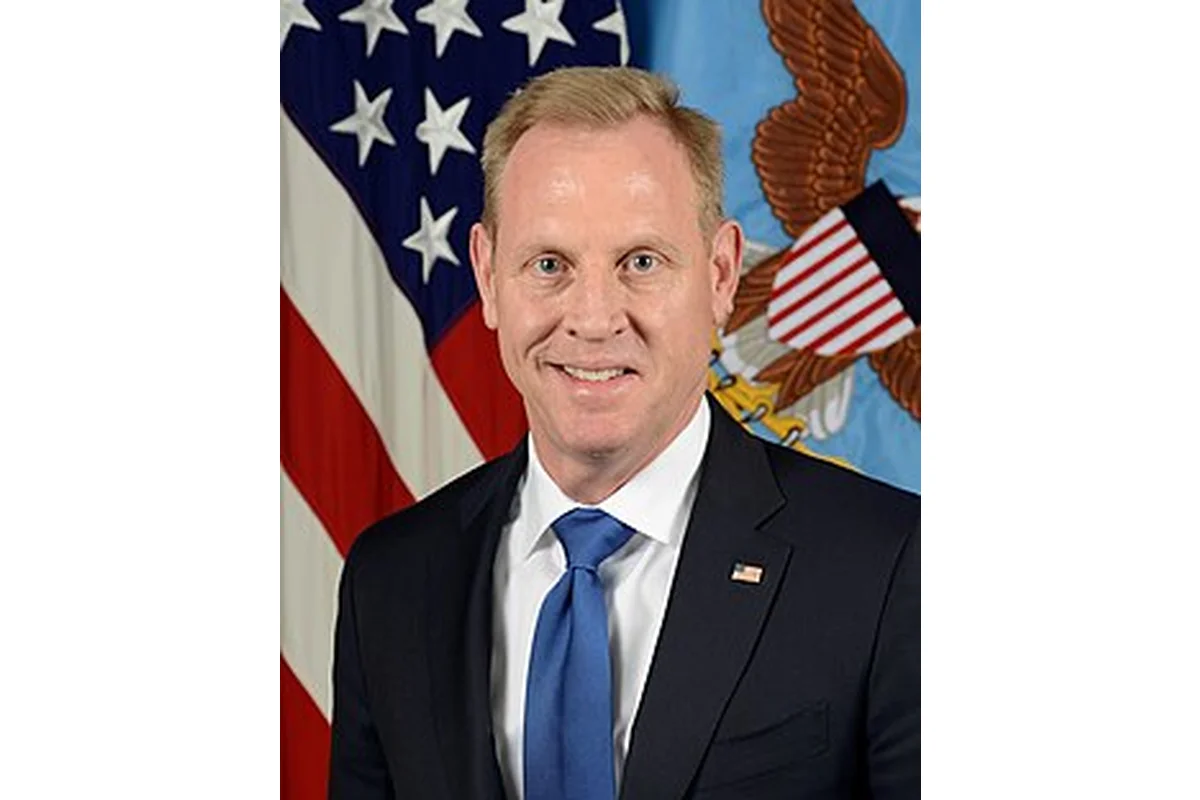
Patrick M. Shanahan Bio
Patrick Michael Shanahan (born June 27, 1962) is an American businessman and government official who served as the acting United States secretary of defense in 2019 and as the 33rd United States deputy secretary of defense from 2017 to 2019. Before joining the Department of Defense, he spent more than three decades at Boeing in senior management roles, including overseeing airplane programs and supply chain operations. After leaving government, Shanahan returned to the private sector and has served on several corporate boards; in 2023 he became interim president and chief executive officer of Spirit AeroSystems.
Born in Palo Alto, California, and raised in Seattle, Washington, Shanahan built his career in engineering and corporate leadership before entering federal service. He holds a Bachelor of Science in mechanical engineering from the University of Washington, along with a Master of Science in mechanical engineering and a Master of Business Administration from the Massachusetts Institute of Technology.
Early Life and Background
Patrick Michael Shanahan was born on June 27, 1962, in Palo Alto, California. He is the son of Michael George Shanahan and Jo-Anne Genevieve Shanahan, née David. Public records note that his father’s original surname was Rockholtz, and that Shanahan is the surname of Patrick’s step-grandfather. The family later settled in the Pacific Northwest, where he spent most of his childhood.
Shanahan grew up in Seattle, Washington, and graduated from Bishop Blanchet High School in 1980. His upbringing in the Seattle area placed him near the heart of the American aerospace industry, an environment that shaped his later professional interests. From an early age, he showed a strong aptitude for math and engineering, which guided his decision to pursue a technical education.
He went on to attend the University of Washington, where he earned a Bachelor of Science degree in mechanical engineering. He later returned to graduate study at the Massachusetts Institute of Technology, completing a Master of Science in mechanical engineering and a Master of Business Administration from the MIT Sloan School of Management. This combination of engineering and management training prepared him for a long career in industrial leadership.
Path to US Politics
Shanahan’s path to federal service ran through decades of work in the private sector rather than traditional political channels. He joined Boeing in 1986, beginning in computer services and the Boeing 777 program, and rose steadily through management positions on commercial and defense programs. By the mid-2010s, he was a member of the Boeing Executive Council, leading major manufacturing and supply chain operations across the company.
In 2017, President Donald Trump nominated Shanahan as the 33rd deputy secretary of defense, the Pentagon’s second-highest civilian position. The choice reflected his extensive experience managing large aerospace programs and his familiarity with both commercial production and defense systems. His Senate confirmation hearing took place on June 20, 2017, and he was confirmed by a vote of 92 to 7 on July 18, 2017, taking office the following day.
When Defense Secretary Jim Mattis resigned in late 2018, Trump elevated Shanahan to acting secretary of defense effective January 1, 2019. In May 2019, the White House announced that Trump intended to nominate Shanahan as the next secretary of defense. He withdrew from consideration in June 2019, and his last day in the acting role was June 24, 2019.
Patrick M. Shanahan Career
Early Career at Boeing (1986–2004)
Shanahan joined Boeing in 1986, beginning his career in computer services before moving to the Boeing 777 program. Over the years, he held management roles on the 737, 747, 767, 777, and 787 commercial airline programs, as well as on Boeing Missile Defense Systems. He also served as vice president and general manager of the Boeing 757 program, with responsibility for the design, production, and profitability of that aircraft family.
He later held leadership positions on the Boeing 767 program and in the company’s fabrication division, followed by a stint as vice president and general manager for Boeing Rotorcraft Systems in Philadelphia. In that role, he oversaw all U.S. Army Aviation programs and site activities in Philadelphia and Mesa, Arizona, including the V-22 Osprey, CH-47 Chinook, and AH-64D Apache.
Boeing Defense and Commercial Programs Breakthrough (2004–2016)
In December 2004, Shanahan became vice president and general manager of Boeing Missile Defense Systems, where he oversaw the Ground-based Midcourse Defense system, the Airborne Laser program, and the Advanced Tactical Laser program. He later led the Boeing 787 Dreamliner program during a critical phase of its development from 2007 to 2008, helping to steer the program through early challenges. Colleagues at Boeing knew him as “Mr. Fix-it” for his ability to stabilize troubled programs.
Beginning in December 2008, he served as senior vice president of Airplane Programs at Boeing Commercial Airplanes. In April 2016, he became senior vice president of Supply Chain and Operations, with responsibility for manufacturing operations, supplier management, advanced manufacturing technologies, and global supply chain strategies. He was also a member of the Boeing Executive Council, one of the company’s top decision-making bodies.
Spirit AeroSystems Era (2023–Present)
After leaving the Department of Defense in 2019, Shanahan joined the boards of Zanite Acquisition Corp. in 2021, Leidos in 2022, and CAE Inc. in 2022. On October 2, 2023, he was appointed interim president and chief executive officer of Spirit AeroSystems, a major aerostructures supplier. In this role, he has overseen the company’s operations as it works to stabilize production and address ongoing industry challenges.
Notable Events and Milestones
Shanahan’s tenure as acting secretary of defense was marked by several high-profile events, including an unannounced visit to Afghanistan in February 2019 and a visit to the US–Mexico border later that month. In late March 2019, reports emerged that the Office of Inspector General was reviewing allegations that he had improperly advocated on behalf of Boeing. In May 2019, he was nominated to be secretary of defense, but withdrew from consideration the following June, citing a desire to spend more time with his family.
Patrick M. Shanahan Career Wins
Shanahan’s career is defined by leadership of complex aerospace and defense programs rather than electoral victories. He guided the Boeing 787 Dreamliner through a difficult development period, led major Boeing commercial and defense programs, and helped shape the Pentagon’s response to global challenges during his time at the Department of Defense.
Department of Defense Highlights
Shanahan was confirmed as the 33rd deputy secretary of defense on July 18, 2017, by a strong bipartisan vote of 92 to 7. He was elevated to acting secretary of defense on January 1, 2019, becoming one of the highest-ranking civilian leaders at the Pentagon. He was later nominated to serve as the permanent secretary of defense in May 2019.
Other Wins & Achievements
Across his Boeing career, Shanahan held senior leadership roles on the 737, 747, 767, 777, and 787 programs, the Boeing 757 and 767 programs, Boeing Rotorcraft Systems, and Boeing Missile Defense Systems. He earned the nickname “Mr. Fix-it” for his success in stabilizing major programs and later served on the boards of Zanite Acquisition Corp., Leidos, and CAE Inc., before taking the helm of Spirit AeroSystems.
Patrick M. Shanahan Family
Family Background and Career Lineage
Patrick Michael Shanahan was born to Michael George Shanahan and Jo-Anne Genevieve Shanahan, née David. Public sources note that his father’s original family name was Rockholtz, and that the Shanahan surname comes from his step-grandfather. The family later made their home in Seattle, Washington, where Shanahan attended Bishop Blanchet High School and went on to study mechanical engineering.
Personal Life
Shanahan lives in Seattle with his wife, Adrienne Shanahan. He has three children from a previous marriage. He and his family have remained based in the Seattle area throughout his career in the aerospace industry and his time in government service.