

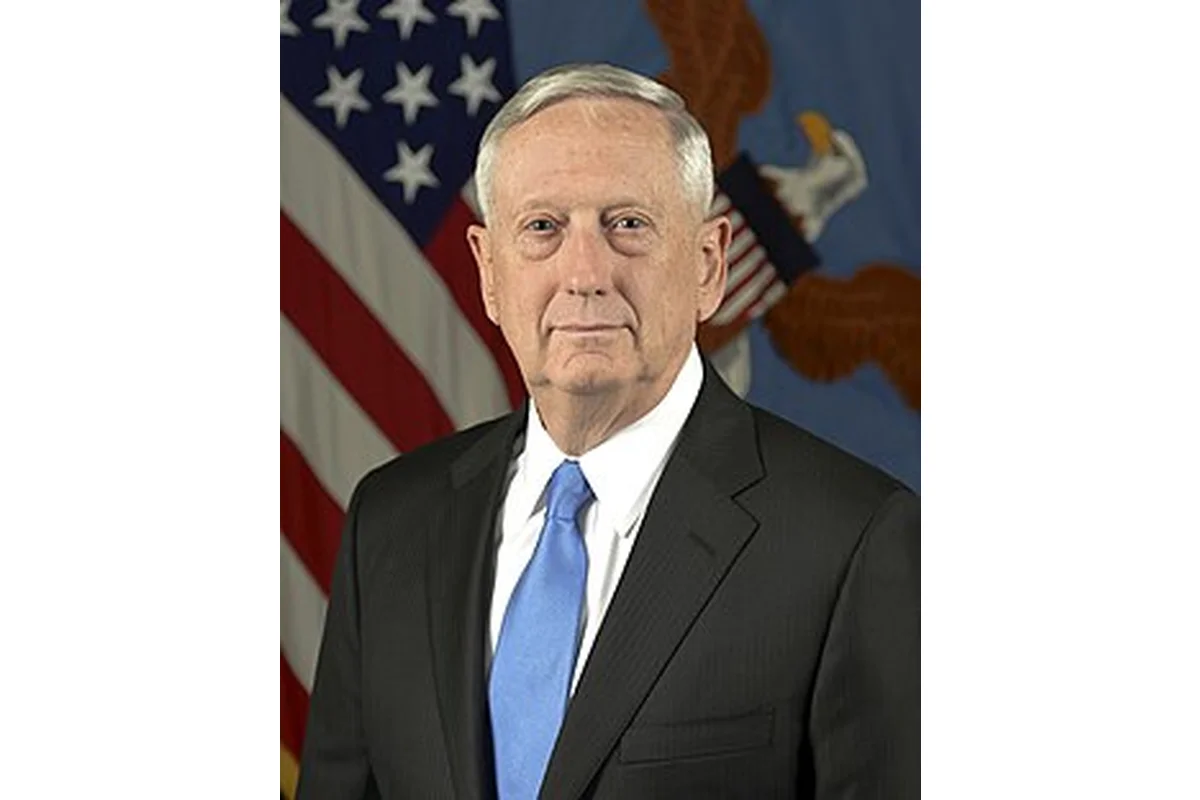
Jim Mattis Bio
James Norman Mattis, born on September 8, 1950, in Pullman, Washington, is an American retired Marine Corps four-star general and former government official. Known widely by the call sign “Chaos” and the nickname “Warrior Monk,” Mattis built a four-decade military career that spanned the Gulf War, the War in Afghanistan, and the Iraq War. He later served as the 26th United States Secretary of Defense from 2017 to 2019, becoming one of the most recognized defense leaders of his generation.
After leaving government, Mattis transitioned to academic, advisory, and writing roles, publishing his memoir Call Sign Chaos: Learning to Lead in 2019. He has been described by peers as an avid reader and military intellectual, recognized for requiring Marines under his command to study regional history before deployment. Throughout his career, he was respected for both his battlefield command and his insistence on cultural awareness among troops.
Early Life and Background
James Norman Mattis was raised in a bookish household in the Pacific Northwest, the son of John West Mattis, a merchant mariner who had moved to Richland, Washington, to work at a plant supplying fissile material to the Manhattan Project, and Lucille (Proulx) Mattis, an immigrant from Canada who had served in Army Intelligence in South Africa during the Second World War. The family did not own a television, and Mattis grew up with a strong emphasis on reading and learning that would later define his command style.
Mattis graduated from Richland High School in 1968 and enlisted in the Marine Corps Reserve the following year. He earned a Bachelor of Arts in history from Central Washington University in 1971, where he participated in the Naval Reserve Officers’ Training Corps. He later completed a Master of Arts in international security affairs at the National War College of National Defense University in 1994, rounding out a formal education that combined history, strategy, and military studies.
Path to US Politics
Mattis’s entry into national political life came in late 2016, when President-elect Donald Trump met with him in Bedminster, New Jersey, to discuss leading the Pentagon. The National Security Act of 1947 required a seven-year waiting period before retired military personnel could serve as secretary of defense, and Mattis had retired in 2013. Congress passed a waiver in early 2017, allowing his nomination to move forward.
The Senate confirmed Mattis as Secretary of Defense on January 20, 2017, by a 98–1 vote, with Senator Kirsten Gillibrand casting the lone “no” vote in opposition to the waiver. Mattis has stated that he has never registered with a political party and that, as a member of the military, he considered himself proudly apolitical. His role as defense secretary nonetheless placed him at the center of major policy debates during the Trump administration.
Jim Mattis Career
Early Career (1972–2000)
Mattis was commissioned a second lieutenant in the Marine Corps on January 1, 1972, and served as a rifle and weapons platoon commander in the 3rd Marine Division. He rose steadily through company and recruiting assignments, eventually commanding 1st Battalion, 7th Marines, one of Task Force Ripper’s assault battalions during the Gulf War in 1991. As a colonel, he led the 7th Marine Regiment from 1994 to 1996, gaining a reputation for intellectualism and direct engagement with his Marines.
During these early years, Mattis earned his call sign “CHAOS,” an acronym for “Colonel Has Another Outstanding Solution,” which was initially offered in a tongue-in-cheek tone. He also became known for his personal library of more than 7,000 volumes and his habit of requiring Marines to study the history and culture of regions where they were deployed. The “Mad Dog” nickname, popularized by a 2004 Los Angeles Times article, stuck in the public imagination for years, though Mattis himself later clarified that “Chaos” was his preferred call sign.
Afghanistan and Iraq Breakthrough (2001–2007)
During the initial planning for the War in Afghanistan, Mattis led Task Force 58 in operations in southern Afghanistan beginning in November 2001, becoming the first Marine Corps officer to command a Naval Task Force in combat. He later commanded the 1st Marine Division during the 2003 invasion of Iraq and the subsequent Iraq War, playing key roles in combat operations in Fallujah, including negotiations during Operation Vigilant Resolve in April 2004 and planning for Operation Phantom Fury in November of that year.
Mattis popularized the 1st Marine Division’s motto “no better friend, no worse enemy,” a phrase that drew national attention. He was known for his willingness to relieve underperforming senior leaders, a practice so rare in the modern military that one such removal made front-page newspapers. Mattis also placed strong emphasis on cultural sensitivity training for his Marines, encouraging them to grow moustaches to better connect with local populations.
Joint Forces Command Era (2007–2010)
On November 9, 2007, Mattis was promoted to four-star general and took command of U.S. Joint Forces Command in Norfolk, Virginia, while also serving as NATO’s Supreme Allied Commander Transformation. He held the JFCOM post until September 2010 and worked closely with allies to reshape NATO’s military capabilities for the post-Cold War era. French Air Force General Stéphane Abrial assumed the SACT role in September 2009.
US Central Command Era (2010–2013)
In July 2010, Defense Secretary Robert Gates recommended Mattis to replace David Petraeus as commander of U.S. Central Command, and he was formally nominated by President Obama. Mattis took command at MacDill Air Force Base on August 11, 2010, overseeing the wars in Iraq and Afghanistan and managing a region that included Syria, Iran, and Yemen. He lobbied the Obama administration for a more aggressive response to Iran, including more covert operations and disruption of Iranian arms shipments to Syria and Yemen.
Mattis retired from the military in March 2013, and the Defense Department nominated General Lloyd Austin to succeed him at CENTCOM. He then moved into the private sector, joining FWA Consultants and the General Dynamics Board of Directors, while also being appointed an Annenberg Distinguished Visiting Fellow at the Hoover Institution. From 2013 to January 2017, he served on the board of the health technology company Theranos, which later faced fraud allegations.
Secretary of Defense Era (2017–2019)
As Secretary of Defense, Mattis affirmed the United States’ commitment to defending longtime ally South Korea during the 2017 North Korea crisis and warned that any attack on the United States or its allies would be defeated. He voiced opposition to proposed military collaboration with China and Russia, stressing what he saw as their threat to the American-led world order. Mattis also criticized Russia’s attempts to redraw international borders by force in Europe and called for freedom of navigation in the South China Sea.
Mattis occasionally voiced his disagreement with Trump administration policies, including the withdrawal from the Iran nuclear deal, the proposed withdrawals of troops from Syria and Afghanistan, and budget cuts hampering the monitoring of climate change. According to The Hill, he reportedly dissuaded Trump from attempting to assassinate Syrian President Bashar al-Assad. On December 20, 2018, after failing to convince Trump to reconsider withdrawing troops from Syria, Mattis announced his resignation effective the end of February 2019. Trump then abruptly accelerated his departure to January 1, 2019, stating that he had essentially fired Mattis.
Notable Events and Milestones
Among Mattis’s most significant moments was leading Task Force 58 during the opening phase of the War in Afghanistan, making him the first Marine to command a Naval Task Force in combat. His command of the 1st Marine Division during the 2003 Iraq invasion, including the Fallujah operations, cemented his reputation as a frontline combat leader. His December 2018 resignation letter, which closed with the line “because the right to dissent protects the very governance of disagreement that we ultimately surrender to majority rule,” became one of the most widely circulated resignation letters in modern Pentagon history.
Jim Mattis Awards
Jim Mattis received numerous military decorations throughout his career, including the Defense Distinguished Service Medal (2), the Navy Distinguished Service Medal, the Defense Superior Service Medal, the Legion of Merit, the Bronze Star Medal (with Valor), and the Meritorious Service Medal (3). His civilian recognitions included induction into the Sons of the American Revolution on July 13, 2021. Mattis also delivered the keynote address at the 2019 Alfred E. Smith Memorial Foundation Dinner, where he joked about being “the world’s most overrated” general.
Military Honors
Mattis’s military honors reflect more than four decades of service, from his commission as a second lieutenant in 1972 to his retirement as a four-star general in 2013. He is also a graduate of the U.S. Marine Corps Amphibious Warfare School, the U.S. Marine Corps Command and Staff College, and the National War College. His reputation as a thoughtful and well-read officer was widely noted by both peers and journalists throughout his career.
Post-Service Recognition
Following his tenure as defense secretary, Mattis co-edited the book Warriors and Citizens: American Views of Our Military, published in August 2016, and later published his memoir Call Sign Chaos: Learning to Lead in 2019. In 2019, he joined The Cohen Group as senior counsel and was re-elected to the General Dynamics board in August of that year.
Jim Mattis Family
Family Background and Heritage
James Norman Mattis was born to John West Mattis, a merchant mariner who worked on the Manhattan Project, and Lucille (Proulx) Mattis, a Canadian immigrant who had served in Army Intelligence during the Second World War. The family settled in Richland, Washington, where Mattis was raised in a bookish household that did not own a television. His mother’s Canadian heritage and his father’s wartime work shaped a family environment that valued learning, discipline, and public service.
Personal Life
Mattis remained a bachelor for his entire professional career, earning the nickname “The Warrior Monk” because of his lifelong devotion to the study of war. A now-retired Mattis married physicist and business executive Christina Lomasney in June 2022, and he has no children. An avid reader, he maintains a personal library of 7,000 books and has recommended Marcus Aurelius’s Meditations as the one book every American should read. Mattis is a Catholic, described as devout and committed, and he often prayed with General John F. Kelly on Sundays during the 2003 Iraq invasion.