

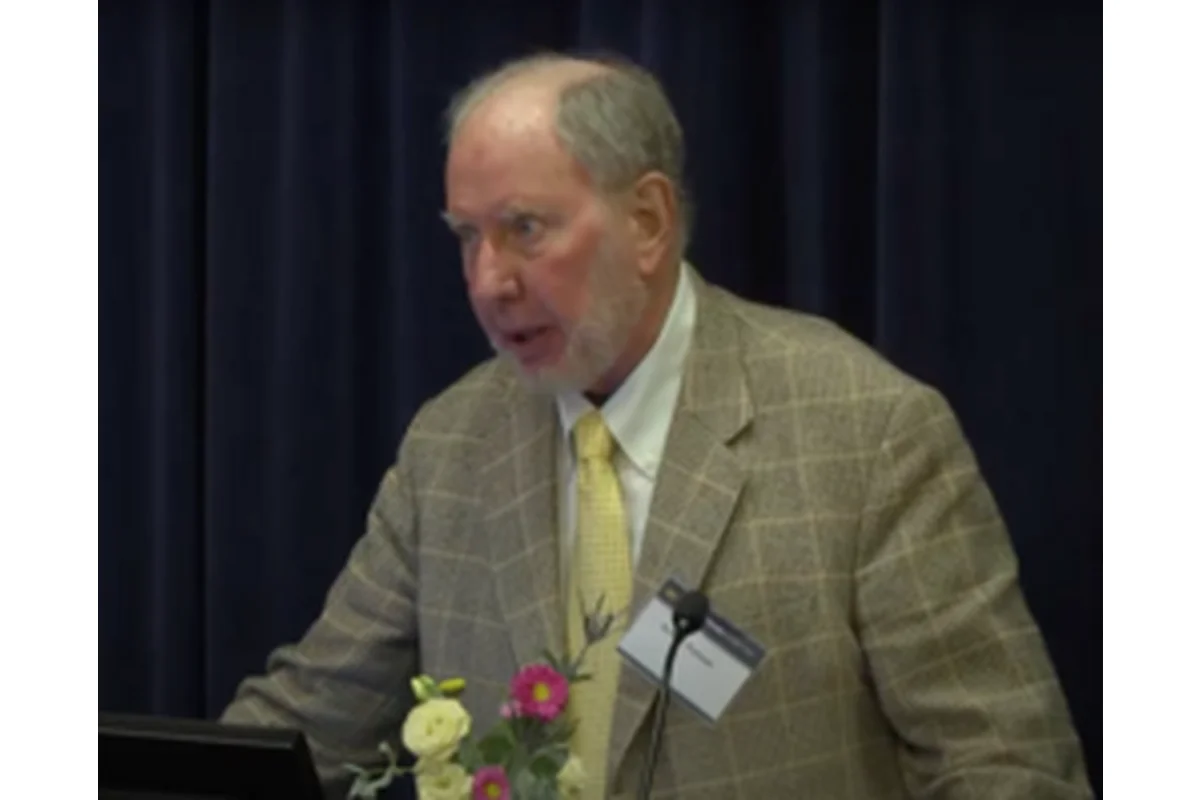
Robert D. Putnam Bio
Robert David Putnam, born on January 9, 1941, is an American political scientist and public policy scholar widely recognized for reshaping modern debates about democracy, civic life, and community in the United States. He currently serves as the Peter and Isabel Malkin Professor of Public Policy at the Harvard University John F. Kennedy School of Government, a position he has held for many years. Putnam’s research has introduced influential concepts such as two-level game theory and the distinction between bonding and bridging social capital. His landmark books, including Making Democracy Work and Bowling Alone, have made him one of the most frequently cited authors on college political science syllabi in the country.
Throughout his career, Putnam has combined rigorous scholarship with public engagement, advising presidents and civic leaders while building a body of work that bridges academic theory and everyday American life. He has also directed major research initiatives, including the Saguaro Seminar, which focuses on rebuilding social connections across the country. His contributions have earned him honors from governments, universities, and scholarly associations around the world.
Early Life and Background
Robert David Putnam was born on January 9, 1941, in Rochester, New York, and grew up in the small town of Port Clinton, Ohio. As a teenager, he participated in a competitive bowling league, an early personal experience with civic association that would later shape his academic interest in community life. He was raised in a religiously observant Methodist household, a background that influenced his later thinking about values, belonging, and shared norms.
Putnam attended Swarthmore College, where he graduated in 1963 and became a member of the Phi Sigma Kappa fraternity. During his undergraduate years, he developed a deep curiosity about political institutions and public life that set the stage for his future scholarship. After college, he won a prestigious Fulbright Fellowship to study at Balliol College, Oxford, an experience that broadened his comparative approach to politics and government.
Putnam went on to earn both a master’s degree and a doctorate from Yale University, completing his PhD in 1970. His graduate training gave him strong tools in comparative politics and statistical analysis, which would become hallmarks of his later research. Around the time of his 1963 marriage, he converted to Judaism, his wife Rosemary’s faith, adding another important dimension to his personal and intellectual life.
Path to Political Science
After finishing his doctorate at Yale, Putnam joined the faculty at the University of Michigan, where he began publishing influential work on comparative politics and democratic governance. His early research focused on the connections between civic traditions, institutional performance, and public trust, themes that would define his career. He also held fellowships at major research centers, including the Center for Advanced Study in the Behavioral Sciences, which helped him refine his comparative methods.
In 1979, Putnam moved to Harvard University, where he took on a series of distinguished roles, including serving as Dean of the Kennedy School of Government. This leadership position allowed him to shape public policy education and to mentor a generation of scholars and practitioners. At Harvard, he deepened his research on social capital, exploring how networks of civic engagement influence the effectiveness of democratic institutions.
Putnam’s path to becoming one of America’s most recognized political scientists was marked by a steady progression from regional studies of Italy to sweeping analyses of American civic life. He built an international reputation by combining deep fieldwork, innovative theory, and accessible writing. This combination helped move his ideas about social capital and community from academic journals into national policy discussions.
Robert D. Putnam Career
Early Career (1963–1992)
Putnam’s professional career began in the mid-1960s after his Fulbright Fellowship at Oxford, followed by early academic appointments and research fellowships. He held positions at the University of Michigan and served as a fellow at several prominent institutions, including the Woodrow Wilson International Center for Scholars and the Council on Foreign Relations. These early years gave him the comparative perspective and policy connections that shaped his later work.
During this period, he began the research that would become his first major book, studying regional governments in Italy to understand why some democratic institutions performed better than others. The project reflected his long-standing interest in the practical workings of democracy and the role of community life in shaping government performance. By the late 1980s and early 1990s, he had become president of major scholarly bodies and a frequent advisor on civic engagement.
Social Capital Breakthrough (1993–2000)
In 1993, Robert David Putnam published Making Democracy Work: Civic Traditions in Modern Italy, a comparative study of Italian regional governments that drew worldwide scholarly attention. The book argued that the success of democracies depends heavily on the horizontal bonds of trust and association that make up social capital. It established Putnam as a leading voice in comparative politics and won him major academic honors.
Two years later, in 1995, he published “Bowling Alone: America’s Declining Social Capital” in the Journal of Democracy, an article that brought his ideas to a much broader audience. The piece caught the attention of then-President Bill Clinton and was even covered in People magazine, signaling its unusual reach beyond academia. In 2000, he expanded the argument into the bestselling book Bowling Alone: The Collapse and Revival of American Community, documenting a steep drop in American civic participation since the 1960s and proposing ideas for renewal.
The book introduced widely cited distinctions between bonding social capital, which builds ties among similar groups, and bridging social capital, which connects people across differences. Putnam argued that peaceful, multi-ethnic societies need both kinds of connection. Critics, including sociologist Claude Fischer, questioned some of his data and interpretations, but the work fundamentally reshaped public conversations about community, trust, and democracy in America.
Harvard Kennedy School Era (1979–Present)
Since joining Harvard in 1979, Putnam has served in multiple senior roles, including Dean of the Kennedy School of Government, before taking up his current position as the Peter and Isabel Malkin Professor of Public Policy. From this base, he has led the Saguaro Seminar, a long-running initiative that brings together scholars, civic leaders, and politicians to discuss strategies for rebuilding American community life. The seminar produced the 2003 book and website Better Together, which highlights successful models of social capital building across the United States.
Putnam has continued to publish influential research on diversity, trust, and inequality, including a widely discussed 2007 study on how ethnic diversity affects communal trust in the short term. In 2015, he released Our Kids: The American Dream in Crisis, a book examining growing inequality of opportunity for American children. His work also inspired the 2023 Netflix documentary Join or Die, which explores the importance of community clubs and civic participation.
In recent years, Putnam has remained an active public intellectual, frequently speaking on topics ranging from democratic decline to social trust and education. He has also built a strong online presence, including a Substack newsletter where he shares ideas about rebuilding American community. His ongoing influence on political science and public policy shows no sign of slowing.
Notable Events and Milestones
Among the signature moments of Putnam’s career was the 1995 publication of “Bowling Alone,” which led to a personal invitation to meet with President Bill Clinton and broad national media attention. The 2000 book of the same name became a defining text on American civic decline, and the 2003 Better Together project offered practical responses to the trends he identified. His 2013 National Humanities Medal, presented by President Barack Obama, recognized his decades of work on community in America.
Robert D. Putnam Career Wins
Robert David Putnam’s career is marked by a series of influential publications, research initiatives, and high-level honors that have shaped political science and public policy. His work has earned recognition from international bodies, U.S. presidents, and leading universities on three continents.
Academic Honors and Major Awards
Putnam received the Wilbur Lucius Cross Medal from the Yale Graduate School of Arts and Sciences in 2003, the same year he was awarded an honorary degree by the University of Edinburgh. In 2004, the President of the Italian Republic made him a Commander of the Order of the Star of Italian Solidarity, honoring his groundbreaking work on Italian civic life. Two years later, in 2006, he was awarded the Johan Skytte Prize in Political Science, one of the most prestigious awards in the field.
He was elected to the National Academy of Sciences in 2001 and to the American Philosophical Society in 2005, and he served as President of the American Political Science Association from 2001 to 2002. In 2013, President Barack Obama presented him with the National Humanities Medal for deepening America’s understanding of community. In 2015, the University of Bologna awarded him the ISA Medal for Science, recognizing the excellence of his research.
Honorary Degrees and Fellowships
Putnam has received honorary degrees from Stockholm University (1993), Ohio State University (2000), the University of Antwerp (2000), the University of Edinburgh (2003), Libera Università Internazionale degli Studi Sociali Guido Carli (2011), the University of Oxford (2018), and University College London (2019). He has held fellowships from the Guggenheim Foundation, the German Marshall Fund, the Ford Foundation, and the Fulbright program, and has been a Corresponding Fellow of the British Academy since 2001. He was also a Fellow of the National Academy of Public Administration from 1989 to 2006.
| Honor | Awarding Body | Year |
|---|---|---|
| Commander of the Order of the Star of Italian Solidarity | President of the Italian Republic | 2004 |
| Johan Skytte Prize in Political Science | Johan Skytte Foundation | 2006 |
| National Humanities Medal | President of the United States | 2013 |
Robert D. Putnam Family
Family Background and Personal Life
Robert David Putnam was raised in a religiously observant Methodist household in Port Clinton, Ohio, where his family valued community involvement and civic participation. His early exposure to a competitive bowling league as a teenager gave him a lifelong appreciation for the kinds of local associations that would later become central to his research.
Marriage and Faith
In 1963, Putnam married his wife Rosemary, a special education teacher and French horn player who has been a steady partner throughout his career. Around the time of their marriage, he converted to Judaism, embracing his wife’s faith and adding a new dimension to his personal and family life. The couple has shared a long partnership grounded in family, learning, and public service.