
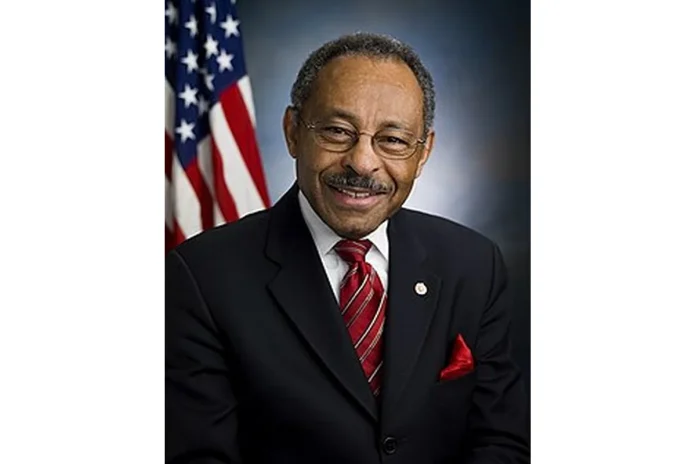
Roland Burris Bio
Roland Wallace Burris (born 3 August 1937) is an American politician and attorney whose career in Illinois government spanned more than three decades. A member of the Democratic Party, he served as Illinois Comptroller, Illinois Attorney General, and briefly as a United States Senator from Illinois. Burris was the first African American elected to statewide office in Illinois, a milestone that defined much of his public service.
Beyond his public offices, Burris built a professional reputation in banking, law, and consulting. He is a former National Bank Examiner for the U.S. Treasury Department, a former vice chairman of the Democratic National Committee, and the manager of Burris & Lebed Consulting, LLC. His 2009 appointment to the U.S. Senate drew national attention because of its connection to the corruption investigation of Illinois Governor Rod Blagojevich, though Burris was never criminally charged in the matter.
Early Life and Background
Roland Wallace Burris was born and raised in Centralia, a small community in southern Illinois. The Burris family traces its roots to enslaved people in the American South, mainly Georgia, South Carolina, and Tennessee. Growing up in the mid-twentieth century, Burris came of age during a period of significant change for African Americans in the United States, an experience that shaped his later commitment to public service.
Burris graduated from Centralia High School in 1955. He then attended Southern Illinois University Carbondale, where he earned a Bachelor of Arts degree in political science in 1959. During his college years, he was selected as an exchange student on scholarship to study International Law at the University of Hamburg in Germany, an experience that broadened his academic perspective.
After college, Burris enrolled at the Howard University School of Law in Washington, D.C., one of the nation’s most prominent historically Black law schools. He earned his Juris Doctor degree in 1963. His legal training at Howard prepared him for a career that would move between banking regulation, corporate finance, government administration, and elected office.
Path to US Politics
After graduating from law school, Burris joined the Office of the Comptroller of the Currency at the U.S. Treasury Department as a National Bank Examiner. In that role, he traveled throughout the Midwest, examining banks in Illinois, Indiana, Michigan, and Wisconsin. The adversities he faced as an African American bank examiner in the early 1960s were later documented in the Treasury Department’s employee newsletter.
From 1964 to 1973, Burris worked at Continental Illinois National Bank and Trust Company, a major financial institution based in Chicago. He served in a series of positions, including tax accountant, tax consultant, commercial banking officer, and vice president. He led a commercial group that handled government-guaranteed loans and minority business banking, giving him direct experience with economic policy at a time when access to capital was a pressing issue for many communities.
In 1973, Illinois Governor Dan Walker appointed Burris as Director of the Department of Central Management Services, a post he held until 1977. He then served briefly as National Executive Director and Chief Operating Officer for Operation PUSH, the civil rights organization founded by the Reverend Jesse Jackson. These state and national roles established Burris as a recognized figure in Illinois public affairs and set the stage for his first run for elective office.
Roland Burris Career
Early Career (1976–1979)
Burris’s first run for statewide office came in 1976, when he sought the Democratic nomination for Illinois Comptroller. He was defeated in that primary by Michael Bakalis. Two years later, in 1978, Bakalis gave up the comptrollership to run for governor, and Burris won the seat. His victory made him the first African American elected to statewide office in Illinois, a historic achievement that he has cited throughout his career.
Following his 1978 election, Burris also engaged in private law practice for several months in late 1977 and early 1979, building a legal foundation that he would return to repeatedly over the following decades. His combination of corporate, governmental, and legal experience positioned him as a versatile figure in Illinois politics.
Statewide Office Breakthrough (1978–1995)
Burris was reelected as Illinois Comptroller in 1982 and 1986, holding the office for a decade. While serving as comptroller, he sought the Democratic nomination for U.S. Senate in 1984 but lost to Paul Simon, who went on to defeat Republican incumbent Charles Percy. In 1985, Burris was selected as vice chairman of the Democratic National Committee, a choice that generated controversy within the party’s Black Caucus.
In 1990, Burris was elected Illinois Attorney General, becoming the second African American ever elected to a state attorney general post in the United States, after Edward Brooke. He served from 1991 to 1995, supervising more than 500 lawyers. As attorney general, he became involved in several high-profile cases, including the appeal of Rolando Cruz, whose death sentence was later overturned after DNA evidence pointed to another perpetrator. Burris also helped organize Chicago’s first Gun Turn-in Day in 1993, although he later acknowledged that he had kept a handgun in his own home.
Later Campaigns and Public Profile (1994–2008)
After leaving the attorney general’s office, Burris returned to private law practice in June 1995. He also pursued several unsuccessful campaigns for higher office, including a run as an independent candidate for mayor of Chicago in 1995, in which he lost badly to incumbent Richard M. Daley. In 1994, 1998, and 2002, he sought the Democratic nomination for governor of Illinois, winning the primary nomination zero times.
During the 1998 Democratic primary, Burris attracted controversy by referring to some of his primary opponents as “non-qualified white boys.” In his 2002 run for governor, he drew support from a number of state figures, including state Senator Barack Obama. Despite these campaigns, Burris remained a well-known figure in Illinois public life, working as an attorney, lobbyist, and consultant.
U.S. Senate Era (2009–2010)
On December 30, 2008, Illinois Governor Rod Blagojevich announced that he was naming Burris to the U.S. Senate seat vacated by President-elect Barack Obama. The appointment came amid a federal corruption investigation into Blagojevich’s efforts to benefit from filling the seat. Burris was sworn in by Vice President Dick Cheney on January 15, 2009, after a legal and political dispute over his certificate of appointment was resolved by the Illinois Supreme Court.
Burris’s tenure in the Senate was marked by continued scrutiny over his pre-appointment contacts with associates of Governor Blagojevich. In 2009, he was named one of the 15 Most Corrupt Members of Congress by the watchdog group Citizens for Responsibility and Ethics in Washington. In June 2009, Sangamon County State’s Attorney John Schmidt announced that Burris would not face criminal perjury charges, and the Senate Ethics Committee later informed Burris that no ethics charges would be pursued, while criticizing his conduct.
Notable Events and Milestones
Burris’s signature political milestone remains his 1978 election as Illinois Comptroller, the first time an African American won a statewide office in Illinois. His 1990 election as attorney general made him the second African American elected to that office anywhere in the United States. His January 2009 swearing-in as U.S. Senator was the most dramatic episode of his career, overshadowed by the surrounding investigation of Governor Blagojevich and later questions about Burris’s own testimony.
Roland Burris Family
Family Background and Public Identity
The Burris family traces its roots to enslaved people in the American South, mainly Georgia, South Carolina, and Tennessee. Roland Burris has often spoken of this heritage as a central part of his identity and motivation for public service. He has built a mausoleum for himself at Oak Woods Cemetery on Chicago’s South Side, with a tombstone inscribed “TRAIL BLAZER” and a list of his accomplishments, leaving room for additional achievements.
Personal Life
Burris is married to Berlean M. Burris. The couple has two children and one grandchild. Beyond his family, Burris has also maintained a public profile through consulting work, including his role as manager and CEO of Burris & Lebed Consulting, LLC, formed in 2002, and a brief appearance in the 1993 film The Fugitive during a Chicago St. Patrick’s Day parade scene.