
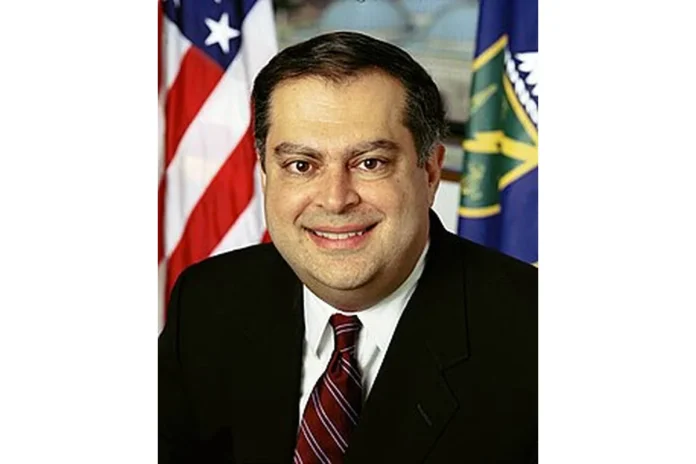
Spencer Abraham Bio
Edward Spencer Abraham, widely known as Spencer Abraham, is an American attorney, author, and Republican politician whose career has spanned academia, the United States Senate, and a cabinet post. He served as a United States Senator from Michigan from 1995 to 2001 and as the 10th United States Secretary of Energy from 2001 to 2005 under President George W. Bush. Abraham is one of the founders of the Federalist Society and a co-founder of the Harvard Journal of Law & Public Policy, and he is recognized for his work on immigration, technology, and energy policy. Of Lebanese descent, he received Lebanon’s National Order of the Cedar in 2004 and remains an influential voice in American public policy.
Early Life and Background
Edward Spencer Abraham was born on June 12, 1952, in East Lansing, Michigan, United States. He is the son of Eddie Joseph Abraham and Juliette Elizabeth (Sear) Abraham, a member of the Michigan Republican State Central Committee, whose involvement in state politics helped shape his early interest in public service. Abraham is of Lebanese descent, a heritage that would later inform his political identity as the only Lebanese American serving in the United States Senate during his tenure.
He graduated from East Lansing High School before attending Michigan State University, where he earned a Bachelor of Arts degree in 1974 as an Honors College graduate. Abraham then enrolled at Harvard Law School, where he earned his Juris Doctor degree. In 1978, while still at Harvard, he helped found the Harvard Journal of Law & Public Policy, a publication that would later become one of the official journals of the Federalist Society, which was established in 1982.
Path to US Politics
Abraham’s entry into Republican politics began at the state level in Michigan. He was elected chairman of the Michigan Republican Party, a position he held from 1983 to 1990. His leadership in the state party established him as a rising figure within the national Republican organization and gave him valuable experience in party strategy and coalition building.
After his tenure as Michigan Republican Party chairman, Abraham moved to Washington, D.C., serving as deputy chief of staff for Vice President Dan Quayle from 1990 to 1991. He then served as co-chairman of the National Republican Congressional Committee (NRCC) from 1991 to 1993. In 1993, he ran for chairman of the Republican National Committee, finishing second to Haley Barbour. These roles prepared him for his successful 1994 Senate campaign. Before his election to the Senate, Abraham was also a law professor at Thomas M. Cooley Law School.
Spencer Abraham Career
Early Career (1983–1993)
Abraham’s early career centered on Republican Party leadership in Michigan and Washington, D.C. As chairman of the Michigan Republican Party from 1983 to 1990, he helped direct state-level political strategy during a transformative decade for the party. His work strengthened the Republican presence in Michigan and earned him a reputation as an effective organizer and coalition builder.
Following his time leading the state party, Abraham served as deputy chief of staff for Vice President Dan Quayle from 1990 to 1991, gaining direct experience in the executive branch. He then served as co-chairman of the National Republican Congressional Committee from 1991 to 1993, working to elect Republicans to the U.S. House of Representatives. In 1993, he sought the chairmanship of the Republican National Committee, finishing second to Haley Barbour, a campaign that expanded his national profile before his run for the Senate.
United States Senate Breakthrough (1994–2001)
Abraham was elected to represent Michigan in the United States Senate in 1994, beginning a six-year term that would define much of his public profile. He served on the Budget, Commerce, Science and Transportation, Judiciary, and Small Business Committees, and he chaired two subcommittees: Manufacturing and Competitiveness, and Immigration. He was the only Lebanese American serving in the Senate at the time, a distinction that shaped both his legislative priorities and his public image.
During his Senate tenure, Abraham authored several notable pieces of legislation, including the H1B Visa in Global and National Commerce Act, which established a federal framework for online contracts and signatures, and the Government Paperwork Elimination Act. He also authored the Anti-Cybersquatting Consumer Protection Act, which protects Internet domain names for businesses and individuals against copyright and trademark infringements. In 1996, when President Bill Clinton endorsed Representative Barbara Jordan’s proposed cuts to legal immigration, Abraham played a leading role in blocking the cuts. In 1999, he co-sponsored S.896, a bill to abolish the U.S. Department of Energy, which would have transferred control of the Strategic Petroleum Reserve largely to the Defense Department. The following year, he received the Defender of the Melting Pot award from the National Council La Raza for his efforts on immigration.
Abraham was defeated for reelection in 2000 by Debbie Stabenow. According to The New York Times, state Republicans attributed his loss in part to advertisements by special interest groups criticizing his support for relaxation of some immigration restrictions. Another factor in his defeat was his vote to convict President Bill Clinton in his 1999 impeachment trial.
U.S. Energy Secretary Era (2001–2005)
In 2001, President George W. Bush appointed Abraham as the 10th United States Secretary of Energy, a cabinet position he would hold for nearly four years. As Energy Secretary, Abraham oversaw national energy policy during a period that included rising concerns about energy security and the early development of next-generation nuclear power initiatives in the United States.
On November 15, 2004, Abraham announced that he would resign from his post, effective with the swearing-in of his successor, Samuel W. Bodman, on February 1, 2005. In 2004, Lebanese Ambassador Farid Abboud awarded him the National Order of the Cedar in recognition of his service and his Lebanese heritage.
Notable Events and Milestones
Among the defining moments of Abraham’s career are his 1994 election to the United States Senate, his role as a founder of the Federalist Society, and his service as the 10th U.S. Secretary of Energy. As of 2026, he is the last Republican to have served as a United States Senator from Michigan. He also briefly served as an ambassador to official Washington for Fred Thompson’s 2008 presidential campaign, announced on July 24, 2007.
Spencer Abraham Family
Family Background and Political Lineage
Edward Spencer Abraham was raised in East Lansing, Michigan, by his father, Eddie Joseph Abraham, and his mother, Juliette Elizabeth (Sear) Abraham. His mother was a member of the Michigan Republican State Central Committee, and her involvement in state-level politics helped foster his early interest in public service. Abraham is of Lebanese descent, a heritage that has been a defining element of his personal and political identity throughout his career.
Personal Life
Abraham is married to Jane Abraham, who serves as chair of the Susan B. Anthony List, an organization focused on pro-life public policy. The couple has three children. Abraham’s family life and Lebanese heritage have remained central to his public identity, and his wife has been a prominent figure in conservative advocacy in her own right.
Spencer Abraham Later Career
Post-Government Work (2005–Present)
After leaving government service, Abraham joined the Hoover Institution, a think tank based at Stanford University, as a Distinguished Visiting Fellow from 2005 to 2007. He also opened The Abraham Group, a Washington, D.C.-based international strategic consulting firm, of which he serves as chairman and CEO. In 2006, he was appointed Non-Executive Chairman of the Board of AREVA Inc., the American arm of the French nuclear company Areva, which was planning to build EPR nuclear power plants in the United States and was building a mixed oxide fuel manufacturing plant at the Savannah River Site.
With William Tucker, Abraham co-authored the book Lights Out!: Ten Myths About (and Real Solutions to) America’s Energy Crisis, published in 2010. In 2016, Abraham was elected to the board of trustees of the California Institute of Technology, continuing his engagement with science, technology, and energy policy at the institutional level.