

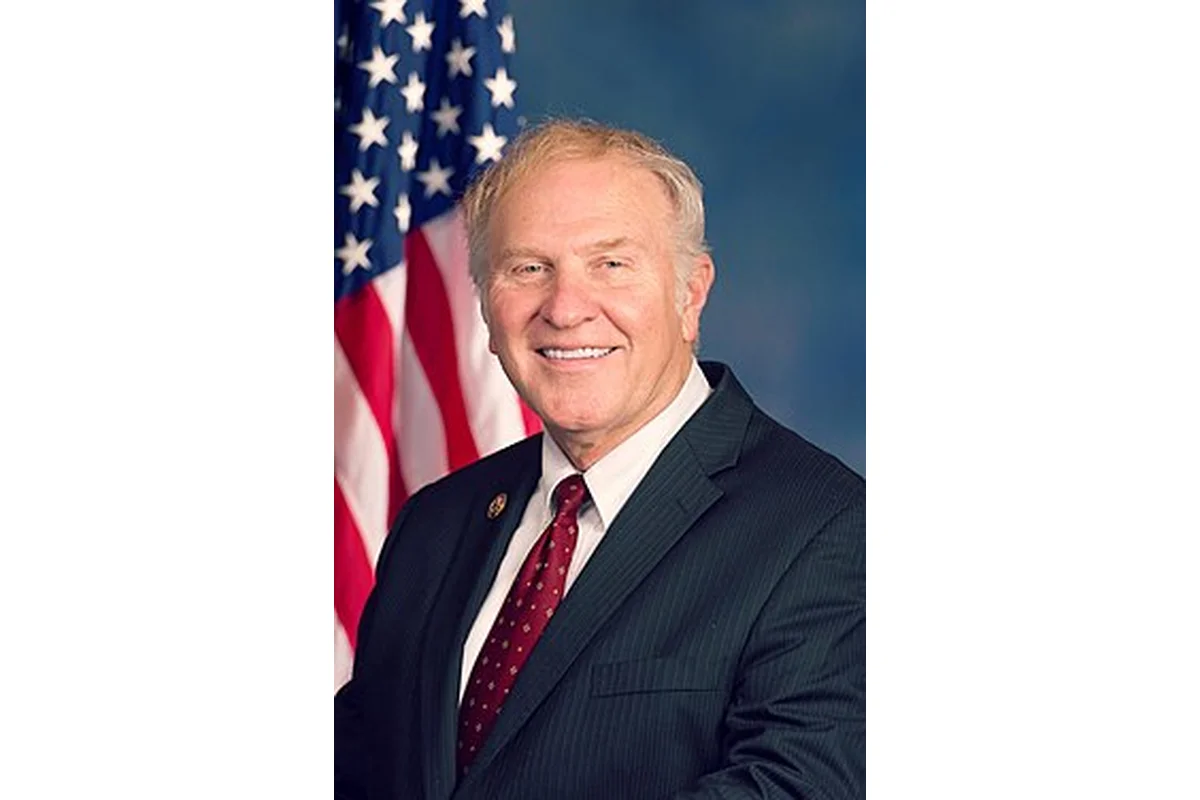
Steve Chabot Bio
Steven Joseph Chabot (born January 22, 1953) is an American politician and lawyer who represented Ohio’s 1st congressional district in the United States House of Representatives from 1995 to 2009 and again from 2011 to 2023. A member of the Republican Party, he built a lengthy career in conservative politics in his home region of southwestern Ohio and Cincinnati. After losing his seat in 2008 to Democrat Steve Driehaus, he reclaimed it in 2010 and later lost a 2022 reelection bid to Democrat Greg Landsman. During his tenure, he served as chair and ranking member of the House Small Business Committee and participated in landmark national proceedings.
Early Life and Background
Steven Joseph Chabot was born in 1953 in Cincinnati, Ohio, the son of Gerard Joseph Chabot and Doris Leona (née Tilley) Chabot. On his father’s side, he is of French-Canadian descent, a heritage that shaped his family identity in working-class Cincinnati neighborhoods. He grew up in the city and graduated from La Salle High School in 1971, a Catholic institution that reflected his family’s religious background.
After high school, Chabot attended the College of William and Mary, earning a Bachelor of Arts in physical education in 1975. He worked as an elementary school teacher in 1975–1976 while taking law classes at night, demonstrating an early commitment to public service and education. He then obtained a Juris Doctor degree from Northern Kentucky University Salmon P. Chase College of Law in 1978, completing the formal qualifications that would guide his future career.
Path to US Politics
Before entering elected office, Chabot practiced law as a sole practitioner from 1978 to 1994, handling domestic disputes and drafting wills out of a small office in Westwood. He also taught political science at the University of Cincinnati and chaired the Boy Scouts of Cincinnati, building community ties that would later support his political ambitions. His early campaigns reflected persistence in the face of defeat.
Chabot ran unsuccessfully for the Cincinnati City Council as an independent candidate in 1979 and as a Republican in 1983. He won a seat in 1985 as a Republican and was reelected for the next four years. In 1988, he ran for the U.S. House of Representatives against seven-term incumbent Democrat Tom Luken, who defeated him 56–44%. In 1990 he was appointed a Commissioner of Hamilton County, Ohio, and was elected later that year and again in 1992, holding that office until 1994.
Steve Chabot Career
Early Career (1995–2000)
In 1994, Chabot ran for the U.S. House and defeated Democratic incumbent David S. Mann of Ohio’s 1st congressional district, 56%–44%, beginning his long tenure in Congress. In 1996, he defeated Democrat Mark Longabaugh, a member of the Cincinnati City Council, 54%–43%. In 1998, he defeated Cincinnati Mayor Roxanne Qualls, 53% to 47%, in a series of debates in which Qualls criticized him for not funneling enough federal spending to his home district while Chabot countered that he would not support wasteful or unnecessary federal programs.
In 2000, he defeated City Councilman John Cranley 53–44%. These early wins established Chabot as a durable figure in Ohio politics, capable of winning competitive races in a swing district. His combination of local legal experience, council service, and county commissioner background helped him connect with suburban and working-class voters in the Cincinnati area.
Congressional Tenure and Impeachment Role (1999)
In 1999, Chabot served as one of the House managers in the impeachment trial of President Bill Clinton, a prominent national role that elevated his profile. This position placed him at the center of one of the most consequential constitutional proceedings of the era. His selection as a House manager reflected his standing among House Republicans at the time.
The impeachment role became a defining moment of his early career. As a House manager, he participated in presenting the case to the Senate, an experience that tied his political identity to a major national event. The visibility from the proceedings helped reinforce his reputation as a committed conservative voice in the House.
Continued Service and Policy Work (2002–2008)
In 2002, Chabot defeated Greg Harris with 65% of the vote, and in 2004 he defeated Harris again with 60% of the vote. In 2002, he advocated teaching intelligent design alongside the theory of evolution by natural selection in Ohio high schools and helped spearhead the local campaign against building a light rail system in Hamilton County. In 2003, President George W. Bush signed a Chabot-authored bill prohibiting a form of late-term abortion called partial-birth abortion into law.
Chabot defeated Democratic challenger John Cranley again, this time by a narrower margin of 52–48%, before losing to State Representative Steve Driehaus 52%–48% in 2008. On the topic of man-made climate change, Chabot has said the evidence is far from conclusive, and he opposed cap-and-trade as harmful to the economy. He has called for ending logging subsidies in the Tongass National Forest and promoted relations with Taiwan.
Return to Congress and Final Years (2010–2023)
In a 2010 rematch, Chabot defeated Driehaus, Libertarian Jim Berns, and Green Party nominee Richard Stevenson, winning with 52% of the vote, aided by redistricting that shifted heavily Republican Warren County into the 1st Congressional District. He defeated Democratic nominee Jeff Sinnard 58%–38% in 2012, Fred Kundrata 63%–37% in 2014, and Michele Young 59%–41% in 2016. In 2018 he defeated Aftab Pureval 51%–48% and in 2020 defeated Kate Schroder 52%–45%.
On December 18, 2019, Chabot voted against both articles of impeachment against President Donald Trump, and on January 7, 2021, he objected to the certification of the 2020 US presidential election results based on claims of voter fraud. In March 2021, he voted against the American Rescue Plan Act of 2021. After redistricting made his district considerably more Democratic, Chabot lost his 2022 reelection bid to Democrat Greg Landsman, a member of the Cincinnati City Council. He was the last surviving member of the Republican Revolution of 1994 still serving in Congress, and afterwards he stated he would not run for the seat in 2024.
Notable Events and Milestones
One signature moment in Chabot’s career came in 1999 when he was appointed as one of the House managers for the impeachment proceedings of President Bill Clinton. On August 22, 2011, Chabot asked Cincinnati police to confiscate cameras being used by private citizens to record a town-hall meeting, an incident that drew wide attention after being captured on YouTube. As of 2016, Chabot had traveled on congressional fact-finding missions to 46 countries at a cost of $200,000, reflecting his engagement in foreign policy matters. During the presidency of Donald Trump, Chabot voted in line with Trump’s stated position 93.1% of the time, while as of August 2022 he had voted in line with Joe Biden’s stated position 16.4% of the time.
Steve Chabot Career Wins
Steven Joseph Chabot compiled a lengthy record of electoral victories in Ohio’s 1st congressional district, winning his first House race in 1994 and serving across multiple redistricting cycles. He is best known for his extended tenure representing southwestern Ohio and for key committee leadership roles.
Congressional Election Highlights
Chabot first won his U.S. House seat in 1994 by defeating Democratic incumbent David S. Mann 56%–44%. His most recent victory came in 2020, when he defeated Democrat Kate Schroder 52%–45%. Over the course of his career, he won reelection in competitive races against figures such as Mark Longabaugh, Roxanne Qualls, John Cranley, Greg Harris, and Aftab Pureval, demonstrating durability in a district that trended competitive over time.
Other Wins & Achievements
Beyond his federal service, Chabot won election to the Cincinnati City Council in 1985 and was reelected for the next four years. He was also elected twice as Commissioner of Hamilton County, Ohio, in 1990 and 1992, and served as chair and ranking member of the House Small Business Committee. He authored legislation signed into law by President George W. Bush in 2003.
Steve Chabot Family
Family Background and Political Lineage
Steven Joseph Chabot was born to Gerard Joseph Chabot and Doris Leona (née Tilley) Chabot and raised in Cincinnati, Ohio. On his father’s side, he is of French-Canadian descent, a heritage that shaped his family background. His upbringing in working-class Cincinnati informed his long career in local and federal politics.
Personal Life
Chabot has been married to his wife Donna (Daly) since 1973, and the couple lives in Westwood. They have two children and a grandson. Chabot is a practicing Roman Catholic, and his faith has remained a visible part of his public identity throughout his political career.