
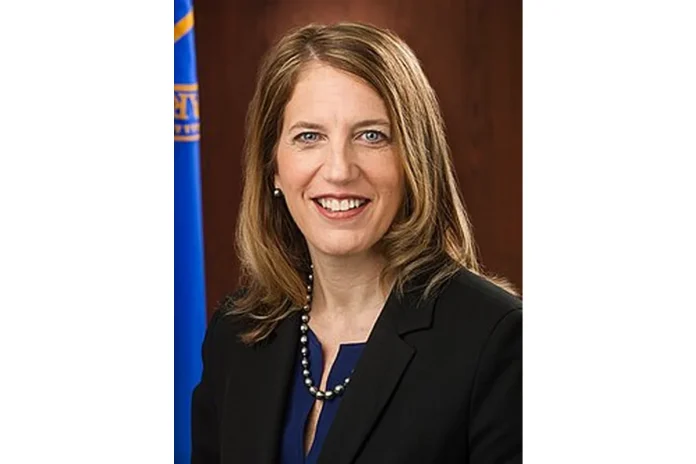
Sylvia Mathews Burwell Bio
Sylvia Mary Burwell is an American government executive, non-profit leader, and university administrator who has served at the highest levels of the United States federal government and higher education. A member of the Democratic Party, she is best known as the 22nd United States Secretary of Health and Human Services under President Barack Obama, a position she held from 2014 to 2017. Earlier in her career, Burwell helped establish the National Economic Council during the Clinton administration and later became the 39th Director of the Office of Management and Budget. After leaving Washington, she led American University as its 15th president before being elected to lead the Harvard University Board of Overseers.
Early Life and Background
Sylvia Mary Burwell was born and raised in Hinton, West Virginia, a small town of roughly 3,000 residents where her family had deep roots. Her mother, Cleo Mathews, was a teacher who also served as Hinton’s mayor from 2001 to 2009, and her father, Dr. William Peter Mathews, was an optometrist who also presided over the local Episcopal Church when no minister was present. Both sets of her grandparents were Greek immigrants, and the family operated a sweet shop in Hinton. Burwell grew up with one older sister, four years her senior, in a household where civic life and community service were part of daily conversation.
Burwell first became interested in politics in grade school, when she joined her best friend’s father’s campaign for county commissioner and later volunteered for Jay Rockefeller’s first run for governor of West Virginia. At her high school, she served as student body president and played on the basketball team, and she graduated as the valedictorian of her class. In 1982, she spent time in Japan as a Youth For Understanding exchange student, an experience that broadened her outlook before she entered college. While still an undergraduate, she interned for West Virginia Congressman Nick Rahall, worked as a governor’s aide to Massachusetts Governor Michael Dukakis, and served as a researcher on the Michael Dukakis 1988 presidential campaign.
Path to US Politics
Burwell earned a Bachelor of Arts degree in government from Harvard University in 1987, where she built a strong academic record. She then enrolled at the University of Oxford as a Rhodes Scholar at Worcester College, where she rowed for fun and graduated with a second bachelor’s degree in philosophy, politics, and economics. She has since been appointed an honorary fellow of Worcester College in recognition of her later accomplishments. These academic experiences shaped her interest in policy, economics, and public service, setting the stage for a career in government.
After completing her education, Burwell joined the New York consulting firm McKinsey & Company as an associate in 1990, gaining private-sector experience. In 1992, she joined the Bill Clinton 1992 presidential campaign and, after his election, helped lead the economic team for the president-elect. Following Clinton’s inauguration, she worked closely with Robert Rubin to establish the National Economic Council, an entirely new White House entity, and became its first staff director from 1993 to 1995. This role marked her formal entry into US politics and launched a steady rise through senior advisory positions in the executive branch.
Sylvia Mathews Burwell Career
Early Career (1995–2001)
When Robert Rubin became Secretary of the Treasury in 1995, Burwell was named his chief of staff, a role in which she advised on a wide range of fiscal and economic policy questions. She testified before a Senate committee during the Whitewater investigations regarding her search of Vince Foster’s office, telling the panel she had been looking for an indication of why Foster had died and denied ordering any documents destroyed. In 1997, White House Chief of Staff Erskine Bowles recruited her to serve as his deputy chief of staff for policy, a position she held alongside John Podesta. Bowles later praised her as smart, hardworking, and unusually skilled at bringing people together.
After Bowles resigned in 1998, Burwell moved to the Office of Management and Budget, where she became deputy director under Jack Lew. She remained at OMB for the remainder of the Clinton presidency, a period that included three consecutive federal budget surpluses. Her steady performance in both the Treasury Department and OMB positioned her as one of the most trusted policy and budget officials in the Clinton administration.
Gates Foundation Era (2001–2011)
In 2001, Burwell relocated to Seattle, Washington, to join the Bill and Melinda Gates Foundation, the largest philanthropic organization in the United States. She joined as an executive vice president, became chief operating officer the following year, and was named president of the foundation’s Global Development Program when the foundation reorganized in 2006. Her portfolio included awarding grants to improve health outcomes in the developing world, including efforts to stop the spread of HIV and other diseases and to expand access to contraception. She also served on the board of the University of Washington Medical Center from 2002 to 2005 and on the boards of MetLife, the Council on Foreign Relations, and the Nike Foundation Advisory Group.
Office of Management and Budget Director (2013–2014)
On March 3, 2013, President Barack Obama nominated Burwell to serve as Director of the White House Office of Management and Budget, and the Senate confirmed her by a 96–0 vote, a rare show of bipartisan support. With her confirmation, she became only the second woman to hold the post, following Alice Rivlin. Burwell entered the job during a heated budget fight, and on September 30, 2013, with no temporary agreement from Congress, she was tasked with initiating the first U.S. federal government shutdown in 17 years. She issued shutdown memos to agencies, including instructions that briefly darkened the famous National Zoo “panda-cam.” Once the government reopened after 16 days, she helped negotiate a two-year budget deal to avoid future shutdowns.
Secretary of Health and Human Services (2014–2017)
On April 11, 2014, President Obama nominated Burwell to be Secretary of Health and Human Services, succeeding Kathleen Sebelius, and the Senate confirmed her on June 5, 2014, by a vote of 78–17. She was sworn in on June 9, 2014, taking charge of a department that oversaw the equivalent of 77,000 full-time employees and major agencies such as Medicare and Medicaid, the National Institutes of Health, the Food and Drug Administration, and the Centers for Disease Control and Prevention. Her early months were dominated by the Ebola epidemic in West Africa and the start of the Affordable Care Act’s second open-enrollment period, during which she helped reconfigure the HealthCare.gov website to reduce the application from over seventy screens to just over a dozen pages.
Burwell’s tenure also included the Supreme Court decisions in Burwell v. Hobby Lobby and King v. Burwell, both of which shaped the implementation of the Affordable Care Act. In 2016, she managed the federal response to the spread of the Zika virus, reprogramming $589 million in funds to fight the disease before Congress appropriated $1.1 billion. Throughout her time at HHS, she publicly defended the Affordable Care Act, noting that it had extended coverage to 20 million more people, and she launched the “Coverage Matters” campaign to boost enrollment and public support. She received praise from Democratic and Republican senators at the end of her tenure.
American University Era (2017–2024)
Shortly after leaving HHS, Burwell became American University’s 15th president on June 1, 2017, and the first woman to hold the post in the institution’s history. She led the development and implementation of the Changemakers for a Changing World strategic plan and the plan for Inclusive Excellence, completed the $500 million “Change Can’t Wait” campaign, grew the university’s endowment by more than 50 percent, and doubled external research funding. Her government experience proved crucial during the COVID-19 pandemic, when she was widely praised for guiding the campus community through an extraordinary period. In 2020, she was appointed by the Council on Foreign Relations to co-chair an Independent Task Force on Improving Pandemic Preparedness. She announced in August 2023 that she would step down, and Jonathan Alger of James Madison University succeeded her as the 16th president on July 1, 2024.
Harvard Board of Overseers Era (2025–Present)
A year after stepping down from American University, Burwell was elected president of the Harvard University Board of Overseers for the 2025–2026 academic year, succeeding Vivian Hunt. She had been a member of the Board since 2023, and her term is set to run through 2029. The Board of Overseers, formally established in 1642, is one of Harvard’s two governing boards and plays a central role in directing the university’s visitation process. Her election came at a moment when the Trump administration placed unprecedented pressure on Harvard over immigration policy, Gaza war protests, and research funding, and she told the Harvard Gazette she looked forward to working with President Alan Garber to advance the university’s core teaching, learning, and research mission.
Notable Events and Milestones
Burwell’s career is defined by a series of firsts and high-stakes assignments, including helping create the National Economic Council in 1993, becoming only the second woman to lead the Office of Management and Budget, and serving as the first woman president of American University. She steered the Health and Human Services Department through the Ebola and Zika public health emergencies, defended the Affordable Care Act through two Supreme Court rulings, and helped negotiate a two-year budget deal after the 2013 shutdown. Her election to lead the Harvard Board of Overseers added governance of one of the world’s leading research universities to her public service record.
Sylvia Mathews Burwell Family
Family Background and Lineage
Burwell was born into a close-knit family in Hinton, West Virginia, with deep Greek immigrant roots on both sides. Her mother, Cleo Mathews, was a teacher and later mayor of Hinton, and her father, Dr. William Peter Mathews, was a local optometrist. Her Greek grandparents, Vasiliki and Dennis N. Maroudas, owned a sweet shop in Hinton and helped anchor the family in the small town where Burwell grew up. She has one older sister, four years her senior, with whom she shared an upbringing shaped by public service and community involvement.
Personal Life
Burwell met Stephen Burwell, a lawyer and Seattle native, in 2005 during her time at the Bill and Melinda Gates Foundation. He proposed at Bellepoint Park in Hinton, a place she had visited often as a child, and the couple married in Seattle in 2007. They have two children, and during Burwell’s tenure as HHS Secretary, her husband stayed home to care for the children, allowing her to focus on leading the department. The family has been based in Washington, D.C., and Seattle at different points in her career.