
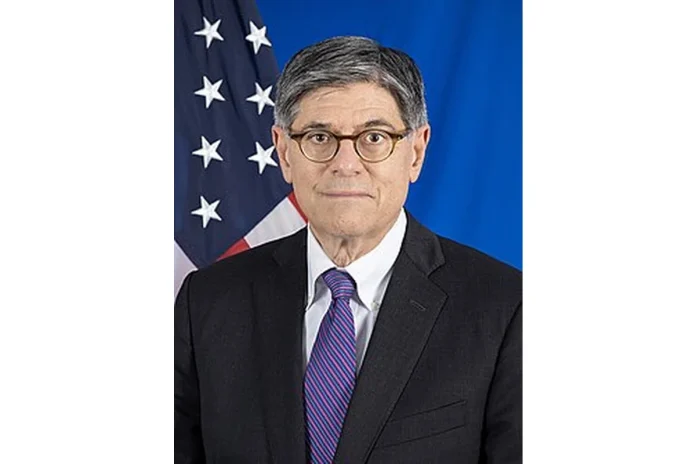
Jack Lew Bio
Jacob Joseph Lew (born August 29, 1955) is an American attorney, diplomat, and former senior government official. A member of the Democratic Party, he served as the 28th United States ambassador to Israel from 2023 to 2025 and as the 76th United States secretary of the treasury from 2013 to 2017. He previously served as the 25th White House chief of staff from 2012 to 2013, as director of the Office of Management and Budget under Presidents Bill Clinton and Barack Obama, and as the first deputy secretary of state for management and resources from 2009 to 2010. After leaving public office he worked in private equity and as a visiting professor at Columbia University’s School of International and Public Affairs.
Across more than four decades in government, law, and finance, Lew became known for his central role in federal budget negotiations, debt-ceiling discussions, and international economic policy. He remains a frequent commentator on fiscal and foreign policy matters in the United States.
Early Life and Background
Lew was born in New York City, the son of Ruth (née Turoff) and Irving Lew. His family is Jewish, and his father was a lawyer and rare book dealer who had come to the United States from Poland as a child. Lew grew up in New York City, attending the city’s public schools and graduating from Forest Hills High School. The household’s legal and immigrant background shaped his early interest in public service and policy.
After high school, Lew attended Carleton College in Minnesota for a year, where one of his faculty advisers was Paul Wellstone, who later represented Minnesota in the United States Senate. He then transferred to Harvard College, graduating in 1978, and later earned a Juris Doctor from the Georgetown University Law Center in 1983. He is also a member of the bar in Massachusetts and the District of Columbia.
Even before finishing his formal education, Lew had begun working in government. From 1974 to 1975, he served as an aide to Representative Joe Moakley of Massachusetts. In 1979, he became a senior policy adviser to House Speaker Tip O’Neill, focusing on Social Security, Medicare, budget, tax, and appropriations issues. In 1971, at the age of 16, he also helped organize The New York March Against Hunger, an early sign of his interest in civic causes.
Path to US Politics
Lew’s move into national politics accelerated in the late 1970s and 1980s, as he built a reputation for detail-oriented work on budget and economic issues. After serving on the staff of House Speaker Tip O’Neill, he practiced law for five years as a partner at Van Ness Feldman and Curtis, focusing primarily on electric power generation. He also worked as executive director of the Center for Middle East Research, as issues director for the Democratic National Committee’s Campaign 88, and as deputy director of the Office of Program Analysis in the city of Boston’s Office of Management and Budget.
His break into the executive branch came in February 1993, when he was appointed Special Assistant to the President under Bill Clinton. In that role he helped develop the national service initiative, AmeriCorps, and worked on health care reform legislation. He left the White House in October 1994 to work at the Office of Management and Budget, first as executive associate director and associate director for legislative affairs, and from August 1995 to July 1998 as deputy director of OMB.
In July 1998, President Clinton nominated Lew to be director of the Office of Management and Budget, and the United States Senate confirmed him on July 31, 1998. He served in that role until the end of the Clinton administration in January 2001, advising the president on budget, management, and appropriations matters and representing the administration in negotiations with Congress.
Jack Lew Career
Early Career (1974–1998)
Lew’s early career blended congressional staff work, legal practice, and Democratic campaign organizing. His positions for Representative Joe Moakley and House Speaker Tip O’Neill gave him direct experience with Social Security, Medicare, and federal budget issues during a period of rising concern about deficits. Working as issues director for the Democratic National Committee’s Campaign 88 further sharpened his skills in national political strategy.
After law school and a period in private practice, Lew joined the Clinton White House in 1993, where he helped design AmeriCorps and contributed to the administration’s health care reform effort. His subsequent rise at the Office of Management and Budget, from associate director to deputy director, prepared him for confirmation as OMB director in 1998. He went on to lead negotiations over the Balanced Budget Act of 1997 and served on the National Security Council.
Clinton Administration and OMB Directorship (1998–2001)
As OMB director, Lew had lead responsibility for the Clinton administration’s policies on budget, management, and appropriations. A cabinet member and senior member of the economic team, he advised President Clinton on a broad range of domestic and international policies, and represented the administration in budget negotiations with Congress. His tenure coincided with the administration’s effort to balance the federal budget and produce surpluses by the end of the decade.
Lew was also involved in international economic work, including preparations related to global financial stability, and he continued to coordinate across agencies on fiscal and management issues. His work during this period established his reputation as a skilled budget negotiator and a trusted voice on complex fiscal questions.
New York University and Citigroup Years (2001–2009)
After leaving the Clinton administration, Lew became executive vice president for operations at New York University and a clinical professor of public administration at NYU’s Wagner School of Public Service. In 2004, President George W. Bush appointed him to the board of directors of the Corporation for National and Community Service, a position he held until 2008.
In June 2006, Lew was named chief operating officer of Citigroup’s Alternative Investments unit, a proprietary trading group. During his time at Citigroup, he oversaw subsidiaries in countries including Bermuda, the Cayman Islands, and Hong Kong, and the number of Cayman Islands subsidiaries increased to 113. He also co-chaired the Advisory Board for City Year New York and served on panels for the Council on Foreign Relations, the Brookings Institution Hamilton Project, and the National Academy of Social Insurance.
Obama Administration and Treasury Leadership (2009–2017)
Under President Barack Obama, Lew served as the first deputy secretary of state for management and resources from 2009 to 2010, acting as the State Department’s chief operating officer. In July 2010, Obama named him director of the Office of Management and Budget, a position for which he was confirmed by the Senate on November 18, 2010 by unanimous consent. He guided a $3.7 trillion 2011 budget that proposed deficit reduction of about $1.1 trillion over a decade, primarily through a five-year freeze in discretionary spending and targeted tax changes.
On January 9, 2012, Obama announced that Lew would replace William M. Daley as White House chief of staff. During his tenure, he was a key negotiator for a grand bargain with House Speaker John Boehner to avoid automatic sequester cuts and tax increases tied to the fiscal cliff. On January 10, 2013, Obama nominated Lew to replace Treasury Secretary Timothy Geithner; the Senate confirmed him on February 27, 2013, and he was sworn in the following day. As Treasury Secretary, he pressed Congress to raise the federal debt limit in time to avoid a default, warning that the creditworthiness of the United States could not be used as a bargaining chip. He served as Treasury Secretary until the conclusion of the Obama administration in 2017.
Ambassador to Israel (2023–2025)
On September 5, 2023, President Joe Biden nominated Lew as the United States ambassador to Israel. His confirmation came amid Congress’s response to the October 7, 2023 attacks and the ensuing war in Gaza. After Senate Foreign Relations Committee hearings in October 2023, the committee advanced his nomination by a 12–9 vote, with Senator Rand Paul joining all Democrats in support. The full Senate confirmed Lew on October 31, 2023, by a 53–43 vote, and he presented his credentials to President Isaac Herzog on November 5, 2023.
As ambassador, Lew engaged with Israeli officials on military assistance, humanitarian access, and the conduct of the war in Gaza, including advocating the State Department approve Boeing-manufactured GBU-39 Small Diameter Bomb sales to Israel in January 2024. Reporting later indicated that he and his deputy had restricted the distribution of certain USAID cables describing humanitarian conditions in Gaza. He served as ambassador until 2025, returning to private life afterward.
Private Equity and Academia (2017–Present)
After leaving the Treasury Department in 2017, Lew became a managing partner at Lindsay Goldberg, a New York City-based private equity firm. He has also served as a visiting professor at Columbia University’s School of International and Public Affairs. In 2018, he was honored by Queens Community House for his lifelong contributions to social equality.
Jack Lew Career Wins
Lew’s career is marked by a series of high-profile confirmations, policy achievements, and recognition across government, law, and education. He was confirmed by the United States Senate for director of the Office of Management and Budget in 1998, deputy director roles at OMB, deputy secretary of state, OMB director in 2010, White House chief of staff, and Treasury Secretary. He also received an Honorary Doctorate of Humane Letters from Georgetown University in May 2014.
Government Confirmations and Honors
Lew’s most visible wins include his confirmation as the 76th secretary of the treasury in 2013, following a 71–26 Senate vote, and his prior confirmations to lead the Office of Management and Budget under Presidents Clinton and Obama. His unanimous Senate confirmation as OMB director in 2010 underscored his bipartisan credibility on budget matters. In 2014, Georgetown University awarded him an Honorary Doctorate of Humane Letters at the first commencement ceremony of its McCourt School of Public Policy.
Other Wins and Achievements
Beyond federal service, Lew has been recognized for his civic leadership, including an honor from Queens Community House in 2018 for his contributions to social equality. He has also held prominent advisory roles with the Council on Foreign Relations, the Brookings Institution Hamilton Project Advisory Board, and the National Academy of Social Insurance.
Jack Lew Family
Family Background and Public Service Lineage
Lew was born to Irving Lew, a lawyer and rare book dealer who immigrated to the United States from Poland as a child, and Ruth Lew (née Turoff). His parents’ legal and immigrant background informed his lifelong interest in public service. The family is Jewish, and Lew is an Orthodox Jew who observes the Jewish Shabbat. He has attended congregations in New York, Maryland, and Washington, D.C., including the Hebrew Institute of Riverdale in the Bronx, Beth Sholom Congregation in Potomac, Maryland, and Kesher Israel Congregation in Washington, D.C.
Personal Life
Lew married his high school sweetheart, Ruth Schwartz. The couple has long lived in the Riverdale neighborhood of the Bronx, New York City, and while he was White House chief of staff, Lew commuted to Washington from that home. They have two grown children, including Shoshana Lew, who has served as head of the Colorado Department of Transportation.