
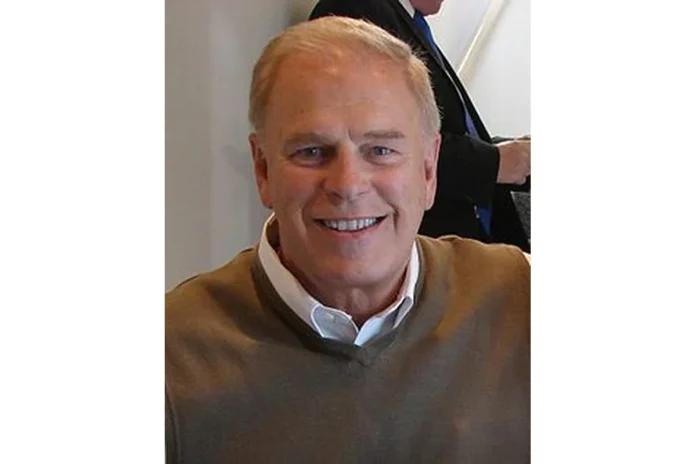
Ted Strickland Bio
Theodore Strickland, commonly known as Ted Strickland, is an American politician and counseling psychologist who served as the 68th governor of Ohio from 2007 to 2011. A Democrat, he represented Ohio’s 6th congressional district in the U.S. House of Representatives across two stretches of service, from 1993 to 1995 and again from 1997 to 2007. As of 2026, he remains the most recent member of the Democratic Party to have occupied the Ohio governorship. Beyond politics, Strickland has worked as a counselor, a university professor, and an ordained minister in the United Methodist Church.
After leaving the governor’s office, Strickland joined the Center for American Progress Action Fund as its president and later returned to academic life at the Harvard Institute of Politics. He also ran as the Democratic nominee for the United States Senate in 2016.
Early Life and Background
Theodore Strickland was born on August 4, 1941, in Lucasville, Ohio, a small community in Scioto County. He is the son of Charles Orville Strickland and Carrie (Carver) Strickland, and he grew up as one of nine children in a working household. The rural southern Ohio setting of his childhood shaped the values he would later bring to public life, including a strong emphasis on education and community service.
Strickland graduated from Northwest High School in 1959, becoming the first member of his family to attend college. He went on to earn a Bachelor of Arts degree in history with a minor in psychology from Asbury College in 1963. He later obtained a Master of Arts in guidance counseling from the University of Kentucky in 1966 and a Master of Divinity from Asbury Theological Seminary in 1967. Strickland returned to the University of Kentucky to complete a Ph.D. in counseling psychology in 1980, rounding out an unusual blend of theological and psychological training that would define much of his early professional life.
Before entering electoral politics, Strickland worked as a counseling psychologist at the Southern Ohio Correctional Facility in Lucasville. He also served as an administrator at a Methodist children’s home and taught psychology at Shawnee State University. An ordained minister in the United Methodist Church, he also pastored a Methodist congregation in Portsmouth, Ohio, giving him deep ties to the region he would eventually represent.
Path to US Politics
Strickland’s entry into electoral politics came in the mid-1970s, when he sought the U.S. House seat for Ohio’s 6th congressional district. He ran in 1976, 1978, and 1980, losing twice to long-serving incumbent William H. Harsha and later to Harsha’s successor and former campaign manager, Bob McEwen. Those early defeats, while disappointing, allowed him to build name recognition across a sprawling, rural district that stretched across multiple media markets.
When McEwen became entangled in the House banking scandal of the early 1990s, Strickland saw an opening. In 1992, he narrowly defeated McEwen in the general election, winning by just over 3,400 votes, or roughly 1.4 percent, to claim the redrawn 6th District seat. He took office in January 1993 as part of the 103rd Congress, beginning a congressional career that would span more than a decade.
Ted Strickland Career
Early Career (1993–1995)
Strickland began his tenure in the U.S. House in January 1993 during the 103rd Congress. He served on the Energy and Commerce Committee and the Veterans’ Affairs Committee, building a record that focused on energy policy and services for military veterans.
His early congressional run was cut short by the Republican wave of 1994. Strickland narrowly lost his seat to businessman Frank Cremeans, ending his first stint in Washington after a single term.
Breakthrough (1997–2006)
Two years after his defeat, Strickland returned to the political arena and won back the 6th District seat in 1996, reclaiming his old position with another narrow victory. He took office in January 1997 as part of the 105th Congress and went on to win re-election three more times, often by large margins. In 2004, he ran unopposed, demonstrating the political strength he had built in southern and eastern Ohio.
During this period, Strickland served on both the Energy and Commerce Committee and the Veterans’ Affairs Committee. He became a well-known voice on rural and small-city issues across the district, which spanned from Lebanon in Warren County to Marietta in Washington County.
Democratic Party Era (2007–Present)
In 2006, Strickland successfully campaigned for governor of Ohio, securing the Democratic nomination with 80 percent of the primary vote. With term limits preventing Republican incumbent Bob Taft from running again, Strickland faced Ohio Secretary of State Ken Blackwell in the general election. He won decisively, capturing 60 percent of the vote and defeating Blackwell, Libertarian Bill Peirce, and Green Party candidate Bob Fitrakis. Strickland was sworn in as Ohio’s 68th governor on January 8, 2007.
As governor, Strickland confronted the Great Recession head-on. In January 2008, he ordered $733 million in state spending cuts, including job losses and the closure of state mental hospitals, followed by another $540 million cut in September 2008 and the announcement of a $640 million budget gap in December of that year. In 2009, he postponed a scheduled income tax reduction, redirecting $844 million in anticipated refunds to balance the budget. He also signed a renewable portfolio standard requiring 25 percent of Ohio’s electricity to come from renewable sources by 2025, and he created the University System of Ohio through an executive order in 2007.
Strickland sought re-election in 2010, choosing Yvette McGee Brown, a former juvenile court judge, as his running mate. He faced Republican John Kasich and running mate Mary Taylor and lost by roughly 77,000 votes. After leaving office, Strickland helped gather signatures to place a referendum on Ohio’s collective bargaining limits on the ballot, contributing to its repeal by more than 60 percent in November 2011. He then joined the Harvard Institute of Politics as a resident fellow in 2012, became president of the Center for American Progress Action Fund in April 2014, and left that role in February 2015. He went on to win the 2016 Democratic nomination for U.S. Senate but lost the general election to incumbent Rob Portman by more than a million votes.
Notable Events and Milestones
One of Strickland’s most memorable moments came during the 2008 Democratic National Convention, where journalists credited him with delivering the convention’s best line, a sharp comparison of President George W. Bush to a runner who inherited third base and then stole second. He was also mentioned as a possible Democratic vice-presidential nominee that year, though he publicly declined interest. At the 2012 Democratic National Convention, he proposed an amendment on the convention floor that led to a dramatic three-voice-vote sequence over language regarding God and Jerusalem.
Ted Strickland Career Wins
Strickland’s electoral record features a Democratic primary win for governor in 2006, a landslide general election victory that same year, and several congressional re-election wins in Ohio’s 6th District. He also reclaimed a seat he had once lost, rebuilt a durable coalition in a difficult rural district, and earned the 2016 Democratic nomination for the United States Senate.
Ohio Governorship Highlights
Strickland’s most prominent win came on November 7, 2006, when he captured the Ohio governorship with 60 percent of the vote, defeating Republican Ken Blackwell along with Libertarian and Green Party challengers. His victory ended eight years of Republican control of the governor’s office in Columbus and represented one of the strongest Democratic showings in Ohio in a generation.
Other Wins and Achievements
Strickland won back Ohio’s 6th congressional district in 1996 after losing it two years earlier and went on to win three more House terms, including an unopposed race in 2004. He also helped lead the 2011 petition drive that overturned Senate Bill 5, Ohio’s collective bargaining limit, by more than 60 percent of the vote.
Ted Strickland Family
Family Background and Public Service Lineage
Ted Strickland was raised in Lucasville, Ohio, the son of Charles Orville Strickland and Carrie (Carver) Strickland. He grew up as one of nine children and became the first member of his family to attend college. His upbringing in a large, working-class household in southern Ohio influenced both his political outlook and his later professional focus on counseling and education.
Personal Life
Strickland is married to Frances Strickland, an educational psychologist. The couple has been married since 1987. Frances has remained a steady presence throughout his career in the Ohio statehouse, in Congress, and on the national stage.