
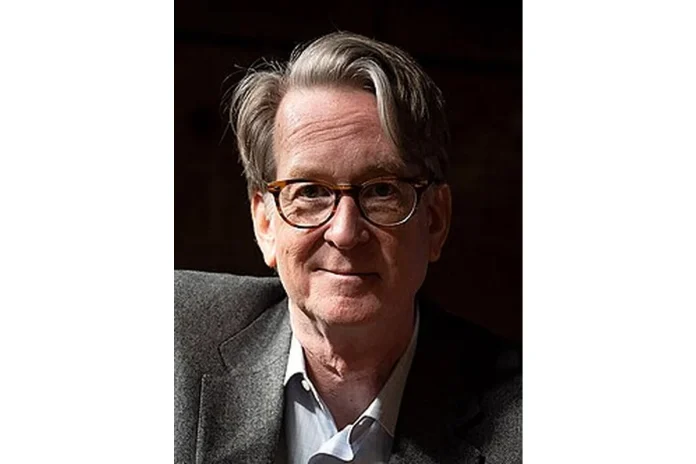
David Koepp Bio
David Koepp, born on June 9, 1963, is an American screenwriter and director whose work has shaped some of the most recognizable films in modern Hollywood. He is the fourth most successful screenwriter of all time in terms of U.S. box office receipts, with a total gross of more than $2.97 billion. He is best known for crafting iconic screenplays for Steven Spielberg’s Jurassic Park and The Lost World: Jurassic Park, as well as for Mission: Impossible, Spider-Man, and Indiana Jones and the Kingdom of the Crystal Skull. Beyond writing, Koepp has built a parallel career as a director, author, and producer across film and television.
Early Life and Background
David Koepp was born in Pewaukee, Wisconsin, as the youngest of four children. His mother, Margaret Fairfield, worked as a family therapist, while his father, Donald Koepp, owned a billboard company. Growing up in the Midwest gave Koepp an early appreciation for storytelling, and the contrast between his parents’ careers, one rooted in emotional care and the other in visual advertising, offered a creative environment that shaped his later artistic interests.
Originally, Koepp set out to become an actor, studying for one year at the University of Minnesota before transferring to the University of Wisconsin–Madison, where he spent two more years in performance training. His interests gradually shifted toward the technical and narrative side of filmmaking, and in 1984 he enrolled in the film school at the University of California, Los Angeles. He graduated from UCLA with a bachelor’s degree in film in 1990, completing the formal training that would launch his Hollywood career.
Path to Screenwriting and Directing
Koepp’s path into professional screenwriting began during his time at UCLA, where he sharpened his craft and began building the storytelling instincts that would define his Hollywood work. He emerged from film school in 1990, just as a new wave of blockbuster filmmaking was taking shape in Hollywood. The early 1990s presented a generation of writers with opportunities to work on large-scale productions, and Koepp was among those who made the most of that moment.
He transitioned quickly from student projects to studio work, taking on rewriting assignments and original scripts that put him in the orbit of major directors. This period of apprenticeship helped him develop a reputation as a reliable writer who could handle high-concept material, paving the way for the breakthrough assignments that would soon follow. His early professional success on the page laid the foundation for his later move behind the camera.
David Koepp Career
Early Career (1988–1995)
David Koepp began his professional career in 1988, working as a screenwriter in the late 1980s and early 1990s. His first major studio credit came with the 1993 crime drama Carlito’s Way, directed by Brian De Palma and starring Al Pacino, which established him as a writer capable of handling character-driven material with sharp dialogue. That same year, he penned the screenplay for Steven Spielberg’s Jurassic Park, a film that would become one of the most influential blockbusters of its era and help define modern visual-effects cinema.
The success of these two early screenplays gave Koepp access to the highest tier of Hollywood productions. He followed them with a 1994 credit as co-writer on the sports drama The Air Up There and continued to build relationships with prominent directors and producers. By the mid-1990s, Koepp had already become a sought-after name on big-budget projects, and he was preparing to step into directing for the first time.
Breakthrough (1996–2005)
Koepp’s breakthrough period began in 1996, when he wrote the screenplay for the first Mission: Impossible film, directed by Brian De Palma and starring Tom Cruise. That same year, he made his directorial debut with The Trigger Effect, a thriller that demonstrated his interest in tension and character. In 1997, he returned to the Jurassic Park franchise as co-writer of The Lost World: Jurassic Park, and he also took on a small cameo as a man famously devoured by a Tyrannosaurus rex in San Diego. He also served as a second unit director on the production.
Throughout the late 1990s and early 2000s, Koepp balanced writing and directing. In 1999, he directed Stir of Echoes, a supernatural thriller starring Kevin Bacon, and in 2002, he wrote Sam Raimi’s Spider-Man, helping launch one of the most successful superhero film franchises. In 2002, he also created the television series Hack, starring David Morse, marking his expansion into episodic storytelling. He directed Secret Window in 2004, again working with Johnny Depp, and he wrote Spielberg’s War of the Worlds that same year. By 2005, Koepp was firmly established as one of the most reliable and bankable screenwriters in the industry.
Notable Works and Milestones
Among Koepp’s signature achievements, the screenplays for Jurassic Park, Mission: Impossible, and Spider-Man stand out as defining works of 1990s and early-2000s blockbuster cinema. His collaboration with Steven Spielberg produced several of the director’s most recognizable films, including Indiana Jones and the Kingdom of the Crystal Skull in 2008, for which he received a reported $4 million payday. Koepp was also recognized with the Writers Guild of America East’s Ian McClellan Hunter Award for Career Achievement in 2013, honoring his body of screenwriting work.
David Koepp Award Nominations
David Koepp has earned recognition from major industry organizations throughout his career, particularly for his work on high-profile Hollywood productions. His screenplays for films such as Jurassic Park, Mission: Impossible, and Spider-Man placed him in the conversation for top writing honors during the 1990s and 2000s, and his work continued to draw attention from awards bodies as his career progressed.
David Koepp Awards Won
On February 17, 2013, David Koepp received the Ian McClellan Hunter Award for Career Achievement from the Writers Guild of America East. The award honored his lifetime of contributions to the craft of screenwriting and reflected his standing as one of the most commercially successful and widely respected writers working in Hollywood at the time.
| Award | Wins | Year |
|---|---|---|
| WGA East Ian McClellan Hunter Award for Career Achievement | 1 | 2013 |
David Koepp Family
David Koepp was raised in Pewaukee, Wisconsin, as the youngest of four children. His mother, Margaret Fairfield, was a family therapist, and his father, Donald Koepp, owned a billboard company. Koepp’s Midwestern upbringing and family environment played an important role in shaping his early interest in storytelling, performance, and eventually filmmaking.
Personal Life
David Koepp was previously married to artist Rosario Varela, with whom he has two children. After their divorce, he married writer Melissa Thomas, with whom he also has two children. Beyond his film work, Koepp has expanded into fiction writing, publishing his debut novel, the science-fiction thriller Cold Storage, in 2019, followed by his second novel, Aurora, in 2022.