
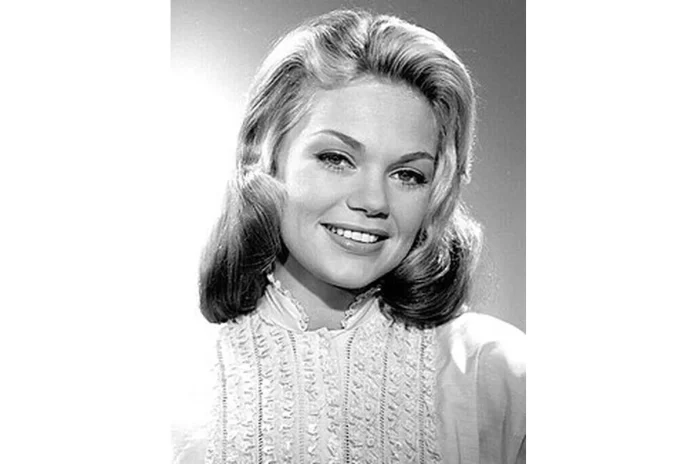
Dyan Cannon Bio
Samille Diane Friesen, known professionally as Dyan Cannon, is an American actress, filmmaker, and editor whose career spans more than six decades across film, television, and stage. Born on January 4, 1937, in Tacoma, Washington, Cannon first gained wide attention for her role in the late 1960s comedy Bob & Carol & Ted & Alice, which earned her an Academy Award nomination for Best Supporting Actress. She later won a Golden Globe Award for Heaven Can Wait (1978) and received a star on the Hollywood Walk of Fame in 1983. Beyond acting, Cannon has written, directed, and produced her own projects, building a versatile body of work that continues to influence American cinema.
Throughout her career, Cannon has remained active as a singer, songwriter, author, and director, and she is also recognized for her memoir Dear Cary (2011), which became a New York Times Best Seller. Her accolades include three Academy Award nominations, a Golden Globe Award, and a Saturn Award, along with honors from the National Association of Theatre Owners and the Hollywood Women’s Press Club.
Early Life and Background
Cannon was born Samille Diane Friesen in Tacoma, Washington, on January 4, 1937, the daughter of Claire, a housewife of Ukrainian Jewish heritage, and Ben Friesen, a life insurance salesman of Mennonite, Dutch-Canadian descent. When she was ten years old, the family relocated to Spokane, Washington, before returning to the Pacific coast four years later and settling in Seattle. Her younger brother, David Friesen, went on to become a respected jazz musician.
She attended West Seattle High School, where she was crowned Miss West Seattle in 1954, an early sign of her interest in performance and public life. After spending two and a half semesters at the University of Washington studying anthropology, Cannon left college in 1956 and moved to Phoenix, Arizona, to live with her aunt Sally and work at Merrill Lynch & Co. That same year, a new chapter began when nightclub owner Sonny Orling courted her, leading her to Beverly Hills, California, where she chose to stay and pursue her ambitions.
Once in Los Angeles, Cannon enrolled at UCLA, where she studied anthropology and writing while taking on part-time modeling work. A chance interview with producer Jerry Wald led to her decision to change her professional surname to Cannon. She soon signed with MGM for promotional work on the film Les Girls (1957) and began studying with the renowned acting teacher Sanford Meisner.
Path to Celebrity
Cannon made her film debut in 1960 with The Rise and Fall of Legs Diamond, but her earliest screen appearances dated to the late 1950s, with guest roles on episodic Westerns such as Bat Masterson, Wanted: Dead or Alive, Johnny Ringo, and Stoney Burke. In 1962, she worked on Broadway alongside Jane Fonda and Bradford Dillman in The Fun Couple before joining the national touring company of How to Succeed in Business Without Really Trying.
Throughout the early-to-mid 1960s, Cannon built her television resume with guest spots on popular series including Gunsmoke, 77 Sunset Strip, The Untouchables, and Hawaiian Eye. She also landed a regular role on the short-lived daytime soap opera Full Circle and a part in the feature film The Murder Game (1965). After taking a four-year break from the industry, she returned to the screen in 1969 with the role that would change her career trajectory.
Her performance in the Paul Mazursky comedy Bob & Carol & Ted & Alice (1969) earned Cannon both Academy Award and Golden Globe nominations, instantly establishing her as a major Hollywood talent. She followed this breakthrough with a string of high-profile projects, including The Love Machine, The Anderson Tapes with Sean Connery, Otto Preminger’s Such Good Friends, and The Burglars with Jean-Paul Belmondo.
Dyan Cannon Career
Early Career (1958-1968)
Cannon’s first credited television appearances came in 1958, and over the following decade she became a familiar face across network television. Her early work included supporting parts in feature films and recurring appearances on drama and Western series of the era. This period allowed her to develop range and stage experience, including a Broadway run in The Fun Couple and a national tour of How to Succeed in Business Without Really Trying.
During these formative years, Cannon’s visibility steadily grew, even though she had not yet landed a defining leading role. By the mid-1960s, her marriage to Cary Grant and the birth of their daughter, Jennifer, in 1966, also drew significant public attention. Their divorce was finalized in March 1968, freeing Cannon to focus fully on rebuilding her acting career.
Breakthrough (1969-1978)
Cannon’s breakthrough arrived with Bob & Carol & Ted & Alice (1969), a contemporary sex comedy that earned her an Academy Award nomination for Best Supporting Actress and a Golden Globe nomination. She quickly followed with four major films in 1971: The Love Machine, The Anderson Tapes, The Burglars, and Such Good Friends. The last of these brought a Golden Globe nomination for Best Actress in a Motion Picture Drama. In 1973, she starred opposite Burt Reynolds in Shamus and appeared in the mystery The Last of Sheila, and was named Actress of the Year by the National Association of Theatre Owners.
In 1976, Cannon expanded her creative reach when she enrolled in the American Film Institute’s Directing Workshop for Women. She produced, directed, wrote, and edited the short film Number One, becoming the first Oscar-nominated actress to also receive a nomination in the Best Live Action Short Film category. That same year, her critically acclaimed performance in Child Under a Leaf highlighted her willingness to take on emotionally demanding roles.
Her second major Oscar nomination came for Heaven Can Wait (1978), the Warren Beatty and Buck Henry fantasy comedy, for which she also won the Golden Globe Award for Best Supporting Actress. Cannon capped this remarkable period by co-starring in Revenge of the Pink Panther, hosting Saturday Night Live during its first season, and guest-starring on The Muppet Show. In 1979, the Hollywood Women’s Press Club honored her as Female Star of the Year.
Notable Works and Milestones
Cannon’s signature film remains Bob & Carol & Ted & Alice, a defining comedy of the late 1960s. Her dramatic turn in Heaven Can Wait remains her most decorated role, securing her Golden Globe and second Oscar nomination. Her semiautobiographical directorial work The End of Innocence (1990) stands as a personal milestone, reflecting her deep investment in telling women-centered stories.
Dyan Cannon Award Nominations
Dyan Cannon has received three Academy Award nominations across her career, beginning with her Best Supporting Actress nomination for Bob & Carol & Ted & Alice in 1970, followed by her nomination as producer of the short film Number One in 1977, and culminating with her second Best Supporting Actress nomination for Heaven Can Wait in 1979. She has also earned multiple Golden Globe nominations across categories.
Dyan Cannon Awards Won
Cannon’s most celebrated win came at the Golden Globe Awards, where she took home the trophy for Best Supporting Actress in a Motion Picture for Heaven Can Wait (1978). She has additionally received a Saturn Award, and was named Actress of the Year by the National Association of Theatre Owners in 1973 and Female Star of the Year by the Hollywood Women’s Press Club in 1979. In 1983, she was honored with a motion picture star on the Hollywood Walk of Fame.
| Award | Wins | Year |
|---|---|---|
| Golden Globe Award for Best Supporting Actress – Motion Picture | 1 | 1979 |
| Hollywood Walk of Fame Star | 1 | 1983 |
Dyan Cannon Family
Cannon was born to Claire Friesen, a Ukrainian-born Jewish housewife, and Ben Friesen, a Mennonite life insurance salesman of Dutch-Canadian ancestry. Her younger brother, David Friesen, is an accomplished jazz musician. Cannon married screen legend Cary Grant on July 22, 1965, and the couple welcomed one daughter, Jennifer Grant, on February 26, 1966. Jennifer later became an actress and author in her own right.
On April 18, 1985, Cannon married lawyer-turned-real estate investor Stanley Fimberg. The couple divorced in 1991, though Cannon has noted that they remain friendly. Her memoir Dear Cary (2011) detailed her life with Grant, drawing wide attention, and in 2023 she served as executive producer of the BritBox miniseries Archie, based on that book.
Personal Life
Beyond her two marriages, Cannon has been linked to several prominent figures in entertainment, including comedian Mort Sahl, directors Jerry Schatzberg and Hal Ashby, and actors Armand Assante and Michael Nouri. She has long balanced her Hollywood career with personal interests in spirituality, having once identified as a born-again Christian and later describing herself as spiritual but not religious. For twelve years, Cannon hosted God’s Party, a biweekly Bible study at Radford Studio Center. She has also been a national spokeswoman for Big Brothers Big Sisters of America and a longtime fixture at Los Angeles Lakers games. In 2025, she began co-hosting the podcast God’s Table alongside Tracey E. Bregman, Kym Douglas, and Christine Avanti-Fischer.